
Important Update: Temporary Closure of the Nancy S. Klath Center Due to water damage, the Nancy S. Klath Center (101 Poor Farm Road) is temporarily closed for construction. For your safety, please do not visit the building. We will share updates as soon as it is ready to reopen.

Meet Victor and Joanna at CMAP

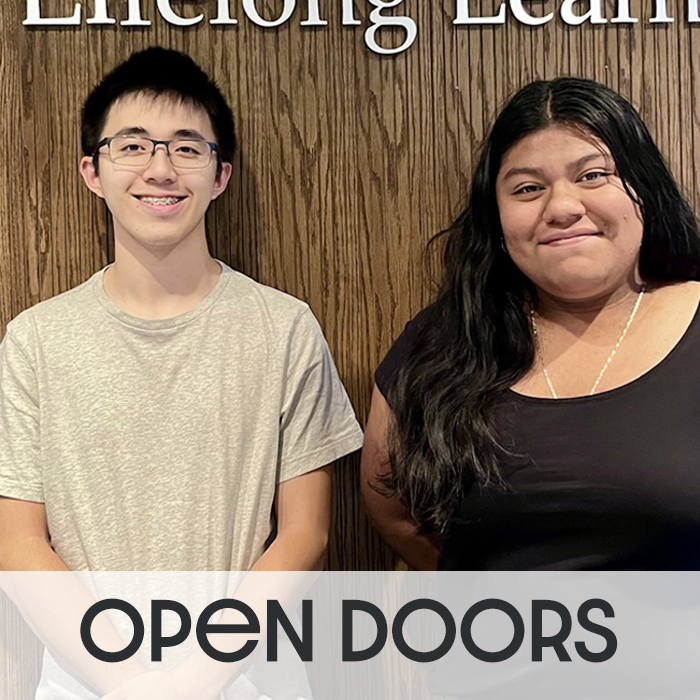
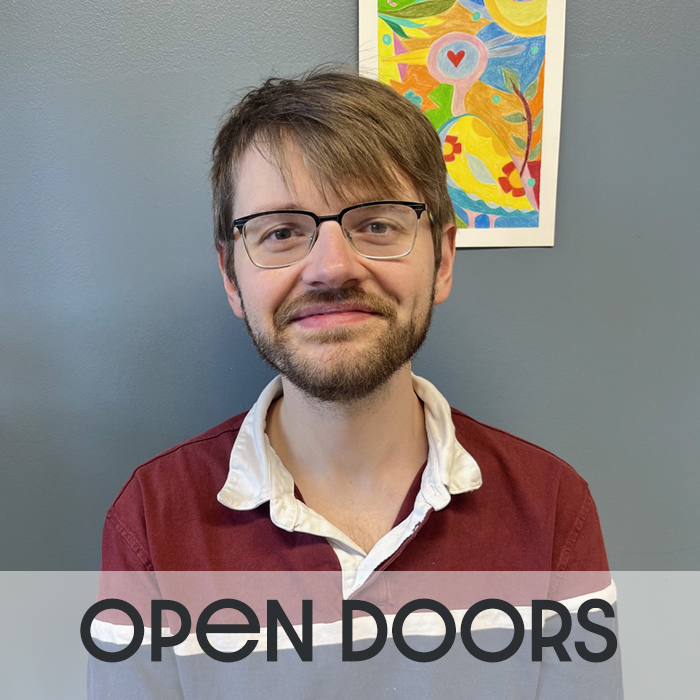
This summer, Joanna Martinez-Salinas and Victor Shen joined CMAP as youth employment interns, and what they experienced went far beyond the tasks on their to-do lists.

For Joanna, the days were filled with laughter, learning, and connection. “I really enjoyed working with the seniors and getting to know everyone around me,” she said. “Helping set up rooms, guiding them with technology, and just being there taught me a lot about patience and communication.” She remembers small moments that made a big impact: “Spending time with people you love, even for a short moment, creates memories you can carry forever.”

Victor’s summer was equally illuminating. “I learned how to multitask—taking calls, helping people, and staying calm all at the same time,” he explained. But above all, he discovered the importance of kindness. “Everyone here has been so considerate. I realized that treating people the way you want to be treated makes a real difference, because you never know what someone is going through.”

Both interns leave CMAP with lessons they will carry forward. Joanna hopes to continue practicing patience and effective communication in her future endeavors. Victor wants to keep spreading empathy, treating everyone he meets with care and understanding.

When asked what advice they would give to the seniors, they smiled and responded with heart. “Enjoy life, cherish your hobbies, and spend time with the people who matter most,” Joanna said. “Find happiness in the little things,” Victor added.

Their summer at CMAP was not just about gaining work experience—it was about building relationships, learning from one another, and understanding the quiet power of connection. For Joanna and Victor, the seniors were teachers in patience, kindness, and perspective. And for our seniors, these two young interns brought energy, curiosity, and reminders that learning—and caring—flow in every direction.

Meet Evelyn James

Evelyn James: From Daily Acts of Care to Changing a Neighborhood
By Brandon Urias

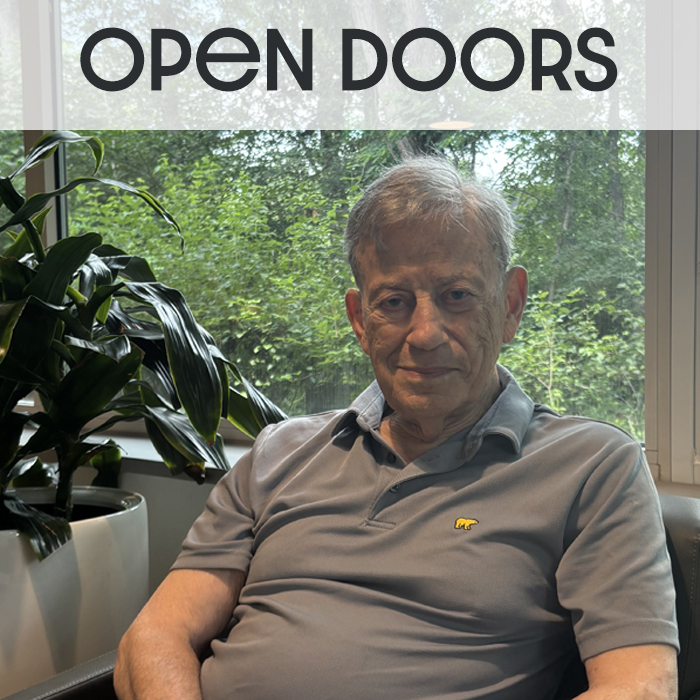
We had the pleasure of sitting down with Evelyn, a longtime participant in the Suzanne Patterson Building’s Nutrition Program. A former nanny with a passion for caregiving, Evelyn has created a lasting impact on the community she now calls home. Here, she shares her life journey, her experience in the program, and the lessons she has learned along the way.

Q: Evelyn, tell us a little about yourself and your background.
Evelyn: I grew up in Georgia in a large family with three brothers and four sisters. At eighteen, I moved to Baltimore, Maryland, to finish my high school education. After that, I started my first job as a nanny for a handicapped boy. I found it incredibly rewarding, and it sparked my love for helping people, no matter their age. From there, I worked with children with disabilities and later transitioned into mental health care for older adults in a mental health institution. I loved interacting with the adults I worked with and getting to know them on a personal level. I learned a lot about the importance of communication and being present for others.

Q: You’ve faced many challenges throughout your life. How did those challenges shape you?
Evelyn: Moving around a lot because of my husband’s work was definitely a challenge. We traveled from state to state, but I always made sure my daughter had the support she needed. Despite the constant change, she excelled in school and later earned her master’s in social work from Temple University. I’m really proud of her. Those experiences taught me the importance of resilience: no matter how many times we moved or how difficult things became, you can always push through with the right support.

Q: How did you get involved with the Nutrition Program at the Suzanne Patterson Building?
Evelyn: When I moved to Princeton, I heard about the Nutrition Program and thought it would be a great way to connect with others in the community. I’ve been a participant for a couple of years now, and it has been a joy to meet so many wonderful people. I’ve even met a few neighbors from my apartment complex, which is always nice. It’s great to have this space to share a meal and have conversations—whether about life, current events, or just something fun. It’s the perfect opportunity to connect and feel part of something.

Q: What role has faith played in your life?
Evelyn: My connection to religion has always been a strong foundation for me. It’s what kept me going during tough times. Just knowing that there’s a higher power watching over me has been a source of peace and strength. I think faith can carry you through anything. Even when life seems difficult, remembering that you’re not alone makes a huge difference.

Q: What are the most important life lessons you’ve learned?
Evelyn: One of the biggest lessons I’ve learned is the importance of staying connected to others—whether through family, friends, or community. Life can be hard, and sometimes you have to face challenges, but you don’t have to do it alone. My faith has also taught me to appreciate the small things. Sometimes it’s those simple moments that make life meaningful. And, of course, I believe that taking care of your body, mind, and spirit is key to living a long and fulfilling life.

Q: What advice would you give to others as they age?
Evelyn: Stay engaged with the world around you, keep learning, and don’t isolate yourself. It’s so important to keep connecting with others—whether through a program like this or by staying active in your community. Aging with dignity isn’t just about physical health; it’s about emotional and mental well-being too. And if you can find joy in the little things, that will carry you through.

Q: What’s next for you, Evelyn?
Evelyn: I’m going to continue participating in the Nutrition Program, of course! But I also want to keep exploring ways to stay connected with others and keep learning. I’ve always been curious, and I believe there’s always more to learn. I’m also excited to see my daughter continue to grow in her career—she’s an inspiration to me.

Stories Sewn Together

Stories Sewn Together: An Afternoon of Fabric, Coffee, and Conversation at CMAP

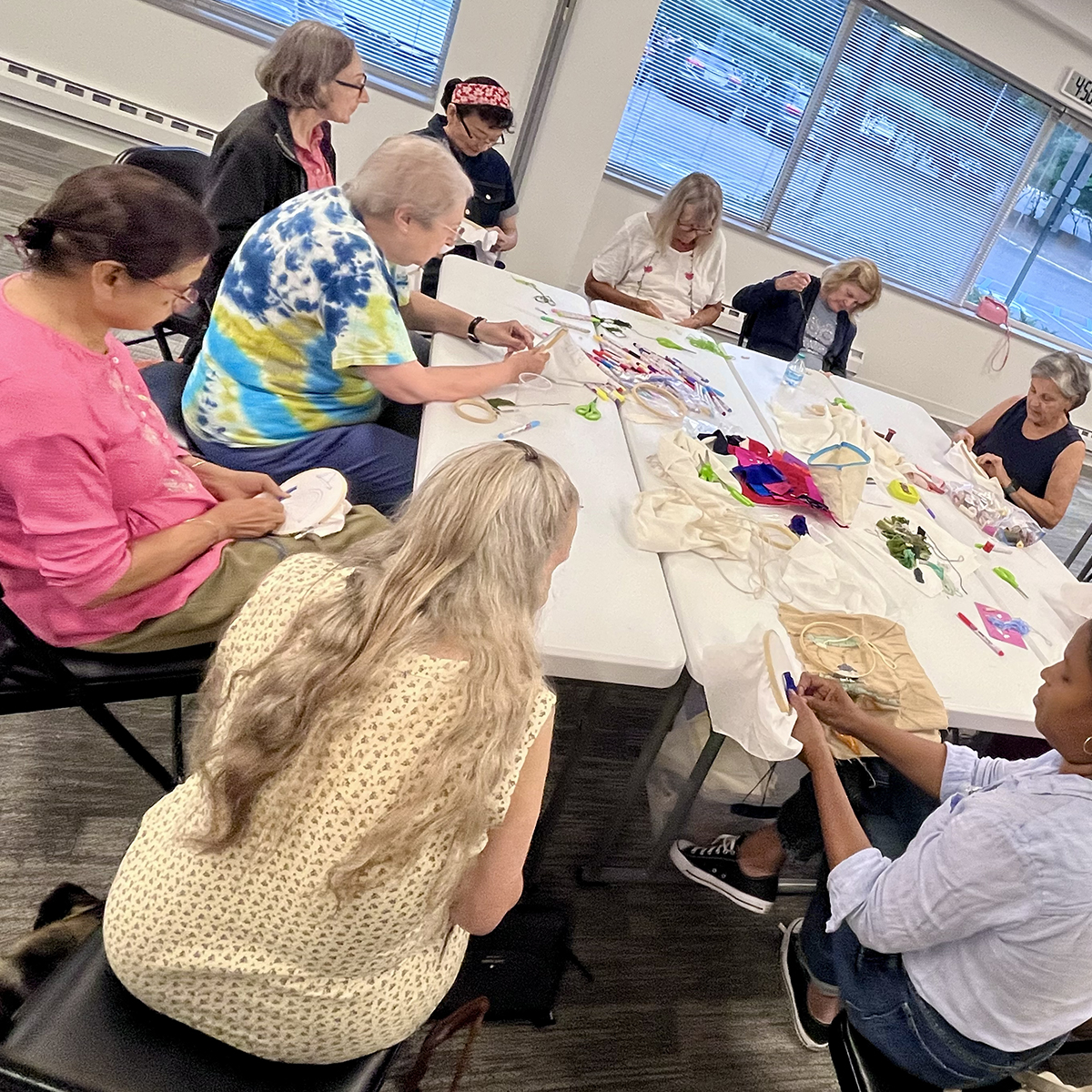
On an August afternoon, CMAP transformed into a vibrant space of creativity, memory, and dialogue during the workshop “Sewing Stories: Craft, Calm & Connection,” led by artist and educator Dr. Ronah Harris.

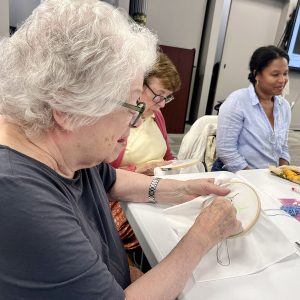
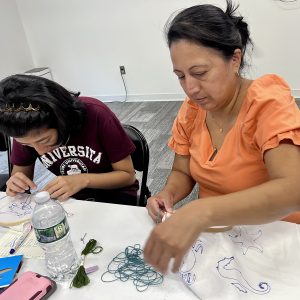
This was not your typical sewing class. Yes, there were threads, needles, and fabrics—but what was truly stitched together that afternoon were stories. A group of senior women came together not only to sew but to reflect on their lives, their struggles, and their shared histories.

Some focused intently on their stitching, others sewed while chatting. The topics ran deep: being a woman in the 1970s, the fight for gender equality, working in male-dominated spaces, and the evolving roles of younger generations—particularly boys and young men—in today’s society. Tales emerged of not being able to get a credit card without a husband’s signature, of unexpected business trips, of being the only woman in leadership positions. There were laughs, sparks of frustration, recognition—and, most of all, solidarity.

Ronah Harris didn’t just lead the sewing session—she gently steered the conversation, allowing stories to surface and flow in all directions. With her background as a researcher, professor, and artist, she created a space where every voice had room to speak, even when several voices spoke at once. It was beautiful, organized chaos—alive with shared memory.

The atmosphere was diverse: some participants stayed quiet and immersed in fabric; others opened up with deep stories. Some sipped coffee, others simply enjoyed the colors and textures they had chosen. The workshop was free, spontaneous, and welcoming—each person finding their own rhythm.

One participant shared: “It wasn’t just about sewing. It felt like each stitch connected me to something bigger—my mother, my past, the women who came before me.”

The conversation eventually turned toward daughters, granddaughters, and the disoriented youth of today. Discussions touched on education, masculinity, mental health, and the urgent need for safe, creative, and inclusive spaces.

By the end, everyone walked away with something handmade—and something heartfelt. Many expressed the desire to meet again, to keep sewing, to keep talking, to keep building.

Because in the end, sewing is also a way to remember, to heal, and to build community.

Meet Val and Martha

Val and Martha – A Life of Adventure, Family, and Connection

We had the pleasure of speaking with Val Mathews and Martha, who both participate in the Nutrition Program at the Suzanne Patterson Building. Their lives have been full of adventure, family, and meaningful connections. Here is their story:


Q: Can you tell us a bit about yourself, your background, and what brought you to Princeton?

Val:
I grew up in Virginia. I had a deep interest in physics and worked in the military-industrial complex for a while. After that, I took some time to explore the world. I lived in southern Russia and the Texas oil fields, and those experiences really shaped who I am. But eventually, I found my number one woman: Martha. That was the moment I realized that life isn’t just about places and jobs; it’s about the people you connect with along the way.

Martha:
I was born in Washington, D.C. and have an identical twin sister. Growing up, tennis was a huge part of my life, and it was something my twin sister and I shared. However, after I fell and broke my hip, I had to leave the sport behind. Even though I couldn’t play anymore, I found joy in watching others, like John Isner, and admiring their talents. It’s funny how life changes, and tennis still remains something that binds my sister and me, even though I no longer play.


Q: How did you find your way to Princeton? What has been meaningful to you about living here?

Martha:
When it came time to choose schools for our children, we wanted the best for them. We found that West Windsor High School was the right place for them, and it was only a few blocks from our home, which made it all the more convenient. We were looking for a community that values education and personal growth, and Princeton has always embodied those values.

Val:
Princeton has been an ideal place for our family. Martha has always been passionate about teaching. She was a wonderful elementary school teacher and later worked as a director at Princeton University’s nursery school. For me, living in Princeton has been about finding balance — having a supportive community and raising our family in a place where education, culture, and the arts thrive.


Q: What has been the most fulfilling part of your life so far?

Val:
The most fulfilling part of my life has been the chance to travel and connect with people from different parts of the world. The cultural exchanges we’ve had in our home, from hosting guests from Russia, Bulgaria, Kazakhstan, and East Germany — have broadened my view of the world. One of the most enriching experiences was when we hosted a student from Finland. She came to West Windsor High School as a senior to improve her English, and watching her grow and adapt to life in the U.S. was an incredible experience. It taught me how interconnected we all are, no matter where we come from.

Martha:
I couldn’t agree more. The exchanges we’ve had have really shaped our understanding of the world. It’s opened up our minds to different perspectives, and I’ve learned so much from these cultural interactions. It also gave our family the chance to appreciate the richness of other cultures and ways of life.


Q: What has been your experience with the Center for Modern Aging Princeton?

Val:
After Martha had her surgeries and was in and out of rehab, I found myself spending a lot of time alone. I qualified for the Nutrition Program here and began attending regularly. Honestly, it’s been a lifeline. It’s not just the food, although the meals are wonderful, it’s the people. Coming here has given me a sense of connection I was missing, and it’s been great for both my physical and emotional well-being. The social aspect has been just as important as the nutrition.

Martha:
I couldn’t agree more. After my surgeries, I’ve really come to appreciate the space CMAP offers. It’s a place where I feel seen and heard, and I’m not just another face in the crowd. Everyone here makes you feel welcome, and the camaraderie is really special. It’s more than just a place for food, it’s a place for connection and support. I truly feel at home here.


Q: What do you think is the most important lesson you’ve learned in your life?

Val:
For me, the most important lesson has been the value of staying curious and never stopping the learning process. No matter how old you get, there is always something new to discover, whether it’s a place, a person, or an idea. I think we’re all constantly evolving, and that’s what makes life exciting. It’s important to keep an open mind and heart.

Martha:
For me, it’s all about savoring the little moments and not taking life too seriously. When you stop and appreciate the simple joys — whether it’s a good meal with family, a quiet walk, or a shared laugh, you find true happiness. It’s those little things that matter most in life.


Q: What do you most enjoy doing with your grandchildren?

Val:
Spending time with our grandchildren is pure joy. One of our granddaughters, when she was just six years old, challenged me to an arm-wrestling match. She said, “Grandpa, I’m your woman.” It was a moment I’ll never forget. The confidence they bring to everything they do is so inspiring, and it reminds me to keep that childlike enthusiasm in my own life.

Martha:
We love to take them out to eat and spend time with them, but they’re so busy with school now that we don’t get to see them as often as we’d like. But whenever we can, it’s a real treat. We just enjoy being together and soaking up their energy.


Q: How do you feel about the future? What are your hopes for the next chapter in your life?

Val:
We’re just so grateful for everything we’ve experienced in life. Watching our children and grandchildren grow and succeed has been a joy, and we just want to continue being a positive influence on them. Our focus now is on enjoying each day and making sure we’re living fully.

Martha:
I agree. We’ve had a rich and fulfilling life, and now it’s about appreciating each day. We want to continue being involved in our family’s lives and continue making memories together. Life’s short, so we’re just going to enjoy it while we can.

_____________________________________

Val and Martha’s story is a testament to the power of connection, love, and adventure. Their journey, full of cultural exchanges, family, and community involvement, shows us that the key to a fulfilling life lies in staying curious, connected, and grateful. Through their participation in the Nutrition Program at CMAP, they’ve found not only nourishment for their bodies but also a deeper sense of belonging. Their story reminds us that no matter our age, we are always capable of learning, growing, and sharing our wisdom with others.

Meet Intern Chris

Christopher Stanley – A Journey from Ministry to Social Work

At CMAP, we are fortunate to have had Chris as an intern, bringing not only his academic expertise but also his compassionate heart to our community. From his background as a former pastor to his current studies in social work at Rutgers, Chris’s journey is one of deep empathy and dedication to helping others. Through his work with older adults, he has witnessed the power of human connection and the importance of listening. Today, Chris shares his story, his experiences at CMAP, and the valuable lessons he has learned about aging and caregiving.

Q: Chris, we’ve had the pleasure of seeing you work closely with our older adults and the team. Can you tell us a bit about yourself and what inspired you to pursue a career in health and wellness for older adults?

Chris:
Before starting at the Center for Modern Aging Princeton, I served as a pastor in the United Methodist Church for about eight years. During that time, I realized my passion for helping people through struggles and difficult times. However, after the pandemic hit in 2020, I began to reflect on my life and the impact I was making. I decided to switch gears and pursue a career in social work. Working with older adults has always been something I’ve been drawn to, and my experience in ministry — especially with older adults — felt like a natural transition. I’ve always believed in the value of helping others, and social work gives me the opportunity to walk alongside people and offer support during challenging moments.

Q: Balancing your graduate studies at Rutgers with your work here must have been challenging. We also know you have a young, playful daughter. How do you manage your time between school, your internship, and family life? How has this internship influenced both your academic and professional development?

Chris:
The key to managing my time has been the incredible support from my wife, Rachel. She’s been an amazing partner, especially when it comes to balancing my responsibilities. There were weeks when I had big projects or papers, and Rachel would step in and take on more of the parenting duties for a few days. Her support has been invaluable. I also made some personal adjustments — like deleting Facebook — to help me focus. With everything going on, it was actually nice to disconnect from social media. Time management, with Rachel’s help, has really been the cornerstone of balancing all my roles.

Q: You’ve shown such kindness and empathy toward the older adults during your time here. Was there a particular experience that deeply impacted you or changed your perspective on aging or senior care?

Chris:
One of the most significant things I’ve learned during my time here is the financial vulnerability many older adults face. I remember meeting someone who was living off Social Security, and after talking with them about the challenges they were facing, I was struck by how little they had to live on. That experience really opened my eyes to how financially difficult life can be for many older adults. I’ve also seen how much people value simple conversation. Often, they don’t want advice or solutions — they just want someone who cares and is willing to listen. That’s been deeply moving to me. Emotional support is just as important as any other kind of care.

Q: What has been the most rewarding part of your internship at CMAP? Is there anything in particular you’ll miss once the internship ends?

Chris:
The most rewarding part has been engaging with older adults and providing a space where they feel seen and heard. It’s a privilege to be part of their lives, even briefly. I’ll definitely miss the relationships I’ve built — with both the participants and the team. Having meaningful conversations with older adults about their challenges and life experiences has been incredibly fulfilling. It’s not always easy, but knowing you’re making a positive impact makes it all worth it.

Q: We’re always looking for ways to improve. Do you have any feedback on how we can enhance the experience for older adults or expand any of our services?

Chris:
One thing I’ve noticed is that there are two sides to CMAP: the programs at the main center and the social services provided at places like Princeton Senior Living (PSL). Sometimes, those sides feel a bit disconnected. I think it would be great to bridge that gap and get more PSL residents involved in the amazing events happening at the center. Many people at PSL may not be aware of all the resources CMAP offers. A little more outreach could really help strengthen that connection.

Q: What advice would you give to others considering a career in social services or working with older adults?

Chris:
I’d encourage people to approach this field with curiosity and an open mind. There are so many stereotypes about aging that simply aren’t true. I remember when I told a friend I was going into geriatric social work, they said, “Oh, that’s so neat — I love playing bingo with older people.” That’s such a limited view of who older adults are. They’re incredibly diverse and have so much wisdom to offer. If you go into this work ready to listen and learn, you’ll grow just as much as the people you’re supporting.

Q: Looking ahead, what are your professional goals? How has your experience at CMAP and your education at Rutgers prepared you for the next step in your journey?

Chris:
I’m still figuring out exactly where I want to go, but I’m really interested in case management and possibly counseling or therapy. There’s a lot of overlap between ministry and social work, and that’s been helpful in shaping my direction. My time at CMAP, along with my education at Rutgers, has helped me see how broad and impactful social work can be. I’m excited to keep growing and to continue finding ways to make a meaningful difference.

Meet Intern Sarah

Sarah Christensen, A Heart Full of Empathy and Service

Q: Sarah, tell us a little bit about yourself and what led you to pursue a career in health and well-being for older adults.

Sarah:
My name is Sarah, and I’m currently pursuing a Master of Social Work at Rutgers University, along with a certificate in aging and health. I was also a fellow in the Aging Fellowship at Rutgers. My interest in social work was sparked by my upbringing—I’ve been surrounded by older adults my whole life. My mom is one of eight children, and I was always part of a close-knit family. My dad’s aunt, who’s 101, has been an immense role model for me, and I’ve learned so much from her about aging. It’s people like her, along with the rest of my family, who inspired me to focus on older adults and pursue a career in this field.

Q: Balancing your studies at Rutgers with your work here at CMAP must have been challenging. How did you manage it all?

Sarah:
The key was having my practical days on Monday, Tuesday, and Wednesday, which allowed me to dedicate those three days fully to CMAP. This structure helped me organize my week, and once I was finished with my practical work, I felt like I had completed everything for the week. The support at CMAP was also crucial. If there was something I didn’t finish or needed help with, I felt comfortable turning to anyone here, whether they were my supervisors or not. Having two other interns to work with was also invaluable. We helped each other, shared ideas, and there was a real sense of understanding between us, which made the experience both rewarding and manageable.

Q: You’ve shown so much empathy during your time here at CMAP. Was there a particular experience that deeply touched you or changed your perspective on aging or the senior community?

Sarah:
One of the most impactful moments for me was when a senior called for feedback on a program she had attended. She talked at length about how much CMAP meant to her and her friends, describing it as a “beacon of light” in their lives. Hearing this really reinforced the importance of what we do here. It wasn’t just about the programs—it was the sense of belonging and support the seniors felt. It made me realize how crucial organizations like CMAP are for older adults who might feel isolated or overlooked by society. It also made me think of my own family, especially my aunt, and how important it is for older adults to have spaces where they can feel welcomed and valued.


Q: From your perspective, what makes CMAP special for the seniors who participate in our programs?

Sarah:
What makes CMAP truly special is the community it fosters. The relationships between the seniors, staff, volunteers, and interns create an environment of warmth and mutual respect. The seniors here are incredibly welcoming, they always ask about our studies, our lives, and genuinely take an interest in us. There’s a unique connection here that goes beyond just the programs. It’s the sense of belonging and the support we offer each other. Whether it’s through shared experiences in groups or casual conversations, it’s clear that CMAP is more than just a place—it’s a community.

Q: Is there something personal that has connected you even more with the seniors here or inspired you in your everyday life?

Sarah:
The phone call from that senior has stayed with me. She talked about how CMAP had become a “beacon of light” for her and her friends. This made me realize the power of what we do, not just in providing services, but in offering a sense of purpose and connection. I think about her words often, and they continue to inspire my work here. It also reminds me of my aunt, who is turning 80, and how important it is to have spaces where older adults can feel supported and connected. CMAP provides that, and it’s something I deeply value.

Q: What advice would you give to other young professionals who want to get involved in health, well-being, or community service roles?

Sarah:
My advice is to be open to learning from the people you work with, not just passively, but actively seeking to understand their experiences. In social work, you get as much as you give. Don’t make assumptions about people’s needs or experiences. Just because someone might be at the same stage in life doesn’t mean they experience things the same way. Embrace creativity and think outside the box. People like to learn, and sometimes trying new things can lead to unexpected rewards. And most importantly, be open to learning from the people around you.

Q: Looking ahead, what are your professional aspirations? How do you feel your experience at CMAP and at Rutgers has prepared you for what’s next?

Sarah:
Looking ahead, my professional aspirations center on intergenerational relationships and program development. I believe that both older adults and younger generations thrive when they connect—it’s about breaking down stereotypes and fostering mutual learning.

With the foundation built through her studies at Rutgers and her internship at CMAP, Sarah is excited to continue making a difference in the lives of older adults. Her time at CMAP has given her a deeper appreciation for the power of community and the many ways we can support and empower older adults.

She also highlighted the value of working alongside other interns, calling it one of the most rewarding aspects of her experience: “From the very start, we were all navigating this new experience together, and it created a real sense of camaraderie. We shared challenges, ideas, and questions, and there was a strong feeling of mutual support. I also learned so much from my fellow interns—especially from Chris, who often asked insightful questions that made me reflect more deeply on the work we were doing. That sense of teamwork and shared purpose made all the difference.”

When it comes to family, Sarah lights up: “They’ve been my biggest supporters. I always joke that my success is thanks to them! Many of my assignments involved interviewing family members, and I’ve ended up asking almost all my aunts and cousins for help. They constantly tell me how proud they are, and I love teasing them whenever I get a good grade on something I interviewed them for, saying they deserve some of the credit! Their support has been invaluable, I know I wouldn’t be where I am without them.”

GrandPal Lois Gerstein

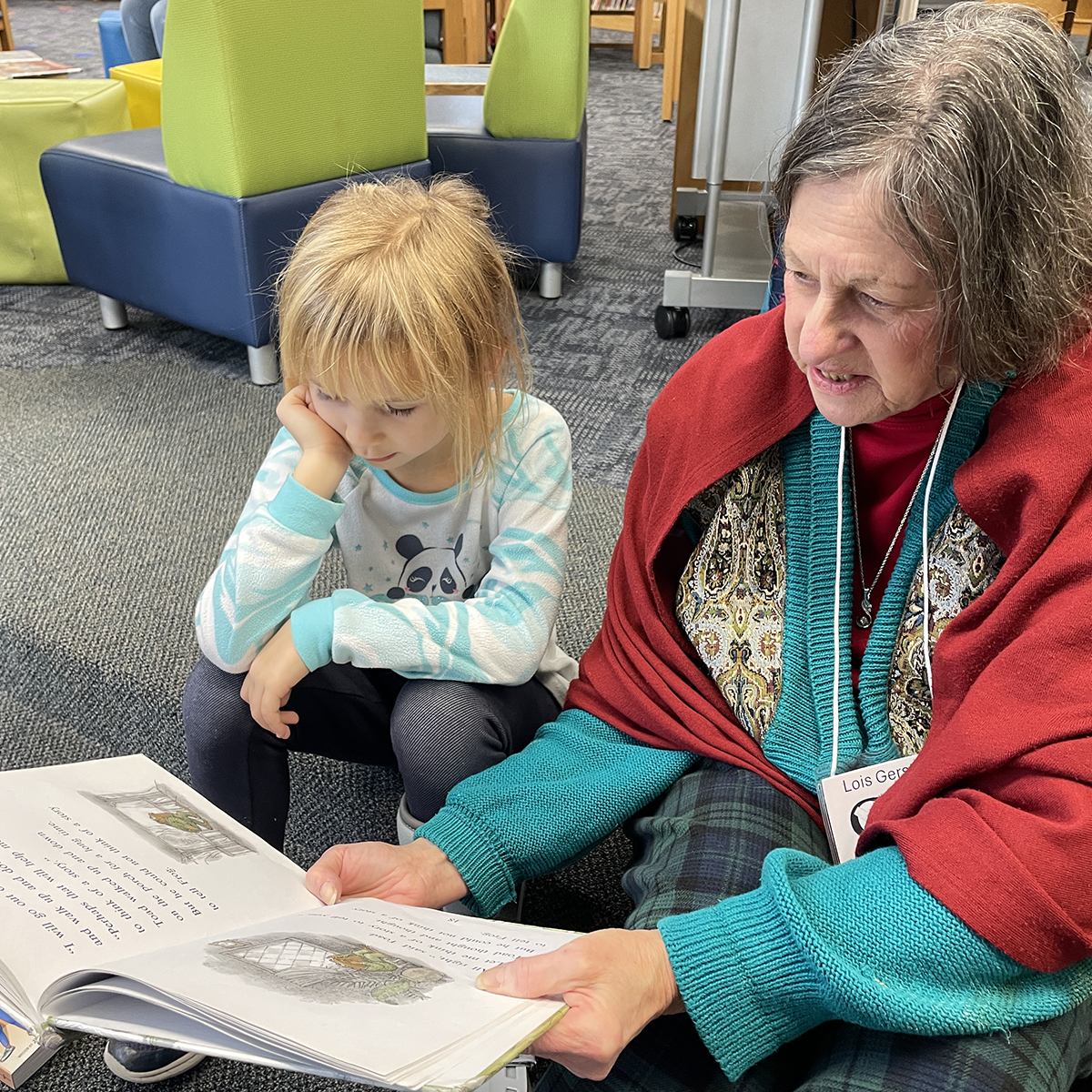
Meet Lois Gerstein, A former medical social worker with an MSW from NYU, she also ran a children’s bookstore, combining her passion for books and early childhood education. After relocating to New Jersey, she transitioned to legal work, earning a paralegal certificate from NYU and spending twenty years with the New Jersey State Attorney General’s office. She later assisted her husband in researching and writing a practical guide on education law. Since retiring in 2020, Lois has been actively involved in volunteer work, including reading to children, and was excited to join GrandPals after hearing about it from a friend.

“I was greeted with a home made Valentine from the little girl that I read to. It was very unexpected as it was not Valentines Day. It really warmed my heart. Last week she hugged my legs at the end of our reading time together. It’s the little things like this that make this experience so rewarding.”

GrandPal Caroline Purnell

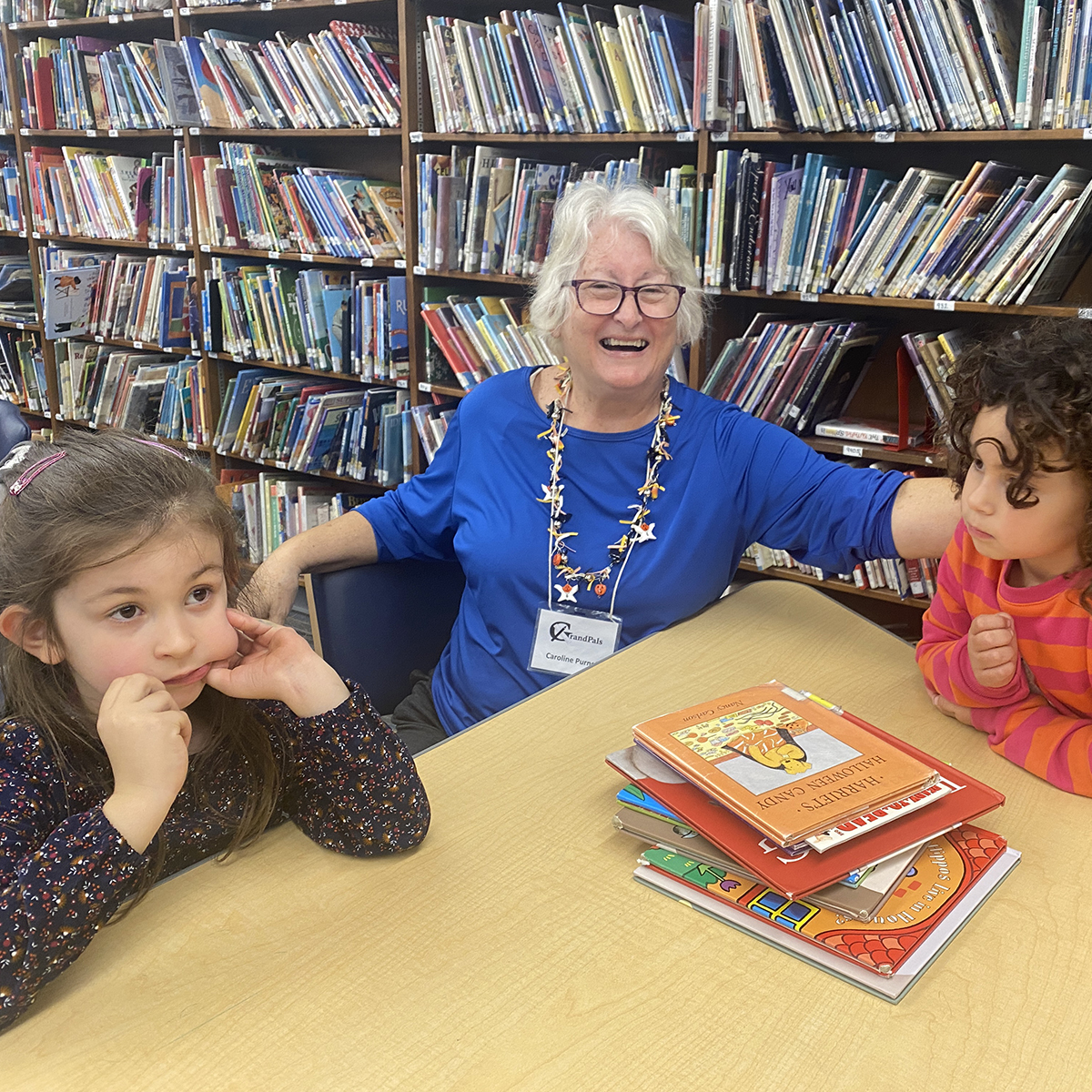
Caroline Purnell has been a GrandPal for the past two years. She is retired from teaching French, Spanish, and ESL for adults, and embodies a deep passion for travel and multiculturalism.

This year as a GrandPal has been special for me since I am able to read to my granddaughter as well as one of her classmates. There is so much joy reading to Mabel and Stella, and they enjoy reading to me from time to time! Once, we made up our own stories, which was a lot of fun. For me, it’s a half hour of smiles, laughter, giggles, and wonder. At the end of each session, I watch as a class of kindergartners leaves the library with huge smiles on their faces. I think the GrandPals have even bigger smiles on their faces!

GrandPal Dave Olson

Meet Dave Olson, a recently retired Special Education teacher with a passion for supporting students of all abilities. Originally from the Philadelphia area, he began his career as a school bus driver before moving to New York to attend the Bank Street Graduate School of Education — a transformative experience that led him to a lifelong career in special education. He spent twenty-nine years in the West Windsor-Plainsboro School District, working in both high schools within the Special Services Department. In addition to his teaching career, Dave has dedicated many summers to tutoring and working in various camps, enriching the lives of countless students.

GrandPals has brought me so much happiness. I spent about forty years in classrooms, and (most years) was grateful that that got to be my life. Then — boom — retirement. The part of it being a job and all the joys of relatively inadequate administrators is what wears ya down. It’s the kids and the craft which gets you up at 6:00 and which holds meaning. GrandPals is showing me a way to have my cake and eat it too. I get to enjoy the pure joy of reading to kids who want you to read to them just cause. I get my cake and eat it too.

And you are gracious and warm and welcoming and kind and have a brilliant program of which l am so proud to be a part of. I so look forward to each session and the time flies.

GrandPal Deb Pillow

Deb Pillow, originally from Michigan and with a background in teaching and storytelling, found her perfect fit in GrandPals after moving to Princeton from Arizona just two-and-a-half years ago. With two married sons and four grandchildren spread across the country, GrandPals allows her to indulge her love for books and young children while enjoying retirement in Princeton.

What amazing, funny, precious…and smart….kindergartners there are in our schools! They all come with smiles and eagerness as we greet them each week. I have been blessed with four adorable “Pals,” two of whom can already read, one as fluently as I do !!!! When I have had him as a solo “Pal,” we take turns reading and it is a delight to see this bright, young mind at work. All four are sounding out words, recognizing words (though this has not been an emphasis during our time together), and enjoying stories. it is so amazing to see all their minds at work and their enthusiasm for books and reading.

What wonderful young minds, with a love of learning! The highlight of my week.

BE THE FUEL

MAKE A DONATION TODAY

Your generosity is truly the fuel that empowers CMAP to change lives and to help older adults discover their “why!”

We invite you to donate to the 2023–2024 Annual Giving Campaign by June 30 to help us reach our goal.