Important Update: Temporary Closure of the Nancy S. Klath Center Due to water damage, the Nancy S. Klath Center (101 Poor Farm Road) is temporarily closed for construction. For your safety, please do not visit the building. We will share updates as soon as it is ready to reopen.

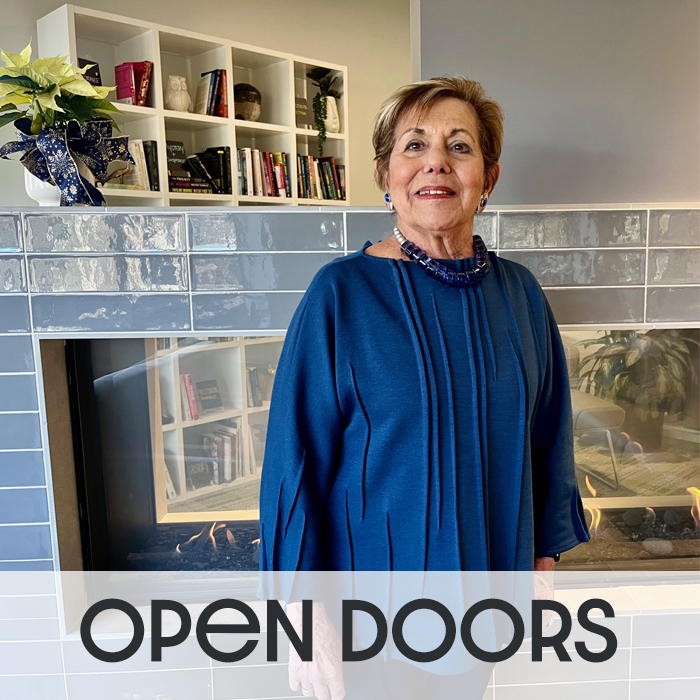
GrandPal Iona Harding

Iona Harding’s Story:
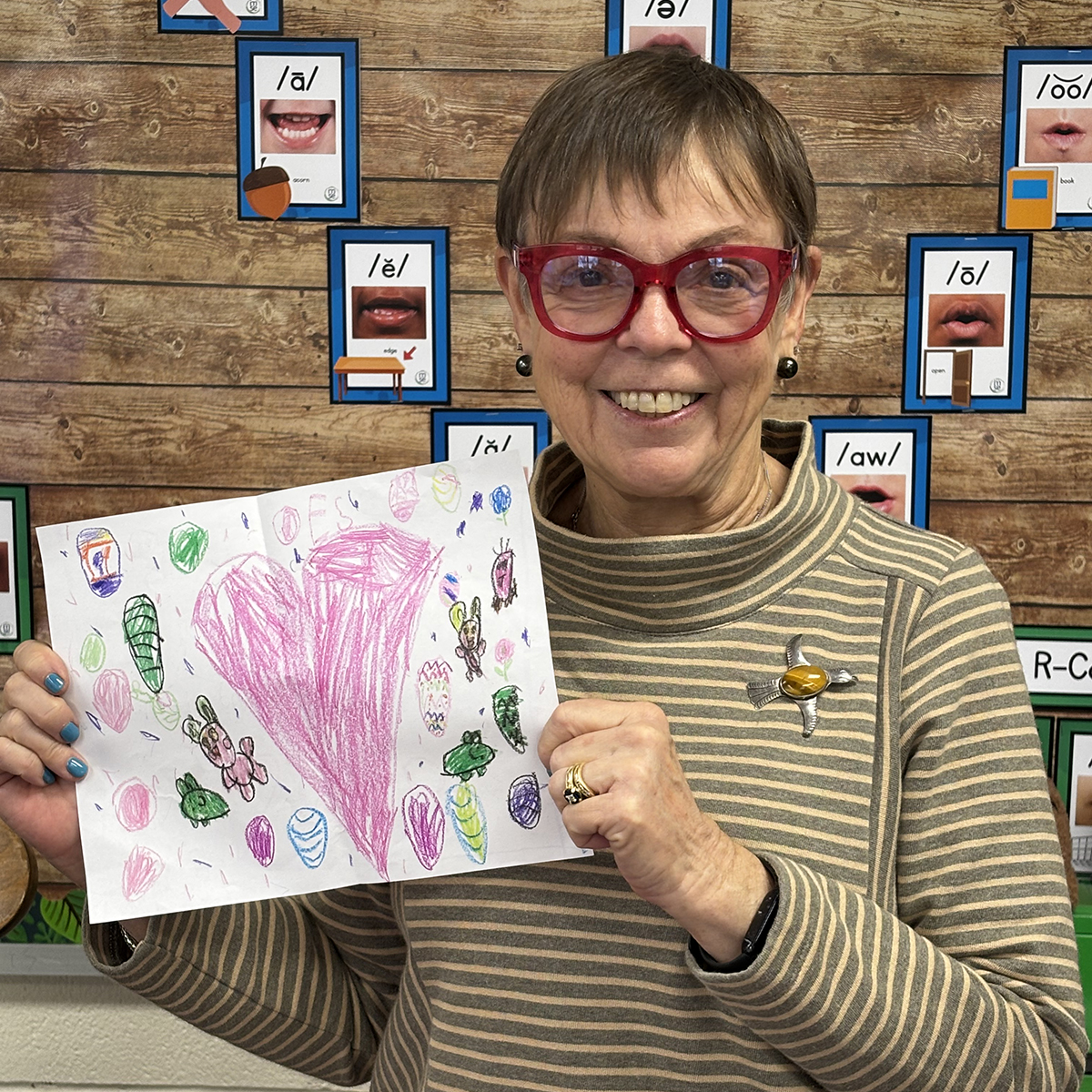
At CP, I regularly have Jude and Ashley, two very sweet, kind and lovely children. Jude has this flock of blond hair that always looks like he just rolled out of bed!  Like my own grandchildren at that age, Jude loves dinosaurs — and he is quite the expert. Last week, one of our books was about dinosaurs and surprising dinosaur facts, all of which Jude already knew and was quite enthusiastic to talk about. Fast forward to last Saturday morning when Maurice and I were sitting at the breakfast table doing “The New York Times” Saturday news quiz together. I was so excited that I knew the answer to one of the questions BECAUSE OF JUDE!. The previous Wednesday, when reading about the Tyrannosaurus Rex, Jude told Ashley and me that this giant of a dinosaur was related to our modern day chicken — a fact that was not in the book.

Well, that was one of the questions in the NYT quiz! The specific question was something along the lines of the leg structure of the beast being the same as a modern day animal — and, thanks to Jude, I knew the answer was the chicken! Seriously, neither Maurice nor I would have guessed that, of the list of five animals in the quiz, the answer was chicken. This morning, I was so happy to share this story with Jude. And he was delighted that I learned from him. He just gave me the most beautiful smile.

This reminds me of why I do GrandPals. I learn from them. I learn from these little people who are so smart, lovely and kind. And it reminds me to listen… listen to what they have to say because we can learn so much.

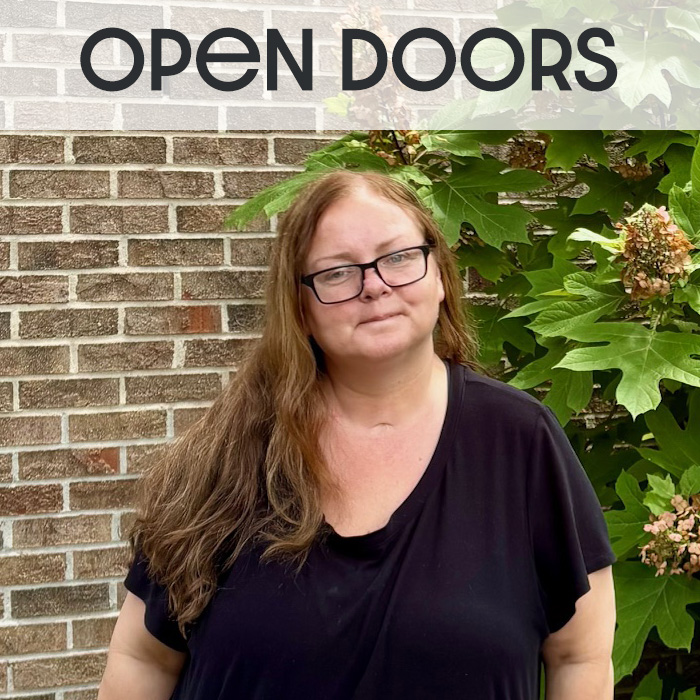
Meet Linda Madani

When Home Becomes Care: Linda Madani on Design, Aging, and Dignity

The seeds of Linda Madani’s interior design career were sown early. Growing up in New Hampshire, Linda’s father was a real estate developer who repurposed spaces, such as old mills, schools and hydro stations into housing, offices and restaurants. Linda accompanied her father to his building projects and even had her own hard hat at the age of ten. She loved construction and learned how to read architectural plans at a very young age. At Simmons College in Boston, Linda majored in business and fine arts. As a college senior she interviewed an interior designer for a class assignment and, in the process, asked if she could intern for her during her winter break. The job “clicked.” After graduating from college, Linda was offered a fulltime position as in interior design assistant. A few years later she went back to school to receive her interior design degree.

Something also clicked when Linda, now the owner of Madani Interiors, took on a renovation assignment at a neurosurgeon’s office. The doctor shared that most of his mature/senior patients had brain injuries from falls, particularly in the bathroom. As a result, Linda realized that a whole demographic was underserved by her field. It became her mission to help those in the third stage of their lives to live more safely, comfortably, and peacefully in their homes.

Linda began by developing ways to make bathrooms safer, such as providing low, amber lighting for nighttime bathroom visits and towel bars that also served as grab bars. As she developed an expertise in safe aging, she understood that the topic needed to be approachable and sensitively handled. She created a website as well as material for presentations. One of the places where she spoke was at the Center for Modern Aging in Princeton.

As Linda’s business grew, it diversified. She has worked with people who wanted to fully renovate their home or their business setting, those who just wanted to “touch up” their home, those who were ready to down-size, and those who were just beginning to think about finding a new way of living and needed help knowing where and how to start. Working in people’s personal spaces, negotiating lifestyle changes with clients, and suggesting ideas required empathy, respectful listening, observing, communicating, and good old-fashioned people skills.

In June 2023, Linda’s father was told he had three days to live. Happily, her father’s prognosis proved incorrect; bringing her design and organizational talents to bear, in just two months’ time Linda relocated her parents from North Carolina to New Jersey, into a safe, welcoming, fully ADA compliant home whose renovation she herself oversaw.

Linda felt it was a gift and an honor to help her parents through their transitional experience, and it only strengthened her resolve to help others maneuver through the aging adventure. She advises those with whom she works that being proactive and preventative about their living environment as they age provides more control over and enjoyment of ones’ home life. She helps people realize what they value most and helps them create a safe, peaceful home environment that enables them to thrive and grow. That might involve purging things they don’t need, organizing and refreshing various living spaces, or finding a new home with fewer maintenance and upkeep demands. Lucky for those who work with Linda, her empathy, energy, and insight help make change happen.

The Center for Modern Aging at Princeton is one of the recipients of Linda’s talents. Through her service as a civic co-leader in the Stoney Brook Garden Club, Linda and her fellow Club members made twenty creative holiday wreaths to decorate the CMAP Christmas luncheon venue. The wreaths were given away after the luncheon to members of the CMAP community. The holiday wreaths are a tradition between Stoney Brook Garden Club and CMAP. As part of her continuing engagement with the Center, Linda will be interviewed by Conrad Strauch on the People & Peace Talk Show airing on January 28, 2026 from 5:00-6:00 p.m. Go to https://engage.cmaprinceton.org/component/events/event/1570 to register. You can also call 609.751.9699 with questions, or email info@cmaprinceton.org.

CMAP Holiday Coat Drive

This holiday season, our Senior Coat Drive wrapped our community in warmth in more ways than one. Through the generosity of twenty-five sponsors, twenty-five brand-new winter coats were purchased and gifted to seniors in our community. Each coat offered protection from the cold, but more importantly, it carried a powerful message: you are seen, valued, and supported.

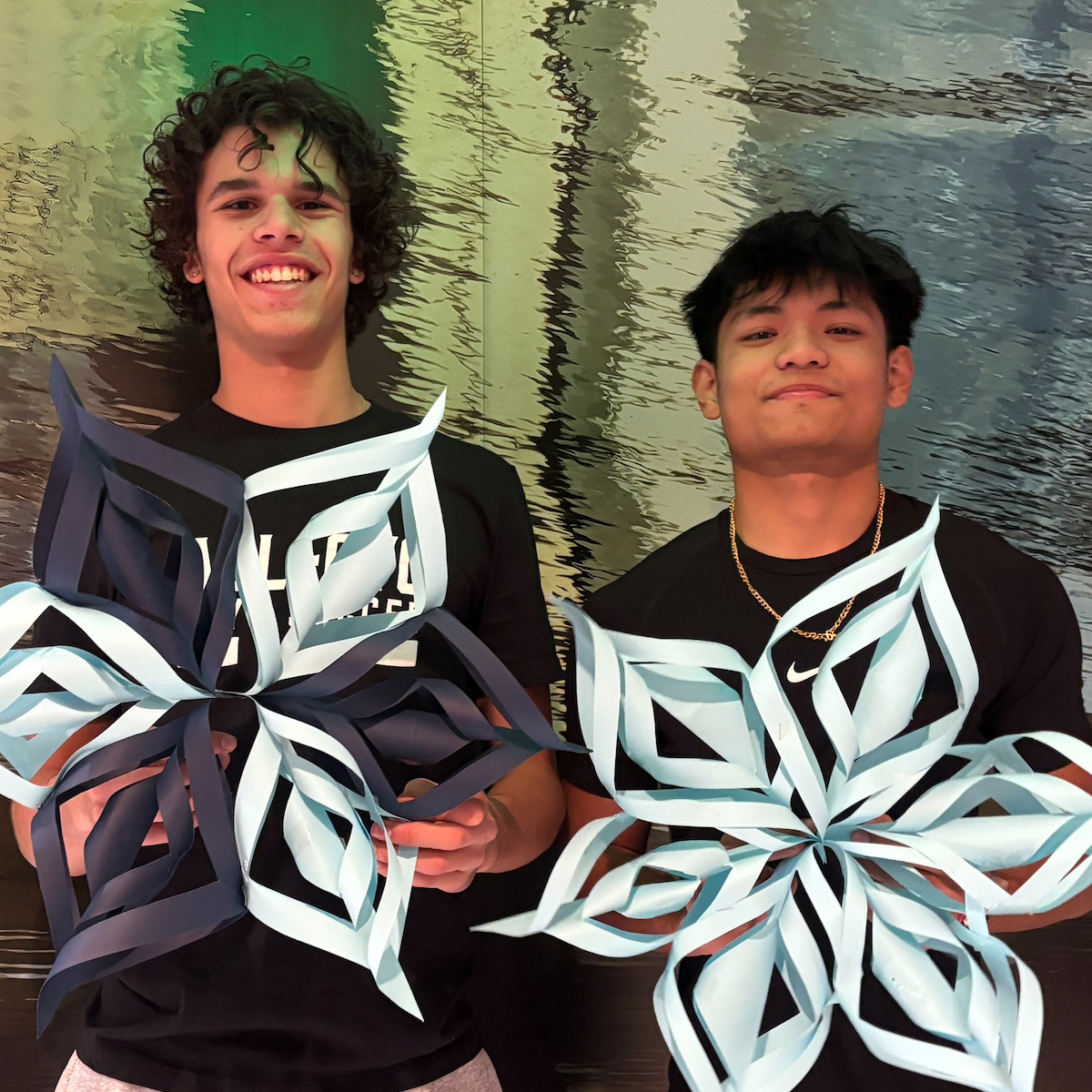
The joy behind the scenes was just as meaningful. In December, fifteen high school students came together to support the effort, filling the space with laughter and holiday cheer as they wrote 80 heartfelt holiday cards, created festive decorations, and lovingly gift-wrapped each coat. Their enthusiasm and care transformed the project into a true intergenerational celebration of giving.

The coats were presented at a holiday luncheon, a festive gathering filled with warmth and connection. Seniors enjoyed a delicious meal, music, and a lively raffle, all while sharing smiles and conversation with neighbors and community members. The room was full of holiday spirit, reminding everyone present that community is one of the greatest gifts we can offer.

This Senior Coat Drive was more than a seasonal initiative; it was a beautiful example of what happens when generations come together with compassion, creativity, and care. Thank you to our sponsors, students, and community members who made this holiday season a little warmer for our seniors, both inside and out.

Meet Nancy Becker

Nancy Becker: Building Community, Changing Systems, and Leading with Heart
How a young woman from the Bronx became New Jersey’s trailblazing advocate for ethics, women’s leadership, and community impact

Nancy Becker has spent decades shaping New Jersey’s civic and political life with quiet determination and unwavering ethics. Today, she brings that same steady vision to her role on CMAP’s board. We sat down with Nancy for an Open Doors conversation about the moments that defined her, the values she returns to, and the legacy she hopes to leave behind.

Where did you grow up, and what shaped those early years?
I grew up in New York City and attended the Bronx High School of Science, one of the most respected public high schools in the country. My father passed away when I was young, which left a significant emotional and practical gap in my life. But I also remember him as someone who never restricted us. He believed deeply that I could do anything I wanted, and that sense of permission stayed with me.

I was also very close to my younger sister, who went on to build a long and fulfilling career in physical therapy. After high school, I attended the University of Michigan, where I majored in English literature, and later earned a master’s degree in English language and literature from Manhattan College.

Were there role models who influenced your journey?
My father’s belief in me was foundational. Eleanor Roosevelt was another important influence, one of the few visible female leaders at the time. Her courage and advocacy for women helped me see the world differently. But in many ways, because there were so few female leaders to look toward, I had to teach myself how to become the kind of woman I hoped to meet: principled, effective, and unafraid to lead.

What setbacks shaped who you are today?
After completing my master’s degree, I moved to Princeton and hoped to pursue a PhD in English literature at Rutgers. In my interview, I explained that I could work only part-time while caring for my young children, and I wasn’t accepted. That rejection left me unsure of what to do next. I didn’t know Princeton well, and I didn’t yet have a community.

So I looked outward and began volunteering with a nonprofit, Common Cause. Several years later, I became its executive director. That role reoriented my path—it introduced me to policy, advocacy, and community impact.

Eventually, I left to start my own lobbying firm, becoming the first woman in New Jersey to found and run her own lobbying business. It wasn’t easy at first, but the work grew, gained attention, and ultimately sustained me for thirty years.

What personal accomplishments matter most to you?
I was married to my husband for forty-eight years, and raising our two children is one of my greatest joys. At a time when few women held corporate or political roles, he encouraged me to pursue them—and he meant it.

I’m proud of the inspiration my career gave my children and grandchildren. I’m also proud that my firm employed mostly women, offering opportunities that were still rare when I started.

What core values guided your work?
Ethics. Always ethics.

Whether in nonprofit leadership or running my own firm, I needed clients whose values aligned with mine. The moral culture of my businesses mattered just as much as the professional work we produced. Ethics is not just a professional standard; it is a way of living.

What do you hope your children and grandchildren remember about you?
I hope they remember me as someone accomplished but also loving, present, and supportive. I’ve built close relationships with my grandchildren individually, not just through their parents, and I treasure that. I want them to know that they can always come to me. Trust has always been essential to me, and I hope they carry that forward.

How has serving on CMAP’s Executive Committee shaped your view of aging and community?
I’ve served on the Executive Committee for two years, leading the Strategic Planning Taskforce. This work is essential—not just planning programs but imagining the future of aging in Princeton.

CMAP’s growth since the pandemic has been remarkable. Hybrid programming has expanded access and reduced isolation for people who might otherwise be alone. That, to me, is transformative.

I have also been proud of CMAP’s commitment to diversity. Through strategic planning, we’ve worked to build more inclusive participation, including expanded programming for Latinx and Asian community members and more outreach across economic and cultural backgrounds. Understanding the challenges of aging—from dementia to social isolation—helps us shape education and engagement for the whole community.

What life lessons have stayed with you?
Patience—not the passive kind, but the kind that trusts the long arc of effort.

I didn’t expect to achieve everything quickly. I believed that if I worked with integrity and surrounded myself with people who shared those values, things would unfold as they should.

Mentorship has also been central to my life. Because I grew up without much mentorship myself, I recognized how crucial it was. I created a yearlong mentorship program during Governor Christine Whitman’s administration to train women for leadership roles in government. Many of those women went on to become judges and public officials.

Later, at Rutgers’ Eagleton Institute of Politics, I created a lobbying-focused mentorship program specifically for women, including a handbook I wrote to teach effective advocacy.

If you could give advice to your younger self, what would it be?
Part of me wonders what would have happened if I had gone to law school. But the truth is, my life moved quickly after college—marriage, young children, shifting opportunities—and everything eventually came together in a way that felt right.

So the advice I’d give myself is this:
Trust the process. Keep your ethics. Take the long view.
And be patient. The life you’re building is worth the wait.

Meet Lori Efaw

Lori Efaw: How Care, Community, and Conversation Shaped Her Path at CMAP

When you meet Lori, you first notice the ease with which she moves through the Suzanne Patterson kitchen—placing trays, greeting participants, exchanging small jokes with the regulars. To most, she’s the warm smile behind the counter. But behind that smile is a story of early responsibility, long pauses, and the quiet strength of someone who learned to rebuild her life one shift, one connection, one good meal at a time.

Below is her story, in her own words.

Where did you grow up, Lori? What do you remember most about your early years?

I grew up in the Chambersburg neighborhood of South Trenton. I was always outside—riding my bike, finding things to do with friends, keeping myself busy and active. After middle school, my family moved to Hamilton, and I spent four years at Hamilton West High School. Those years were really fun for me. It’s also where I met my husband.

Right after graduating, I moved into a house with him and three of my closest friends. It was crowded, but it was a good kind of crowded—full of energy and laughter. At twenty, I had my first child. Becoming a mother that young changed everything. It taught me how to work hard, because suddenly it wasn’t just about me.

I had worked at Dunkin’ Donuts through high school, and afterward I bounced between being a manager at Wawa and waitressing at different restaurants—all while raising my son. It was a lot, but you do what you have to do.

You took on major responsibilities early. What challenges shaped you most?

Balancing work and motherhood at a young age was really tough. By the time I was twenty-six, I had my second child, and that made me step away from working for a while.

When my older son graduated high school, I decided to pause work for about ten years to be home with my younger son while my husband worked. It was a long stretch of caretaking, but it felt right at the time.

Then COVID hit.

I had just decided I was ready to go back to work, and suddenly every opportunity disappeared. Quarantine made everything more uncertain — not just jobs, but routines, connections, even confidence.

Eventually I learned that my mother-in-law worked for Mercer County Nutrition. She helped me get connected to the East Windsor kitchen, where we were delivering meals because no one could come inside. When the Princeton site reopened in 2022, I moved here.

Getting back to work after COVID and after years at home wasn’t easy. But as my kids became more independent, I knew it was time for me to step into something new again.

How has working behind the scenes at the Nutrition Program been different from your other jobs?

Being here has been fabulous.

This job is different because of the people. The participants bring so much warmth and personality. I get to greet them, hear their stories, catch up about their week — and that just didn’t exist in my previous jobs.

Starting my day with that positive energy makes all the difference.

I also think a lot about what this place gives the participants. Loneliness can really affect people, and here they get to enjoy good food and good company. It matters.

How do you feel about the diversity you see at Suzanne Patterson?

It’s one of my favorite parts of working here.

Every week I meet people from so many different backgrounds. It makes the building feel welcoming and alive. I love seeing conversations happen between people who might never have crossed paths otherwise.

And honestly, I think it’s only going to grow. I hope I get to keep seeing it firsthand.

If you could give your younger self advice, what would you tell her?

I’d tell her not to be so closed off.

Most of my life, especially when I was younger, I kept to myself. But working all kinds of jobs — waitressing, managing, customer service — forced me to talk to people. And that’s what changed me.

Communication taught me confidence. It taught me how to connect with people. And now, connecting with others is one of the parts of life I enjoy most.

My Sneakers Go Upscale

“I originally signed up for the class because I wanted to write my obituary, but I found I have much more to say and share. I now feel more comfortable writing, and I have met some interesting people. I still haven’t gotten around to writing my obituary.”
— Class Member Since 2023

My Sneakers Go Upscale

Around seven years ago, I began to experience pain in my right knee whenever I walked. Finally, when the discomfort became miserable, off to the doctor I went. An X-ray revealed arthritis in the knee. The calcium knob on the end of a bone in the X-ray picture protruded considerably. It was easy to see that when the bone-on-bone contact occurred while walking, agonizing discomfort would result, because of the calcium knob between the bones.

I  was given a cortisone shot, and several days later, the pain was gone. In about six months, however, the knee acted up again. Was I going to have to have a knee replacement? I certainly hoped not.

Cortisone shots to the knee cannot be given more than one or two times, because of possible damage to the bone. So I had a second cortisone shot and hoped  that the problem in the knee would be cured. In a year or so, however, the knee spoke loudly to me again. By this time I had fortunately heard about a gel shot which delivered a cushiony substance into the knee between the arthritic knob and the nearby bone.

Over time the need for the gel shot began to be required around every three or four months, if I wanted to be able to maintain any comfort while walking.

In December of 2021, I traveled to Florida to vacation for some months. I had the gel shot in late November just before I left New Jersey, and kept my fingers crossed that the knee would hold up until I returned to Princeton. Alas, in February, the knee problem became excruciating.

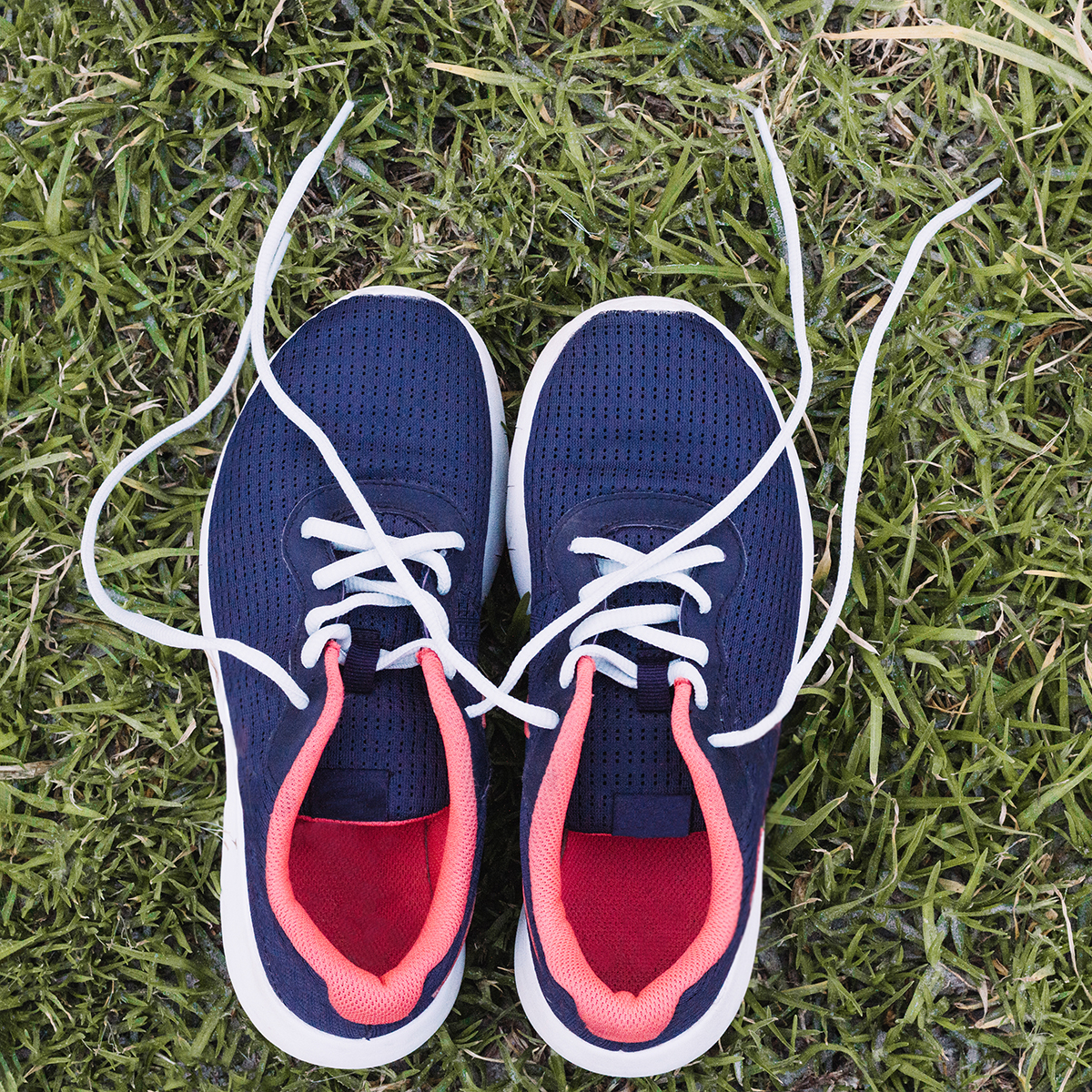
I researched online for a doctor and fortunately was able to obtain an almost immediate appointment. I asked the doctor for a gel shot. He pointed out, however, that the soles of the sneakers I was wearing were much too firm and that I should also get a more suitable sneaker in addition to the gel shot.

The doctor administered the gel. In addition, he told me about a sneaker store. I was able to find the store even though I had not yet mastered the GPS. In the store, a young man, completely decorated in tattoos, reached out to help me. After my explanation quoting the doctor, the very courteous helper brought out some colorful footwear. The sneaker he was holding had a thick, deep sole. The shoes seemed comfortable enough. So I bought them. The new footwear was called HOKA.

I am happy to report that for three and a half years I have not needed a gel shot. During that time, my knee has not spoken to me one little bit. I have now decided that I would wear HOKA sneakers all day, day in and day out, for the rest of my life.

For most of my activities, wearing sneakers was okay as far as appearances were concerned. Soon to become a member of the tenth decade, I felt that my footwear could be less formal, because people are more tolerant of the foibles of the older generation. No matter whatever function I attended, I really was not self-conscious about what I wore on my feet.

That is, until several weeks ago, when the development office at my college invited me to a luncheon in Palm Beach to meet the president of the college. The affair sounded rather fancy and much more formal than my usual activities.

Unfortunately, the only shoes I had in Florida were my HOKA sneakers. Certainly sneakers were not really suitable, but I did have a hankering to attend the event. So, sneakers it was going to be, because, of course, bare feet, the only alternative,  certainly would not do.

The luncheon was at an alumna’s home. Beautifully decorated with flowers, little statues, and elegant pictures, the extensive layout of the house made me additionally self-conscious, because I really had no dressy clothes appropriate for the special invitation. I did have a necklace to wear, however.

Upon entering the home I was escorted to a table containing name tags, each of which were hung on a string.  People were lingering around the table, introducing themselves and chatting. I stood close to the table to hide the sneakers. I noticed, with some relief, that I was the third oldest of the fifteen guests, thus making my sneaker age-related idiosyncrasy perhaps less out of place.

In time, we moved to a room filled with couches and fancy-cushioned chairs. Two men in penguin-like uniforms of white shirts, black pants and black bow ties passed around hors d’oeuvres along with wine. I sat next to a woman who was a graduate of Harvard Law School and who worked for a Wall Street law firm. I gathered that her one client was a wealthy family who kept her busy full time. During the conversation she shared that she came to Palm Beach every weekend in the winter and went to the Hamptons on weekends during the summer. Obviously she had rather deep pockets from which to donate generously to the college. I did not check out her shoes, but I kept my legs and feet as much under my skirt as possible.

After a while, we moved to the porch for lunch. There were three tables with place cards by each setting. I found myself designated to sit by our hostess who was already seated at the table. When I sat, my sneakered feet quickly disappeared under the table. Thank goodness we were not eating from trays off our laps sitting in an open circle causing the HOKAS to be fully exposed.

Three additional graduates sat at the table. Somehow the subject of writing came up. I blurted out that I found writing difficult. I pointed out that, for me, production of the written word was slow and laborious. Our hostess was extremely surprised to hear about my struggles with “putting pen to paper.”  It turned out that my fellow diners all had majored in English or drama. I was the only science major. The other alums were very comfortable, therefore, about delivering the written word.

One woman at the table had written sixteen books. Words certainly were not difficult for her. Her income was probably substantial from all of those royalties. So she was in a position to be financially generous to the college. I bet SHE was not wearing sneakers.

Across from me sat an alum who was the head of a foundation which backed Broadway plays and funded projects in the arts and education. She wore a lovely pink suit with a matching necklace containing hand painted floral beads. Of course she had deep pockets from which to donate to the school. Obviously she would never consider wearing sneakers even if they matched the suit. In addition, she was comfortable with words, for she taught drama writing courses at several colleges.

The third woman was the head of an organization which had produced over one-hundred off-Broadway plays. She was a trustee of our college, making her another generous donor. I am sure she did not wear sneakers to trustees’ meetings. Also, words were definitely her friends, because she was an adjunct professor of drama at our school.

For dessert, our hostess switched places with the president of the college. My sneakers continued to be out of sight under the table as the president arrived to sit next to me. I asked our college head how she managed to handle the tensions of running the institution. Her reply was interesting. Before falling asleep each night, she reviewed the activities of the day in a special way. She focused on her emotions connected with each of the day’s events. That strategy released her psychological stress from the work. She was therefore able to fall asleep easily.

After the luncheon solicitously served by the penguin-outfitted men, we gathered for a group picture which was sent to each of us the following day. You know? In the picture those  HOKAS did not look too out of place. Also, the knee  certainly had been comfortable.

Later in the evening, back at home I read online the opening second semester speech given by the president of another college I am involved with. In the welcoming talk he described the concern for and attention to the school’s students. In the examples of student care, he mentioned my name in connection with  a program I had presented the previous June. At that presentation I had of course worn my HOKA sneakers.

Late into the darkness of the night, as I read his speech, I figured that connections with two college presidents in one day, meeting highly accomplished wealthy women, and dining in elegance were special memories for me and my HOKAs.

Meet Barbara Skinn

Barbara Skinn: Finding Purpose, Poetry, and Belonging at CMAP

When you meet Barbara Skinn at the Center for Modern Aging Princeton, she greets you with a gentle warmth that can make even a cloudy morning brighter. Once a week, Barbara volunteers at the front desk, welcoming everyone who walks through CMAP’s doors with patience and grace.

Behind that serene smile lies a story of perseverance, curiosity, and quiet transformation — the journey of a woman who once called herself shy and who now helps others find connection and confidence through community.

Where did you grow up, and what was your childhood like?

I grew up in Wingham, Ontario, a very small town — only about three thousand people. I was one of eleven children: eight brothers and two sisters. You learn a lot growing up in a big family. You learn how to listen, how to share, and how to find your place in the noise.

My father was one of the people who shaped me the most. He was kind, steady, and respectful — the sort of person everyone trusted. He never needed to raise his voice to be heard. I think that’s where I learned that quiet strength can sometimes speak louder than anything else.

You’ve had an incredible academic and professional journey. How did it all begin?

From early on, I knew I wanted to go to university, but my family couldn’t afford it. That was hard — watching my dream feel so far away. But I also knew I had to try. So I studied harder than ever and earned a scholarship to the University of Western Ontario, where I completed my degree in nursing.

Nursing became my way to understand people — to be close to others when they were at their most vulnerable. Later, I earned my master’s degree at the University of British Columbia and eventually my Ph.D. in nursing at the University of Cincinnati.

Leaving home also opened me to the world. My hometown wasn’t very diverse, so being surrounded by people from different cultures changed how I saw everything. Nursing gave me a way to connect, to listen, to learn. I realized that every patient, every colleague, every stranger holds a story worth hearing.

You mentioned once that you were a shy person. How did that shape your life?

Yes, I was. I was very shy — the kind of person who preferred to stay quiet and listen. Home was where I felt safest, and for a long time, I didn’t think I had much to say. But once I left, I began to discover who I was.

Being shy taught me empathy. It made me observant. I learned that you can understand a lot about people by simply paying attention — their tone, their gestures, what they don’t say. I think that’s part of what made me a better nurse, a better listener, and maybe a better friend, too.

How did you become involved with CMAP, and what does it mean to you now?

CMAP has become like a second home for me. I’ve been part of this community for several years now — volunteering, learning, and connecting.

I joined Wonders of Wordplay, a creative writing workshop. I remember being hesitant at first, unsure if I had anything to say. But as I started to write and share, I realized that poetry wasn’t about perfection — it was about truth. It gave me another way to express myself.

Now, at the front desk, I get to greet people — each person with their own rhythm, their own story. Sometimes all someone needs is a smile or a familiar hello. That connection, no matter how small, can make a day feel different.

What lessons have stayed with you the most?

Integrity. Always that. Staying true to yourself, even when no one is watching.

I’ve learned that boundaries aren’t walls; they’re ways of protecting your peace so you can keep giving to others with an open heart.

If I could talk to my younger self, I’d tell her not to be afraid of her own voice. To speak up. To trust that being gentle doesn’t mean being small.

And what advice would you share with others?

Be curious. Be kind. Be yourself. Don’t rush through life trying to be someone else’s version of you.

And remember — joy isn’t always loud. Sometimes it’s found in small, ordinary moments: a poem shared, a smile at the door, a new friend who feels like home.

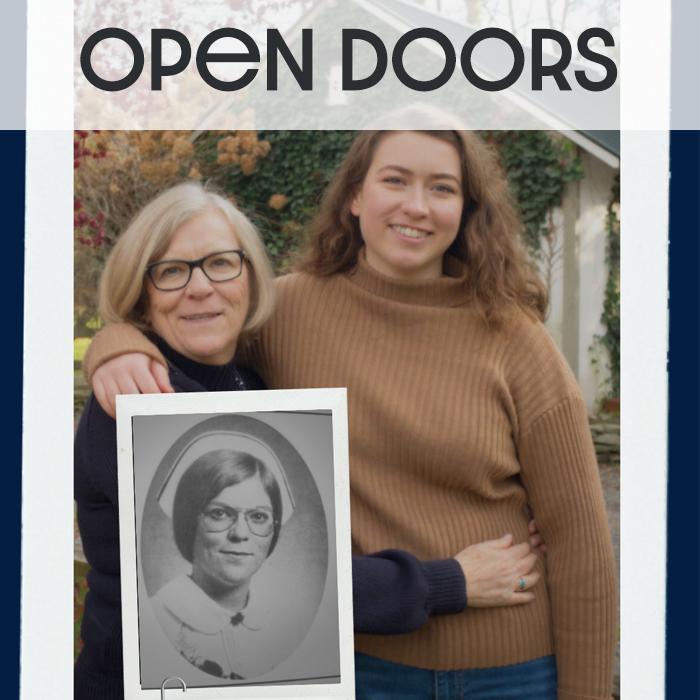
Photo: Barbara with her daughter, sharing a moment of laughter and warmth. A reminder that care, love, and learning never stop. Courtesy of Barbara Skinn.

The Balloon Ride

“After signing up for nine consecutive sessions of ‘Time to Tell Your Story,’ the memoir writing class led by Wendy Humphrey, I can say my life has been changed. I entered the class knowing only how to write for scholarly journals. Now I have a memoir in press that fills me with optimism and pride. Hail to CMAP.”

— Marilyn Aronberg Lavin, Class Member Since 2023


The Balloon Ride

Approaching our twenty-fifth anniversary that summer, my husband Irving and I decided to celebrate with a party that would include a ride in a hot air balloon. I had read in the “Town Topics,” the weekly Princeton newspaper, about a local gentleman who would come to your house with all the necessary paraphernalia and take groups of people up about 500 feet, high enough to get a view of the neighborhood. The balloon would remain tethered to the ground so there was no chance of going higher or flying away. The contract covered twenty or so such elevations. It sounded like a fun idea, and certainly out of the ordinary, which we wished our friends and neighbors to believe was our style.

I called the number in the “Topics” and spoke directly to the pilot. Yes, he was a private company; and yes, he had the proper insurance. Since the price didn’t seem too outrageous, we spoke about dates and times. The party would be toward the end of the summer, near our anniversary (August 31), late afternoon-early evening while it was still light outside. There would be a letter of agreement and payment in advance. All was agreed upon and finalized. The party guest list included all the art history members of the coming semester plus a few outside friends. I planned to serve plenty of cocktails and a light, walk-around supper. I sent out invitations, including information about the planned entertainment.

When the day came, I was somewhat shocked to meet the balloonist. He was quite tall and thin and wore a black silk hat, a stiff white front shirt, black tails, and shorts that were black and white striped. Nevertheless, he was quite business-like and more than pleasant and I soon got over his bizarre appearance. He carried the huge, deflated balloon and his other equipment into the wide lawn of our backyard and started making preparations. When the guests began to arrive, I could tell their reactions were going to be quite varied. Some people took their drinks out the back door to watch the pilot at work. Some were rather blasé, pulling faces to imply they had seen all this before. Others seemed too preoccupied to look in the direction of the large, inflating balloon.

Soon the preparations for liftoff were complete. The first couples to volunteer were very excited and ready to climb into the basket. But at that very moment, by good fortune or bad, it began to rain. The balloonist frantically dismantled the equipment. The first couples ran inside, politely swearing under their breath as they sought their second drink. Other guests were looking disappointed. As it began to rain harder, others looked greatly relieved and started to enjoy the party. The balloonist took off his hat and shoes and joined the animated conversation that filled the house. And so the party changed in character, but was nevertheless a great success.

The result of all this enforced change of plan was that we were left with a paid-up but unfulfilled contract. The balloonist (whose name by now we knew was Alex) very responsibly suggested a way to fulfill what he thought we were owed. He suggested taking Irving and me on a real balloon ride. On the next fine-weather day, we would go up one thousand feet and fly for an hour in whatever direction the wind was blowing. He had a chase car (car and driver) that would follow us all the while and, after the balloon landed, would bring us back to our home. This proposition struck us as more than equitable and, although in my heart I was terrified, I could see that Irving was champing at the bit. So we agreed.

Alex returned with his equipment on the next bright and sunny day. We clambered into the basket wearing hats and sunglasses. We heard the swoosh of the great bag filling and watched the flame dance above the gas lamp as it heated the air. Sandbags were dropped, and up we went. As Irving chatted enthusiastically with Alex about the principles involved, I watched the ground recede as we rose higher and higher. Sounds of earth, traffic, and birds faded away, and the localization of scale slowly shifted into my own receding line of sight. Things on Earth were now becoming miniaturized, and the real center of the universe was in the balloon’s basket. We floated up over the Institute’s grounds and the golf course, then over to Alexander Street, the University campus, and on to Lake Carnegie. Over the water the air drew us up a bit higher, giving us a full view of the west end of Princeton and Route 1, the old Brunswick Pike. Irving and I were continually enthralled by the vista, breathlessly pointing out familiar places seen in a new perspective. It was as though time had stopped and, embraced in silence, the swoosh of the gas flame was the only language left in the world.

After about forty-five minutes, the wind shifted and changed our flight path toward the southeast. In a few moments, Alex said it would be best to land before entering the sphere of the three north-south highways that at this hour would be full of traffic. We were floating along somewhere between Route 1 and Highway 130 when he spied an empty patch of ground alongside a big cornfield. He began to pull on various ropes, edging the balloon in that direction, at the same time he was letting air out of the balloon. As we began to descend, it struck me that I had not researched hitting the ground in a basket without wheels. My panic continued to increase, and I cried out, “What do we do at the landing”? Alex roared back: “BEND YOUR KNEES.” As the earth came up to meet us, I grabbed the edge of the basket and instinctively timed my bend with the exact moment of contact. Irving must have done the same. After a bump and a few little hops, we came to a standstill. Alex looked pleased. Irving and I were surprised and relieved. We began to breathe more easily.

But not for long. In a matter of minutes, a huge man came running out of the farmhouse. He was accompanied by a big, black, barking, dog, and he was carrying a shotgun. He was also yelling and swearing malignantly and telling us to get the hell off his property. Alex suavely jumped out of the balloon basket carrying a bottle of champagne. With kind words and great apologies, he offered the wine to the man who would have none of it and kept yelling and waving his gun in the air. When he took aim, Alex leapt back into the basket, handed me the bottle, and began the re-inflation of the balloon. I looked down as we rose; my last vision was of the man still gesticulating, gun in the air, the dog still barking.

Once we were sufficiently high, Alex looked about for another place to land. The nearest open space turned out to be not too far away but on the other side of Highway 130, which was now filled with cars. The flat spot was the parking lot of a roadside filling station. Our second descent was nowhere near as idyllic as the first, but Alex’s expertise manipulated us into what was a fairly tight spot. At least now, Irving and I had become experts at bending our knees. We made quite an amusing sight: a half-filled balloon, three frazzled souls in a basket, among cars, trucks, and even a tractor. Luckily, the station had a telephone and bar. The chase car had lost us after our second take-off, and it took some time to explain our location to the driver. While waiting, we all had a beer and were glad to have it.

At home that night, in reviewing our day’s adventure, Irving and I decided we had gotten more than our money’s worth. We had seen and done things we could honestly call unique. All in all, it had been a bargain. We also agreed that we probably would not be repeating the exercise any time soon.

Fidel Castro – My Hero

“Our biweekly memoir class helps me reflect on meaningful moments in my life. Each session uncovers a new theme or memory, opening a treasure chest of experiences I might otherwise have stored away and forgotten. Writing with others who share my passion creates a supportive circle: we listen to one another’s stories, give feedback, and cheer each other on. My confidence as a writer has grown. Our instructor, Wendy, offers just the right amount of motivation and guidance. I am writing my memoirs for my family.”

—Class Member since 2024

Fidel Castro—My Hero

I lived in a small three-bedroom apartment with my parents and brother in Roselle, New Jersey. In 1955, at the age of six, I sat with my family in front of an old twelve-inch black-and-white television, watching the six o’clock CBS news. Despite our deep concern for the lives of Black Americans in the segregated South, we could barely make out the fuzzy images of four small Black children navigating through a frenzied mob of white citizens trying to block their entry into the local public school. I sat frozen, imagining the possibility of an angry white crowd shouting at me. I was so terrified I couldn’t sleep for weeks.

The schools in the South operated under “separate but equal” laws. Yet it was widely known that schools in Black neighborhoods lacked the resources needed to improve reading and math skills. Through threats of violence, white aggressors enforced racial segregation within school districts. Black parents and their children were prevented from attending mainstream Southern elementary schools.

For the next five years, my family watched numerous racist events recorded and televised every evening on the six o’clock news. I will never forget the coverage of the Little Rock Nine, a group of teenagers who attempted to enroll in the public high school in Little Rock, Arkansas. They walked silently, single file, with military police at their sides. The police guarded them against a crowd of hundreds of angry white citizens. The crowd screamed that Black people were animals and should not be permitted in school with white children.

I watched disturbing scenes of nonviolent resistance—both men and women facing violent dog attacks and powerful water hoses. I realized no one would protect us from these assaults. I felt a mix of anger and fear. Beatings increased in frequency and severity. The violence had to stop somehow. Still, I understood that the path to equality would be a long one. Martin Luther King Jr., the most recognized leader of the Civil Rights Movement, was deeply influenced by the principles of Mahatma Gandhi’s nonviolent resistance.

In September 1960, Fidel Castro, recognized as an ally against colonialism and U.S. racism, stepped up to the United Nations speaker’s platform and delivered a four-hour, passionate speech that resonated worldwide in support of freedom fighters in the United States and Africa. This address set a record for the longest speech in the history of the General Assembly. Castro highlighted blatant racism and inequality in the United States, becoming a voice for the oppressed and marginalized—especially in Africa, where colonial independence movements were gaining momentum. My soul was shouting: Thank God for Castro. He championed the African American struggle for equality on the global stage.

In response, the U.S. government restricted Castro’s movements in Manhattan. When his hotel refused to display the Cuban flag, he relocated his entire delegation to the Hotel Theresa, a modest three-star hotel in Harlem. The Black community felt pride in being chosen by a world leader for refuge. He received warm hospitality at Harlem’s top establishments. My father and thousands of Black Americans marched to the Hotel Theresa to welcome the Cuban delegation. As a result, other world leaders visited Harlem to meet and discuss sensitive political issues with Castro there. Racism and colonialism remained the primary focus.

Castro met in Harlem with Malcolm X, the African American religious leader and freedom fighter; Allen Ginsberg, the American poet and activist; Nikita Khrushchev, the Soviet premier; Gamal Abdel Nasser, the president of Egypt; and Jawaharlal Nehru, the prime minister of India. Days later, the U.S. government imposed a trade embargo on Cuba. Following the humiliation of the Bay of Pigs, the blockade has remained in place for more than fifty years.

I have always admired and respected Castro for addressing the civil rights struggle in America. I knew that one day I would travel to Cuba to thank Castro and the Cuban people for their vital support. On January 25, 2025, I traveled to Cuba. Even though Castro was no longer its leader, I still hold deep respect for the country’s values. I imagined that the Cuban people would remember the UN speech and the world-famous meetings at the Hotel Theresa. Our tour guide, Jesús, proudly recounted Castro’s visit to New York City in 1960. Many younger tourists were unaware of his courageous stance. Later, we visited the Fidel Castro National Museum, which features numerous exhibits showcasing his leadership during historic conflicts achieved through Cuban heroism.

While the beauty of Spanish colonial architecture is captivating, I was struck by the poverty I saw in Havana. Many architectural historians recognize Cuban architecture, often called Spanish eclectic, as one of the most stunning styles in the world. This style blends influences from Moorish, Byzantine, Roman, Renaissance, and modern design. The streets were lined with beautiful homes decorated with marble columns and intricate details, though their interiors were noticeably in disrepair. The government covers all monthly rent and food costs, so I saw no one hungry or homeless.

As expected, there were issues with water distribution and electricity. I was most disturbed by the clutter in the streets, which included plastic bags filled with trash, heaps of used paper, and cardboard boxes. According to our guide, the country has limited funds for infrastructure maintenance and waste management due to the near collapse of its economy. Garbage is collected only as needed. Designated as a terrorist state by the United States, any country that does business with Cuba is quickly labeled a supporter of terrorism.

We visited several world-class art museums with works from the fifteenth to the twenty-first centuries. We also explored small galleries featuring original paintings and sculptures for purchase. While in Havana, we enjoyed jazz performances during the Annual International Jazz Festival, which featured musicians from North America, Europe, Australia, and Asia. Formal concerts took place at the National Theatre in the afternoon, while modern jazz jams occurred late into the night at the National Arts Factory. I loved the rhythm of the African drums, which amplified the lively rumbas and romantic Cuban love songs. Cuban art and music continue to be celebrated worldwide.

Life is tough in Cuba. The country supported Namibia and Angola in their fight against apartheid in the 1970s, losing twenty thousand soldiers in those conflicts. Yet these African countries no longer support Cuba due to the embargo and political tensions. Additionally, Cuba has lost financial backing from its main supporters: Russia, Mexico, and Argentina. Venezuela has reduced its oil aid. Still, the Cuban people take great pride in their achievements despite hardships. The people of Cuba have adequate shelter, food, and excellent healthcare. The government provides housing and monthly food rations to every citizen.

Although I stayed at a four-star hotel, there were restrictions on food, drinks, and linen services. We also faced inconsistent internet service and electronic room keys that required daily reprogramming. These issues are not unique to Cuba; they are common in most developing countries. Poverty creates lifestyle challenges worldwide, affecting family life, nutrition, and resources.

Nonetheless, for me, Castro was a brave and exceptional world leader. I enjoyed my travels and learned much about Cuban history and society.

Meet Stephen Albert

Beyond Careers and Titles: Stephen Albert on What Really Matters

By Brandon Urias

Across decades that carried him from Brooklyn to Harvard, from Wall Street to retirement, Stephen Albert has held onto a simple but powerful conviction: life’s worth is found in the people we walk alongside. Brotherhood, community, and respect are not footnotes in his journey; they are the throughline.


  1. Where did you grow up?

I grew up in Brooklyn, New York, where I spent most of my childhood. As an only child, I relied heavily on the guidance of my parents, who supported me in both personal and professional ways. I was also close to my cousin, who played an important role in my early life.

I left Brooklyn to attend Union College in upstate New York, where I studied Mechanical Engineering. College was transformative, not just academically, but socially. I was deeply involved in my fraternity, Kappa Nu, where I educated new members about its values and eventually became president. That leadership role helped me grow into someone who could represent the morale and spirit of an entire group. The bonds I formed with my fraternity brothers, the laughter, and the shared challenges remain some of my most cherished memories.

After graduating, I expanded my horizons by pursuing an MBA at Harvard Business School. Transitioning from engineering to business was a leap, but I knew it would open new career paths and allow me to find work that I could truly enjoy for the long term.


  1. Did you know for certain what you wanted to do with your life? Were there any setbacks you faced throughout your career?

My parents, both successful attorneys, initially encouraged me toward pre-law. But I followed my own path into engineering. My first job was at a technical firm in research planning. Though the role was clear, it didn’t align with my expectations. After a few years, I pivoted to the investment sector on Wall Street—where my MBA became invaluable.

Working in Manhattan’s fast-paced investment world was exhilarating, though not without setbacks. When my firm was taken over by another brokerage, it was a difficult moment, but also an opportunity to regroup and find a stronger place. Moving into a larger firm on Wall Street taught me that the industry was full of wins and losses, and that resilience was essential.


  1. What accomplishments are you most proud of, personally or professionally?

Above all, I am proud of the respect I earned from others, and the respect I gave in return. From my fraternity brothers to my colleagues, mutual respect has been the foundation of my relationships.

Professionally, being named to the All-American Investment Team was a highlight I never anticipated. It validated not only my skills but also the passion I brought to my work. Later, moving from Wall Street to Philadelphia firms was a risk, but one I am proud to have taken, even with the challenges it entailed.


  1. How has your family helped you become who you are today? What do you hope your children and grandchildren remember you for?

My parents were instrumental in shaping my life, offering unconditional love and a foundation that carried me through uncertainty. I was also blessed to be married to my wife for 43 years, and together we raised children to whom I passed down that same foundation.

I hope my children and grandchildren remember me first as someone they respected, and then as someone they loved unconditionally. Respect, in my view, is lasting, it doesn’t waver as much as love might over time. I also hope they see me as a figure of gratitude, someone they can look up to and appreciate.


  1. How do you feel about CMAP and the community it fosters?

CMAP has given me the support I needed after retirement. Friends encouraged me to join, and I quickly saw its value. The seminars, the accessibility, and the opportunities to keep learning gave me a renewed sense of purpose. It has helped me stay forward-thinking, open-minded, and engaged.

At the end of the day, we’re not here for a long time, we’re here for a good time. And CMAP has reminded me how much we can still learn and enjoy, no matter our stage in life.


  1. What life lessons have you learned? If you could give advice to your past self, what would it be?

Persistence has been the greatest lesson. Getting back on my feet after setbacks carried me further than I could have imagined. I learned to view disappointments as opportunities rather than defeats, and to recognize the blessings I already had.

If I could speak to my younger self, I would say: face challenges with courage, never let fear dictate your choices, and trust in the foundation you’ve been given.

BE THE FUEL

MAKE A DONATION TODAY

Your generosity is truly the fuel that empowers CMAP to change lives and to help older adults discover their “why!”

We invite you to donate to the 2023–2024 Annual Giving Campaign by June 30 to help us reach our goal.