Important Update: Temporary Closure of the Nancy S. Klath Center Due to water damage, the Nancy S. Klath Center (101 Poor Farm Road) is temporarily closed for construction. For your safety, please do not visit the building. We will share updates as soon as it is ready to reopen.

Dementia: The Numbers Are Climbing but the Risk Is Not

I’ve said it before, and I’ll keep saying it: dementia rates are dropping. There are more cases because there are more older people as a percentage of the population, and age is the biggest risk factor.  But your risk is lower than the risk for your parents’ generation. Most of that risk doesn’t emerge until after age 85. And people are being diagnosed at later ages. That’s according to new research reported by Paula Span in the New York Times and published in JAMA

Want to hold dementia at bay? Check your age bias. Study after study shows that attitudes toward aging affect how our minds and bodies function. People with more positive feelings about aging—fact- rather than fear-based, that is—walk faster, heal quicker, live longer and are less likely to develop dementia—even if they carry the gene that predisposes them to the disease

Much of the research has been conducted by Yale’s Becca Levy, PhD, whose latest finding is remarkable: positive age beliefs help prevent cognitive decline. Not only that, they can reverse it and improve memory. And not only that: participants with more accurate, positive beliefs about aging were also significantly less likely to experience cognitive impairment at all.

Dementia is a wretched disease. We don’t understand what causes it, and we’re nowhere near a cure. We do know that anxiety about dementia is itself a health risk. There’s a lot about growing older that we can’t control. We are in charge of what we know and how we feel about it. 

What Do You Say to Someone with Dementia?

I got a call from my neighbor Marion.

“I need to talk to you. My friend Jean was just diagnosed with Alzheimer’s. I want to visit her, but I don’t know what to say to her. What do you say to someone with Alzheimer’s?”

The stigma of Alzheimer’s disease (AD) is so strong, it can lead us to imagine that, once diagnosed, a person changes almost overnight. We can’t help wondering, what will she be like now?

I told Marion, “Jean will still be Jean. If you just keep that in mind, you’ll be treating her in ways that show that you still value her friendship as you always did. That’s what she needs most right now.”

“But,” Marion asked, “should I say, ‘I hear you have Alzheimer’s?’”

“I’d give her a chance to bring it up first. If she doesn’t, try saying, ‘I heard about your diagnosis. I just want you to know, if you want to talk about it, I’m glad to listen. If not, that’s OK too.’”

One man, himself recently diagnosed, said, ”People are not sure how to respond when the topic comes up. Most of them change the subject or attribute my symptoms to aging and say, ‘I forget things too.’”

Such discomfort is very common and understandable. But tragically, it leads to the person diagnosed being ignored. And it dismisses their very real and frightening trouble remembering.

Family members and friends need to know that people diagnosed with AD or any other dementia are sensitive. Their feelings can be hurt, and they are often lonely. Jean needs her friends to be with her, to show her she is still important to them.

How we engage people with dementia reveals–often unwittingly—a lot about what we think of them. Are we distracted, because we don’t think they have anything interesting to say, and we’re essentially pretending to listen? Or do we listen actively, letting them know we want to understand, because what they say is important to us?

As the disease progresses, people living with dementia need the patience and good listening skills of others because AD may make it increasingly hard for them to communicate. 

But the people around them face dilemmas they have no preparation for. Many of their natural ways of responding and interacting get them into trouble.

Here are some tips to help you avoid unintended outcomes: 

Don’t say, “Do you remember…?” They may not be able to. If you want to reminisce about a time you were together, say, “I remember when we went fishing in Maine, and you were the only one who caught a fish!” In that way you may spark a memory without putting them on the spot.

Make eye contact and listen with all you have. As one woman with AD told her caregivers, “Listen with the ears of your heart.” 

Don’t interrupt, because if you do, the person may not be able to pick up the thread of their thoughts again.

Don’t exclude the person when you’re having conversations with others. This can happen even though you’re not aware of it. Be proactive about inclusion!

Be patient. Dementia can make it hard for people to find the right word. You can supply the word if you know it, and they don’t take offense. You might say, “Shall I guess?” One woman was so comfortable with her friends that when she was stuck for a word, she could say, “What’s that big water thing?” And someone would guess, “The ocean?” People living with AD sometimes invent new words for common objects or rely on gestures instead of speech. They may take longer to pull their thoughts together. Give them time and quiet; don’t distract them.

Don’t argue. There’s a maxim in the Alzheimer’s community, “If you argue with someone with Alzheimer’s, you get what you deserve.” That is, a major meltdown. But more important, by arguing you are eroding their sense of security and their self-esteem—both of which are fragile in view of their many losses. Don’t criticize or correct them, even when you’re obviously right. Just let it go.

Don’t condescend to them by using elderspeak—“Come dearie, let’s get dressed”—or baby-talk. They will rightly be offended.

Don’t ask open-ended questions. “What would you like for dinner?” is unanswerable for someone who can no longer remember which foods one eats at dinner or what they’re called. You can ask instead, “Would you like chicken or spaghetti for dinner?” You’re still giving them a choice, but it’s a choice they can make. When even two choices become too much, say, “I know you love chicken. Shall we have chicken for dinner?”

Be honest if you don’t understand. Say, “I’m having trouble understanding. Can you help me?” That tells the person you care about what they are trying to say and want to work with them.

Following these guidelines will help create a safe and supportive environment where the person with dementia is valued, enabled and included. In such surroundings, they may surprise you with their ability to understand and communicate. 

Alan Dienstag, PhD, is a psychologist who has worked with people with AD in support groups. He continued to work with one woman long after her language was too impaired to be in a group. But eventually it became harder to connect with her and she seemed to have lost all language. Their last visit was just before he was set to go on vacation to the beach.

He knew she loved the seaside too, so he said to her, “Ann, I’m going to the beach. I’m going to be away for a while.” Her face lit up. 

“What do you love about the beach?” he asked. 

She was quiet for a long time, and he lost hope that she could answer.

But then she turned to him and said, “There’s a certain kind of music there.”

Bathing Demystified: The Person Comes First

I didn’t know enough.

I knew that people with Alzheimer’s and other dementias are sensitive to temperature, so I heated the bathroom before bringing my mother to the shower. And I had my mother test the water to be sure it was neither too hot nor too cold. I used baby shampoo on her hair so that any suds that got on her face wouldn’t sting her eyes. And I tried to preserve a bit of control for her by giving her a washcloth to do as much of the washing as she could by herself.

In spite of all that, my mother was cranky throughout the entire process.

I asked her if the water was too hot. “No. I’d rather put up with it like this than have you change it to too cold.” Her tone made it clear she felt put upon.

Sarcasm was her defense if I tried to tell her what to do. After she had washed her legs over and over, I suggested she switch to washing her arms. “Oh well! I don’t care if my legs go dirty,” she said, glaring at me. “I guess people don’t wash the way they used to!”

Even after she was thoroughly dried and dressed, she claimed she was ”freezing cold” and “still soaking wet.”

Her interpretation of what was happening was the opposite of mine. I thought I was doing something for her; she thought I was doing something to her.

Still, I felt bathing her was a job that needed to be done, so I focused on the bath and ignored the sarcasm.

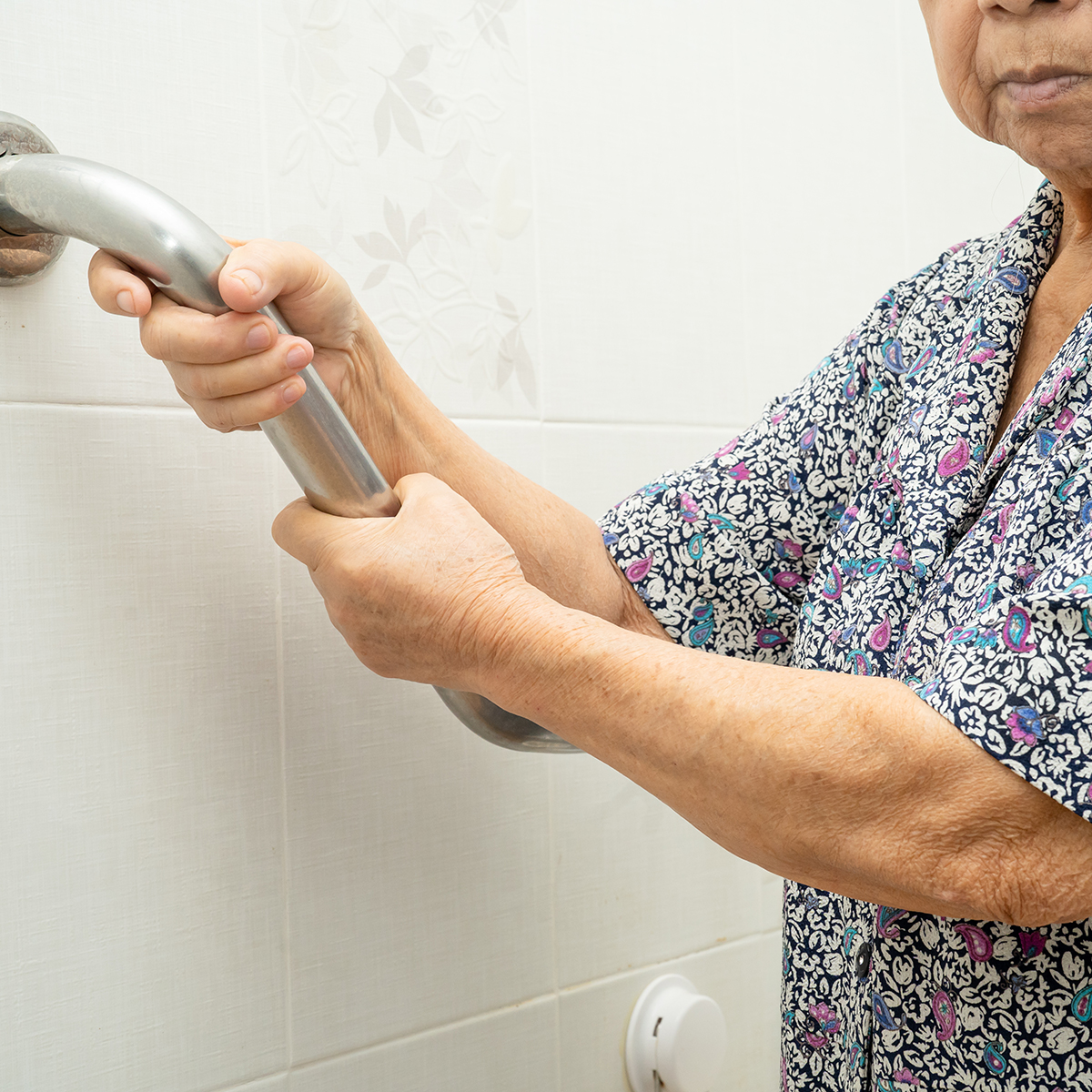
In the Alzheimer’s caregiver groups I now facilitate, resistance to bathing comes up frequently. One man reported his wife held on to the grab bar outside the shower and refused to let go and get in. A woman said her husband pushed her away every time she mentioned getting a bath. And at a recent meeting, Sam, clearly at his wits’ end, pleaded, “Please help me. How can I stop my wife from screaming when I give her a shower?”

For a long time, we had few answers other than things I had tried with my mother with limited success. I thought of bathing resistance as one of the unsolved mysteries of Alzheimer’s.

Then, haunted by the desperation in Sam’s voice when he begged for some advice on bathing his wife, I ordered a copy of Bathing Without a Battle: Person-Directed Care of Individuals with Dementia by Ann Louise Barrick, Joanne Rader, et al, (2008). It is written primarily for professional caregivers, but most of it applies equally to people being cared for at home.

Reading the book opened my eyes to how much we could change the experience of bathing for people living with dementia if only we more fully respected them, if only we believed their feelings, reasons and right to choose were just as important as ours.

And if only we were more flexible about ways to get clean.

The philosophy expressed in the book is that the person is more important than the task.

The authors call this person-directed care. It is based on the expressed preferences of the ones being cared for, which gives them more control and allows them to feel less at the mercy of others. That is, it’s based on respect.

It’s important to understand why in caregiving so many problems are associated with personal care, like bathing, dressing and undressing, and shaving. They all entail entering the personal space of the care recipient. That can feel like an invasion to anyone who doesn’t expect it, hasn’t given permission or doesn’t want it.

In cases of dementia, people don’t always realize they need help, making it more likely they will strike out verbally or even physically against what they perceive as an assault.

We think nothing of calmly declaring, “It’s time for your bath.” Yet a study of 33 people with dementia found that 92 percent of them immediately became agitated or resistive on hearing that—like the man who pushed his wife away when she even mentioned the word.

Bathing clearly represents a threat to these people—or, more likely, multiple threats, some of which easily escape our notice.

There’s the threat of being deprived of control; the threat of being naked, vulnerable and exposed; the shame of not being able to do these things for themselves; and often the anticipation of pain and the fear of falling.

In addition, there are the more openly expressed objections to bathing, such as room temperature or water that is too hot or too cold.

To the caregiver reading this, the idea of bathing your loved one may now seem more daunting than ever. How do you overcome so many hindrances?

Barrick and Rader have many good suggestions and a fresh perspective on ways to get clean. I’ll discuss them in my next blog; but the real game changer in my mind is the authors’ respectful approach.

They say the battle starts with the invitation to the bath, that is, how you initiate the conversation about the need for a bath. And it does need to be a conversation. It makes a difference whether you plan with the person when and how he wants to bathe, or you dictate, “It’s time for your bath.”

When you show respect for and honor your loved one’s preferences, you demonstrate that you care about how they feel. That goes a long way toward changing the person’s experience of the bath.

I know it would have made a world of difference in the way my mother and I lived with her dementia.

She preferred to shower in the morning. She said showering in the evening made her feel like a child.

But for what seemed like a good reason, I overruled her. She suffered from painful edema in her legs and ankles if she was upright for more than ten minutes. If I showered her in the morning, her legs would swell so much by the time I got to helping her dress that we couldn’t put on her compression stockings. An evening shower worked because she was about to get into bed for the night.

I explained that to her a number of times, but she couldn’t put it all together. I thought I had no choice. I never considered alternative ways of bathing. I just quietly proceeded while not responding to her complaints.

No wonder she found so much to complain about during the shower! She was looking for some evidence that I cared how she felt.

People who saw me with my mother often commented on my patience. And yes, one meaning of patience is enduring provocation with calmness.

Not reacting is better than reacting with anger, but what people with dementia need is connection. Dementia often impairs their perception of how much their caregiver is doing for them. My mother didn’t see how much I did; she needed other evidence that I cared.

She would have seen it if I had honored her preference for a morning shower and had sat and read to her afterwards while she lay in bed and let the swelling subside.

At the distance of many years, it’s easy to imagine that I could have done much more—easy because it’s hard to recall how exhausting it all was at the time.

At the very least, I could have sat down and invited her to tell me how she wanted to bathe and tried to work with her instead of just explaining why it had to be an evening shower. And when she complained, I could have said, “I’m so sorry we have to do it this way,” instead of simply not reacting.

If I had done those things, I would have moved beyond patience to compassion.

BE THE FUEL

MAKE A DONATION TODAY

Your generosity is truly the fuel that empowers CMAP to change lives and to help older adults discover their “why!”

We invite you to donate to the 2023–2024 Annual Giving Campaign by June 30 to help us reach our goal.