Important Update: Temporary Closure of the Nancy S. Klath Center
Due to water damage, the Nancy S. Klath Center at 101 Poor Farm Road is temporarily closed and under construction. For your safety, please do not visit the building. We will notify the community when it is ready to reopen.

CMAP remains fully operational during this time. Staff are working remotely and from the Suzanne Patterson Building at 45 Stockton Street. Programs will continue as planned at the Suzanne Patterson Building and in virtual formats. We appreciate your understanding as we work to minimize disruption to our community.

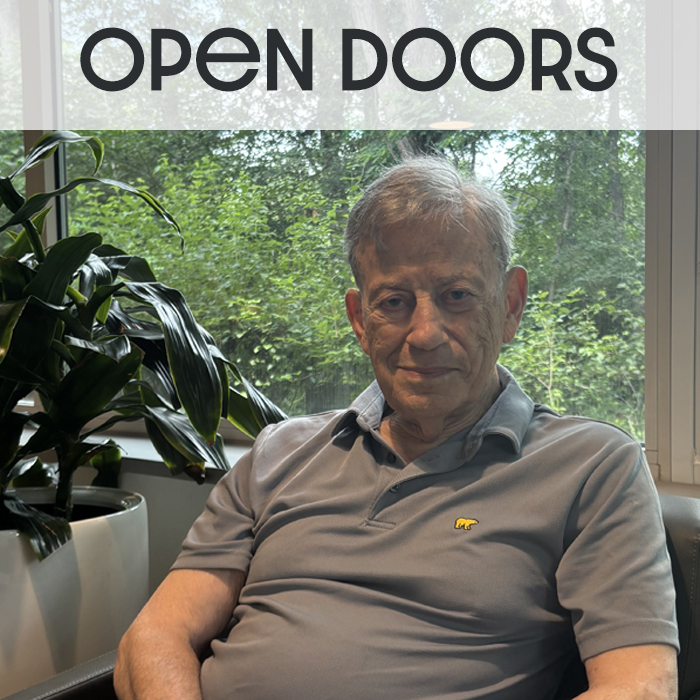
Meet Nancy Becker

Nancy Becker: Building Community, Changing Systems, and Leading with Heart
How a young woman from the Bronx became New Jersey’s trailblazing advocate for ethics, women’s leadership, and community impact

Nancy Becker has spent decades shaping New Jersey’s civic and political life with quiet determination and unwavering ethics. Today, she brings that same steady vision to her role on CMAP’s board. We sat down with Nancy for an Open Doors conversation about the moments that defined her, the values she returns to, and the legacy she hopes to leave behind.

Where did you grow up, and what shaped those early years?
I grew up in New York City and attended the Bronx High School of Science, one of the most respected public high schools in the country. My father passed away when I was young, which left a significant emotional and practical gap in my life. But I also remember him as someone who never restricted us. He believed deeply that I could do anything I wanted, and that sense of permission stayed with me.

I was also very close to my younger sister, who went on to build a long and fulfilling career in physical therapy. After high school, I attended the University of Michigan, where I majored in English literature, and later earned a master’s degree in English language and literature from Manhattan College.

Were there role models who influenced your journey?
My father’s belief in me was foundational. Eleanor Roosevelt was another important influence, one of the few visible female leaders at the time. Her courage and advocacy for women helped me see the world differently. But in many ways, because there were so few female leaders to look toward, I had to teach myself how to become the kind of woman I hoped to meet: principled, effective, and unafraid to lead.

What setbacks shaped who you are today?
After completing my master’s degree, I moved to Princeton and hoped to pursue a PhD in English literature at Rutgers. In my interview, I explained that I could work only part-time while caring for my young children, and I wasn’t accepted. That rejection left me unsure of what to do next. I didn’t know Princeton well, and I didn’t yet have a community.

So I looked outward and began volunteering with a nonprofit, Common Cause. Several years later, I became its executive director. That role reoriented my path—it introduced me to policy, advocacy, and community impact.

Eventually, I left to start my own lobbying firm, becoming the first woman in New Jersey to found and run her own lobbying business. It wasn’t easy at first, but the work grew, gained attention, and ultimately sustained me for thirty years.

What personal accomplishments matter most to you?
I was married to my husband for forty-eight years, and raising our two children is one of my greatest joys. At a time when few women held corporate or political roles, he encouraged me to pursue them—and he meant it.

I’m proud of the inspiration my career gave my children and grandchildren. I’m also proud that my firm employed mostly women, offering opportunities that were still rare when I started.

What core values guided your work?
Ethics. Always ethics.

Whether in nonprofit leadership or running my own firm, I needed clients whose values aligned with mine. The moral culture of my businesses mattered just as much as the professional work we produced. Ethics is not just a professional standard; it is a way of living.

What do you hope your children and grandchildren remember about you?
I hope they remember me as someone accomplished but also loving, present, and supportive. I’ve built close relationships with my grandchildren individually, not just through their parents, and I treasure that. I want them to know that they can always come to me. Trust has always been essential to me, and I hope they carry that forward.

How has serving on CMAP’s Executive Committee shaped your view of aging and community?
I’ve served on the Executive Committee for two years, leading the Strategic Planning Taskforce. This work is essential—not just planning programs but imagining the future of aging in Princeton.

CMAP’s growth since the pandemic has been remarkable. Hybrid programming has expanded access and reduced isolation for people who might otherwise be alone. That, to me, is transformative.

I have also been proud of CMAP’s commitment to diversity. Through strategic planning, we’ve worked to build more inclusive participation, including expanded programming for Latinx and Asian community members and more outreach across economic and cultural backgrounds. Understanding the challenges of aging—from dementia to social isolation—helps us shape education and engagement for the whole community.

What life lessons have stayed with you?
Patience—not the passive kind, but the kind that trusts the long arc of effort.

I didn’t expect to achieve everything quickly. I believed that if I worked with integrity and surrounded myself with people who shared those values, things would unfold as they should.

Mentorship has also been central to my life. Because I grew up without much mentorship myself, I recognized how crucial it was. I created a yearlong mentorship program during Governor Christine Whitman’s administration to train women for leadership roles in government. Many of those women went on to become judges and public officials.

Later, at Rutgers’ Eagleton Institute of Politics, I created a lobbying-focused mentorship program specifically for women, including a handbook I wrote to teach effective advocacy.

If you could give advice to your younger self, what would it be?
Part of me wonders what would have happened if I had gone to law school. But the truth is, my life moved quickly after college—marriage, young children, shifting opportunities—and everything eventually came together in a way that felt right.

So the advice I’d give myself is this:
Trust the process. Keep your ethics. Take the long view.
And be patient. The life you’re building is worth the wait.
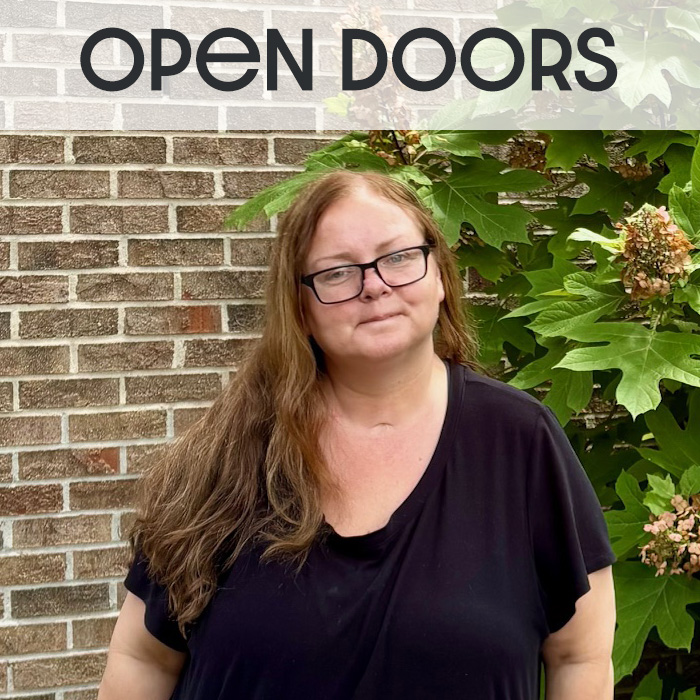
Meet Lori Efaw

Meet Barbara Skinn

Barbara Skinn: Finding Purpose, Poetry, and Belonging at CMAP

When you meet Barbara Skinn at the Center for Modern Aging Princeton, she greets you with a gentle warmth that can make even a cloudy morning brighter. Once a week, Barbara volunteers at the front desk, welcoming everyone who walks through CMAP’s doors with patience and grace.

Behind that serene smile lies a story of perseverance, curiosity, and quiet transformation — the journey of a woman who once called herself shy and who now helps others find connection and confidence through community.

Where did you grow up, and what was your childhood like?

I grew up in Wingham, Ontario, a very small town — only about three thousand people. I was one of eleven children: eight brothers and two sisters. You learn a lot growing up in a big family. You learn how to listen, how to share, and how to find your place in the noise.

My father was one of the people who shaped me the most. He was kind, steady, and respectful — the sort of person everyone trusted. He never needed to raise his voice to be heard. I think that’s where I learned that quiet strength can sometimes speak louder than anything else.

You’ve had an incredible academic and professional journey. How did it all begin?

From early on, I knew I wanted to go to university, but my family couldn’t afford it. That was hard — watching my dream feel so far away. But I also knew I had to try. So I studied harder than ever and earned a scholarship to the University of Western Ontario, where I completed my degree in nursing.

Nursing became my way to understand people — to be close to others when they were at their most vulnerable. Later, I earned my master’s degree at the University of British Columbia and eventually my Ph.D. in nursing at the University of Cincinnati.

Leaving home also opened me to the world. My hometown wasn’t very diverse, so being surrounded by people from different cultures changed how I saw everything. Nursing gave me a way to connect, to listen, to learn. I realized that every patient, every colleague, every stranger holds a story worth hearing.

You mentioned once that you were a shy person. How did that shape your life?

Yes, I was. I was very shy — the kind of person who preferred to stay quiet and listen. Home was where I felt safest, and for a long time, I didn’t think I had much to say. But once I left, I began to discover who I was.

Being shy taught me empathy. It made me observant. I learned that you can understand a lot about people by simply paying attention — their tone, their gestures, what they don’t say. I think that’s part of what made me a better nurse, a better listener, and maybe a better friend, too.

How did you become involved with CMAP, and what does it mean to you now?

CMAP has become like a second home for me. I’ve been part of this community for several years now — volunteering, learning, and connecting.

I joined Wonders of Wordplay, a creative writing workshop. I remember being hesitant at first, unsure if I had anything to say. But as I started to write and share, I realized that poetry wasn’t about perfection — it was about truth. It gave me another way to express myself.

Now, at the front desk, I get to greet people — each person with their own rhythm, their own story. Sometimes all someone needs is a smile or a familiar hello. That connection, no matter how small, can make a day feel different.

What lessons have stayed with you the most?

Integrity. Always that. Staying true to yourself, even when no one is watching.

I’ve learned that boundaries aren’t walls; they’re ways of protecting your peace so you can keep giving to others with an open heart.

If I could talk to my younger self, I’d tell her not to be afraid of her own voice. To speak up. To trust that being gentle doesn’t mean being small.

And what advice would you share with others?

Be curious. Be kind. Be yourself. Don’t rush through life trying to be someone else’s version of you.

And remember — joy isn’t always loud. Sometimes it’s found in small, ordinary moments: a poem shared, a smile at the door, a new friend who feels like home.

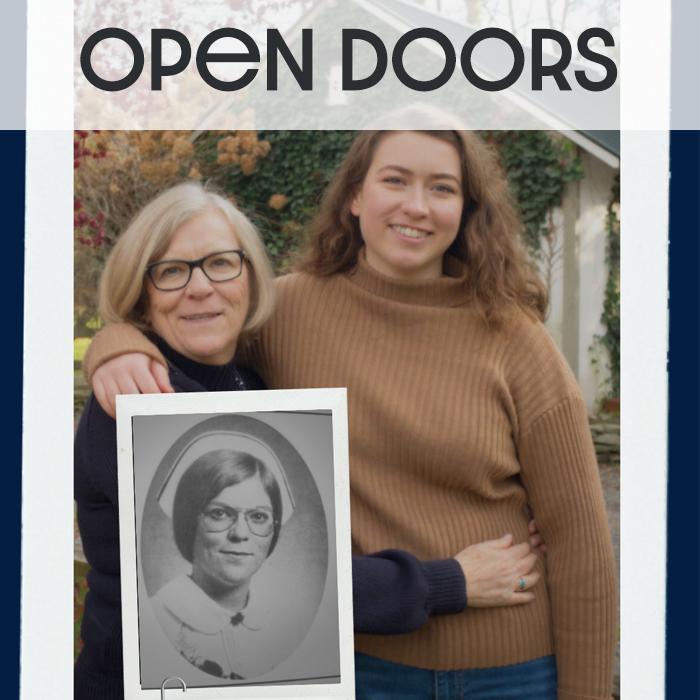
Photo: Barbara with her daughter, sharing a moment of laughter and warmth. A reminder that care, love, and learning never stop. Courtesy of Barbara Skinn.

Meet Stephen Albert

Beyond Careers and Titles: Stephen Albert on What Really Matters

By Brandon Urias

Across decades that carried him from Brooklyn to Harvard, from Wall Street to retirement, Stephen Albert has held onto a simple but powerful conviction: life’s worth is found in the people we walk alongside. Brotherhood, community, and respect are not footnotes in his journey; they are the throughline.


  1. Where did you grow up?

I grew up in Brooklyn, New York, where I spent most of my childhood. As an only child, I relied heavily on the guidance of my parents, who supported me in both personal and professional ways. I was also close to my cousin, who played an important role in my early life.

I left Brooklyn to attend Union College in upstate New York, where I studied Mechanical Engineering. College was transformative, not just academically, but socially. I was deeply involved in my fraternity, Kappa Nu, where I educated new members about its values and eventually became president. That leadership role helped me grow into someone who could represent the morale and spirit of an entire group. The bonds I formed with my fraternity brothers, the laughter, and the shared challenges remain some of my most cherished memories.

After graduating, I expanded my horizons by pursuing an MBA at Harvard Business School. Transitioning from engineering to business was a leap, but I knew it would open new career paths and allow me to find work that I could truly enjoy for the long term.


  1. Did you know for certain what you wanted to do with your life? Were there any setbacks you faced throughout your career?

My parents, both successful attorneys, initially encouraged me toward pre-law. But I followed my own path into engineering. My first job was at a technical firm in research planning. Though the role was clear, it didn’t align with my expectations. After a few years, I pivoted to the investment sector on Wall Street—where my MBA became invaluable.

Working in Manhattan’s fast-paced investment world was exhilarating, though not without setbacks. When my firm was taken over by another brokerage, it was a difficult moment, but also an opportunity to regroup and find a stronger place. Moving into a larger firm on Wall Street taught me that the industry was full of wins and losses, and that resilience was essential.


  1. What accomplishments are you most proud of, personally or professionally?

Above all, I am proud of the respect I earned from others, and the respect I gave in return. From my fraternity brothers to my colleagues, mutual respect has been the foundation of my relationships.

Professionally, being named to the All-American Investment Team was a highlight I never anticipated. It validated not only my skills but also the passion I brought to my work. Later, moving from Wall Street to Philadelphia firms was a risk, but one I am proud to have taken, even with the challenges it entailed.


  1. How has your family helped you become who you are today? What do you hope your children and grandchildren remember you for?

My parents were instrumental in shaping my life, offering unconditional love and a foundation that carried me through uncertainty. I was also blessed to be married to my wife for 43 years, and together we raised children to whom I passed down that same foundation.

I hope my children and grandchildren remember me first as someone they respected, and then as someone they loved unconditionally. Respect, in my view, is lasting, it doesn’t waver as much as love might over time. I also hope they see me as a figure of gratitude, someone they can look up to and appreciate.


  1. How do you feel about CMAP and the community it fosters?

CMAP has given me the support I needed after retirement. Friends encouraged me to join, and I quickly saw its value. The seminars, the accessibility, and the opportunities to keep learning gave me a renewed sense of purpose. It has helped me stay forward-thinking, open-minded, and engaged.

At the end of the day, we’re not here for a long time, we’re here for a good time. And CMAP has reminded me how much we can still learn and enjoy, no matter our stage in life.


  1. What life lessons have you learned? If you could give advice to your past self, what would it be?

Persistence has been the greatest lesson. Getting back on my feet after setbacks carried me further than I could have imagined. I learned to view disappointments as opportunities rather than defeats, and to recognize the blessings I already had.

If I could speak to my younger self, I would say: face challenges with courage, never let fear dictate your choices, and trust in the foundation you’ve been given.

Meet Evelyn James

BE THE FUEL

MAKE A DONATION TODAY

Your generosity is truly the fuel that empowers CMAP to change lives and to help older adults discover their “why!”

We invite you to donate to the 2023–2024 Annual Giving Campaign by June 30 to help us reach our goal.