
Important Update: Temporary Closure of the Nancy S. Klath Center Due to water damage, the Nancy S. Klath Center (101 Poor Farm Road) is temporarily closed for construction. For your safety, please do not visit the building. We will share updates as soon as it is ready to reopen.

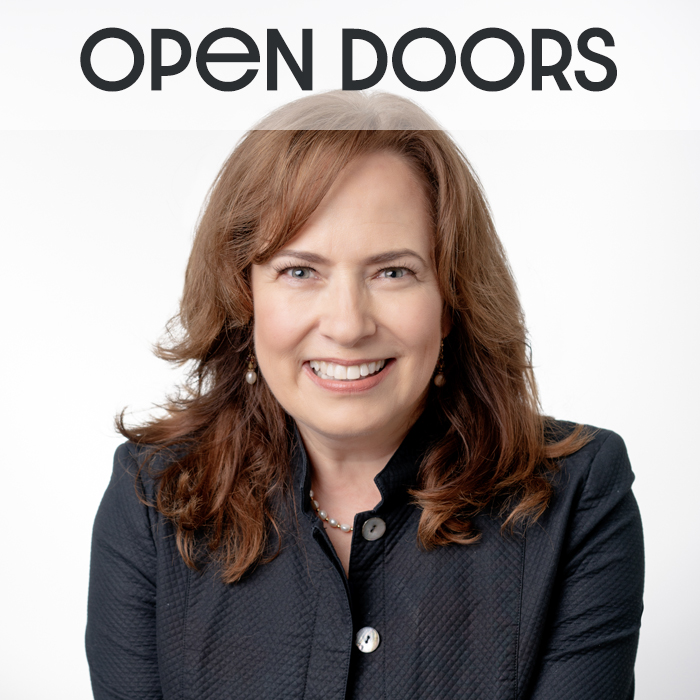
Meet Linda Madani

When Home Becomes Care: Linda Madani on Design, Aging, and Dignity

The seeds of Linda Madani’s interior design career were sown early. Growing up in New Hampshire, Linda’s father was a real estate developer who repurposed spaces, such as old mills, schools and hydro stations into housing, offices and restaurants. Linda accompanied her father to his building projects and even had her own hard hat at the age of ten. She loved construction and learned how to read architectural plans at a very young age. At Simmons College in Boston, Linda majored in business and fine arts. As a college senior she interviewed an interior designer for a class assignment and, in the process, asked if she could intern for her during her winter break. The job “clicked.” After graduating from college, Linda was offered a fulltime position as in interior design assistant. A few years later she went back to school to receive her interior design degree.

Something also clicked when Linda, now the owner of Madani Interiors, took on a renovation assignment at a neurosurgeon’s office. The doctor shared that most of his mature/senior patients had brain injuries from falls, particularly in the bathroom. As a result, Linda realized that a whole demographic was underserved by her field. It became her mission to help those in the third stage of their lives to live more safely, comfortably, and peacefully in their homes.

Linda began by developing ways to make bathrooms safer, such as providing low, amber lighting for nighttime bathroom visits and towel bars that also served as grab bars. As she developed an expertise in safe aging, she understood that the topic needed to be approachable and sensitively handled. She created a website as well as material for presentations. One of the places where she spoke was at the Center for Modern Aging in Princeton.

As Linda’s business grew, it diversified. She has worked with people who wanted to fully renovate their home or their business setting, those who just wanted to “touch up” their home, those who were ready to down-size, and those who were just beginning to think about finding a new way of living and needed help knowing where and how to start. Working in people’s personal spaces, negotiating lifestyle changes with clients, and suggesting ideas required empathy, respectful listening, observing, communicating, and good old-fashioned people skills.

In June 2023, Linda’s father was told he had three days to live. Happily, her father’s prognosis proved incorrect; bringing her design and organizational talents to bear, in just two months’ time Linda relocated her parents from North Carolina to New Jersey, into a safe, welcoming, fully ADA compliant home whose renovation she herself oversaw.

Linda felt it was a gift and an honor to help her parents through their transitional experience, and it only strengthened her resolve to help others maneuver through the aging adventure. She advises those with whom she works that being proactive and preventative about their living environment as they age provides more control over and enjoyment of ones’ home life. She helps people realize what they value most and helps them create a safe, peaceful home environment that enables them to thrive and grow. That might involve purging things they don’t need, organizing and refreshing various living spaces, or finding a new home with fewer maintenance and upkeep demands. Lucky for those who work with Linda, her empathy, energy, and insight help make change happen.

The Center for Modern Aging at Princeton is one of the recipients of Linda’s talents. Through her service as a civic co-leader in the Stoney Brook Garden Club, Linda and her fellow Club members made twenty creative holiday wreaths to decorate the CMAP Christmas luncheon venue. The wreaths were given away after the luncheon to members of the CMAP community. The holiday wreaths are a tradition between Stoney Brook Garden Club and CMAP. As part of her continuing engagement with the Center, Linda will be interviewed by Conrad Strauch on the People & Peace Talk Show airing on January 28, 2026 from 5:00-6:00 p.m. Go to https://engage.cmaprinceton.org/component/events/event/1570 to register. You can also call 609.751.9699 with questions, or email info@cmaprinceton.org.


Maybe It’s Not Just Aging. Maybe It’s Anemia.

Anemia is a common condition that can have serious medical consequences, but doctors often fail to recognize it. Journalist Paula Span investigates the situation here and has suggestions for patients. KFF Health News posted her column on July 17, 2025. It also ran in the New York Times. Funding from the Silver Century Foundation helps KFF Health News produce articles (like this one) on longevity and related health and social issues. 

Gary Sergott felt weary all the time. “I’d get tired, short of breath, a sort of malaise,” he said. He was cold even on warm days and looked pale with dark circles under his eyes.

His malady was not mysterious. As a retired nurse anesthetist, Sergott knew he had anemia, a deficiency of red blood cells. In his case, it was the consequence of a hereditary condition that caused almost daily nosebleeds and depleted his hemoglobin, the protein in red blood cells that delivers oxygen throughout the body.

But in consulting doctors about his fatigue, he found that many didn’t know how to help. They advised Sergott, who lives in Westminster, MD, to take iron tablets, usually the first-line treatment for anemia.

But like many older people, he found a daily regimen of four to six tablets hard to tolerate. Some patients taking iron complain of severe constipation or stomach cramps. Sergott felt “nauseated all the time.” And iron tablets don’t always work.

After almost fifteen years, he found a solution. Michael Auerbach, MD, a hematologist and an oncologist who is the co-director of the Center for Cancer and Blood Disorders in Baltimore, suggested that Sergott receive iron intravenously instead of orally.

Now Sergott, seventy-eight, gets an hourlong infusion when his hemoglobin levels and other markers show that he needs one, usually three times a year. “It’s like filling the gas tank,” he said. His symptoms recede, and “I feel great.”

His story reflects, however, the frequent dismissal of a common condition, one that can not only diminish older adults’ quality of life but also lead to serious health consequences, including falls, fractures and hospital stays.

One study found that 20 percent of nearly 2,000 people who were tested were anemic.

Anemia’s symptoms—tiredness, headaches, leg cramps, coldness, decreased ability to exercise, brain fog—are often attributed to aging itself, William Ershler, MD, a hematologist and researcher said. (Some people with anemia remain asymptomatic.)

“People say, ‘I feel weak, but everybody my age feels weak,’” Ershler said.

Even though hemoglobin levels are likely to have been included in their patients’ records, as part of the complete blood count, or CBC, routinely ordered during medical visits, doctors often fail to recognize anemia.

“The patients come to the clinic and get the blood tests, and nothing happens,” he said.

Anemia affects 12.5% of people over sixty, according to the most recent survey data from the National Health and Nutrition Examination Survey, and the rate rises thereafter.

But that may be an underestimate. In a study published in the Journal of the American Geriatrics Society, Ershler and his colleagues examined the electronic health records of almost 2,000 outpatients over sixty-five at Inova, the large health system based in Northern Virginia from which he recently retired.

Based on blood test results, the prevalence of anemia was much higher: about one in five patients was anemic,  with hemoglobin levels below normal as defined by the World Health Organization.

Yet only about a third of those patients had anemia properly documented in their medical charts.

One possible cause of anemia: blood loss, due to internal bleeding from ulcers, polyps, diabetes or other disorders.

Anemia “deserves our attention, but it doesn’t always get it,” said George Kuchel, MD, a geriatrician at the University of Connecticut, who wasn’t surprised by the findings.

That’s partly because anemia has so many causes, some more treatable than others. In perhaps a third of cases, it arises from a nutritional deficiency—usually a lack of iron—but sometimes of vitamin B12 or folate (called folic acid in synthetic form).

Older people may have decreased appetites or struggle to shop for food and prepare meals. But anemia can also follow blood loss from ulcers, polyps, diabetes and other causes of internal bleeding.

Surgery can also lead to iron deficiency. Mary Dagold, eighty-three, a retired librarian in Pikesville, MD, underwent three abdominal operations in 2019. She remained bedridden for weeks afterward and needed a feeding tube for months. Even after she healed, “the anemia didn’t go away,” she said.

She remembers feeling perpetually exhausted. “And I knew I wasn’t thinking the way I usually think,” she added. “I couldn’t read a novel.” Her primary care doctor and Auerbach both advised that oral iron was unlikely to help.

Iron tablets, available over the counter, are inexpensive. Intravenous iron, becoming more widely prescribed, can cost $350 to $2,400 per infusion depending on the formulation, Auerbach said.

Some patients find a single dose sufficient, while others will need regular treatment. Medicare covers it when tablets are hard to tolerate or ineffective.

For Dagold, a twenty-five-minute intravenous iron infusion every five weeks or so has made a startling difference. “It takes a few days, and then you feel well enough to go about your daily life,” she said. She has returned to her water aerobics class four days a week.

In about one-third of cases, the cause of the patient’s anemia is never pinned down. 

In other cases, anemia arises from chronic conditions like heart disease, kidney failure, bone marrow disorders or inflammatory bowel diseases.

“These people don’t lack iron, but they’re not able to process it to make red blood cells,” Kuchel said. Since iron supplements won’t be effective, doctors try to address the anemia by treating patients’ underlying illnesses.

Another reason to pay attention: “Loss of iron can be the first harbinger of colon cancer and stomach cancer,” Kuchel pointed out.

In about a third of patients, however, anemia remains frustratingly unexplained. “We’ve done everything, and we have no idea what’s causing it,” he said.

Learning more about anemia’s causes and treatments might prevent a lot of misery down the road. Besides its association with falls and fractures, anemia “can increase the severity of chronic illnesses—heart, lung, kidney, liver,” Auerbach said. “If it’s really severe and hemoglobin goes to life-threatening levels, it can cause a heart attack or stroke.”

Among the unknowns, however, is whether treating anemia early and restoring normal hemoglobin will prevent later illnesses. Still, “things are happening in this field,” Ershler said, pointing to a National Institute on Aging workshop on unexplained anemia held last year.

The American Society of Hematology has appointed a committee on diagnosing and treating iron deficiency and plans to publish new guidelines next year. The Iron Consortium at Oregon Health & Science University convened an international panel on managing iron deficiency and recently published its recommendations in The Lancet Haematology.

In the meantime, many older patients can gain access to their CBC results and thus their hemoglobin levels. The World Health Organization defines thirteen grams of hemoglobin per deciliter as normal for men, and twelve for nonpregnant women (though some hematologists argue that those thresholds are too low).

Asking health care providers about hemoglobin and iron levels, or using a patient portal to check the numbers themselves, could help patients steer conversations with their doctors away from fatigue or other symptoms as inevitable results of aging.

Perhaps they’re signs of anemia, and perhaps it’s treatable.

“Chances are, you’ve had a CBC in the last six months or a year,” Kuchel said. “If your hemoglobin is fine, great.”

But, he added, “If it’s really outside the normal boundaries, or it’s changed compared to a year ago, you need to ask questions.”

BE THE FUEL

MAKE A DONATION TODAY

Your generosity is truly the fuel that empowers CMAP to change lives and to help older adults discover their “why!”

We invite you to donate to the 2023–2024 Annual Giving Campaign by June 30 to help us reach our goal.