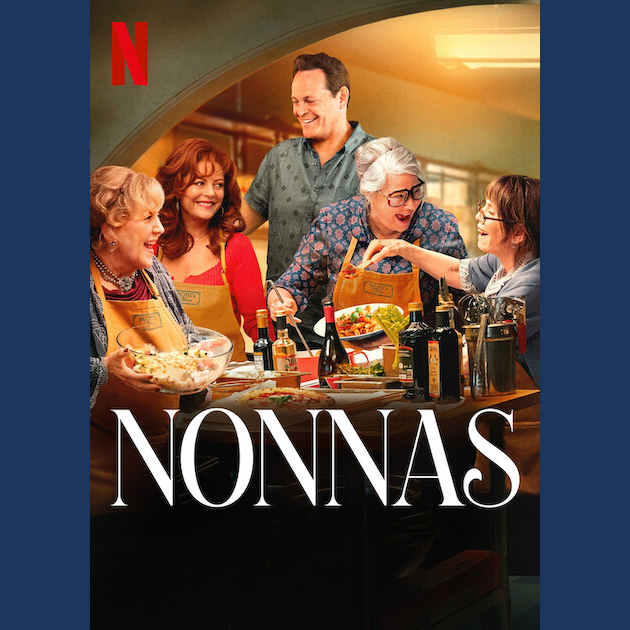
Nonnas

United States, 109 min.

After the death of his beloved mother, middle-aged Brooklyn lifer Joe Scarvella (Vince Vaughn) copes by cooking her Italian recipes. Warm memories of delicious food and living room bonhomie spur Joe to buy a shabby, vacant restaurant in Staten Island and hire nonnas—Italian grandmothers—to cook and summon those familial vibes. Yes, there’s a makeover scene. Yes, there’s a food fight in the kitchen. Despite its predictable emotional maneuvers, Nonnas shines in its depiction of four women (Brenda Vaccaro, Talia Shire, Lorraine Bracco and Susan Sarandon) (re)discovering their place in the world. “He’s not using me,” Vaccaro’s feisty character protests to an opponent of Joe’s restaurant. “He’s celebrating me.” The performances and camaraderie of the nonnas is the best part of this uplifting, well-intentioned drama-comedy. Based on a true story.

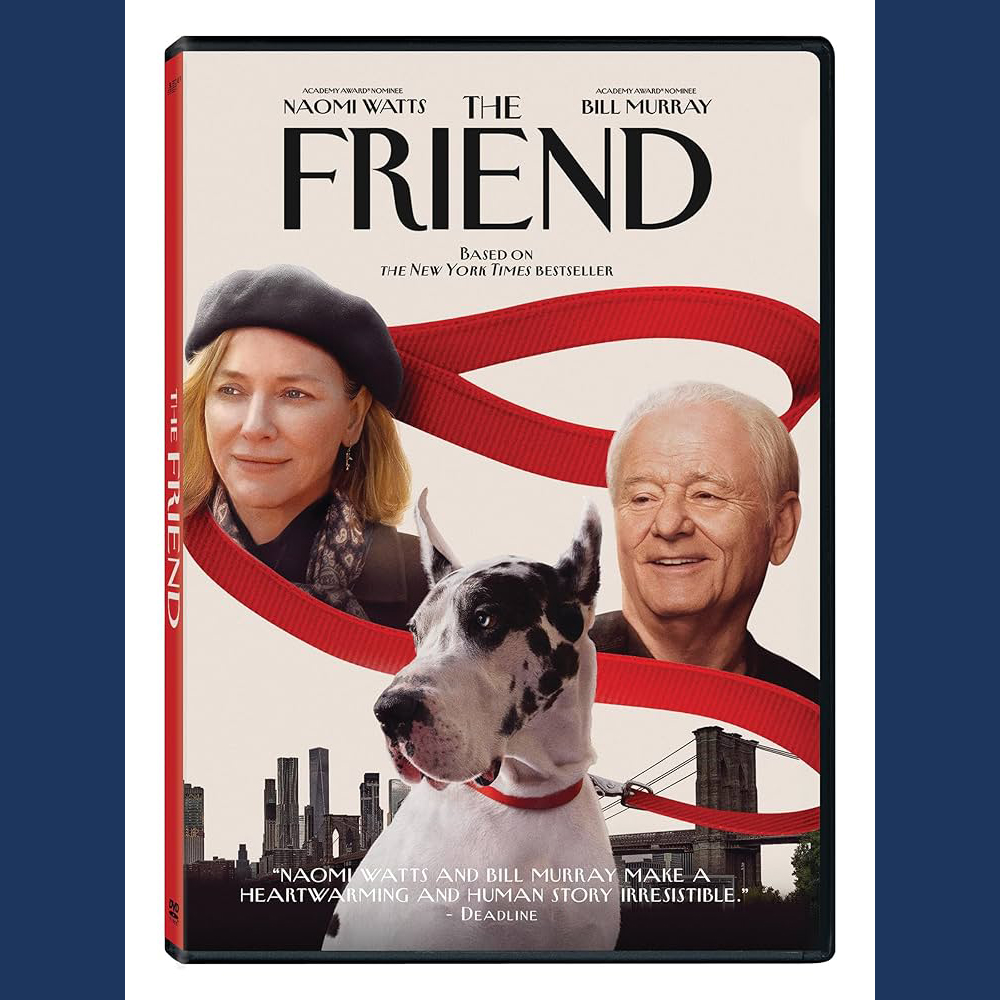
The Friend

United States, 119 min. 

Iris (Naomi Watts) is crushed after her beloved mentor, Walter (Bill Murray), unexpectedly dies by suicide. Then a complication in fur arrives: he has bequeathed her his dog, Apollo. The Great Dane is the size of a Buick; Iris is tiny and lives alone. Her cozy, rent-controlled, New York City apartment prohibits animals. Iris, who is in a creative lull, needs to finish a book, and the dog demands all her attention. But the two lost souls miss their best friend, a connection that provides a foundation to build a relationship. The Friend will undoubtedly appeal to dog lovers, but it’s more than an ode to companionship. It’s a heartwarming, forthright drama about accepting loss, dealing with our past, and finding the resolve to move forward. 

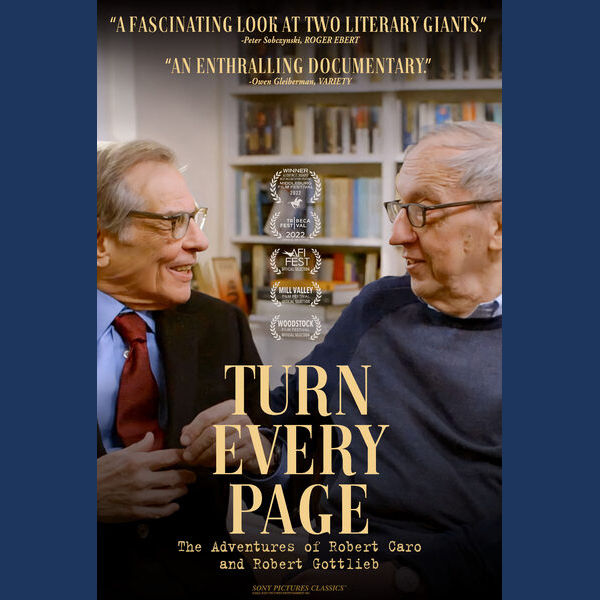
Turn Every Page

United States, 112 min.

This warm, bittersweet documentary examines the fifty-plusyear relationship between Robert A. Caro and Robert Gottlieb. Caro is a titan of American nonfiction, thanks to his exhaustive, beloved biographies of Robert Moses (The Power Broker, 1974) and Lyndon B. Johnson. Gottlieb is his former New Yorker editor. Their frequently contentious relationship has endured the tumultuous world of book publishing and debates over semicolon usage. The heart of this winning film from Lizzie Gottlieb (Robert Gottlieb’s daughter) is its portrayal of two different but passionate craftsmen—Caro pounds away on a typewriter; Gottlieb edits in pencil—looking for a final triumph as Caro completes the final volume of his LBJ masterwork. In an environment where information is nonstop, Turn Every Page reminds us that someone exists behind every word. In some cases, it’s their life’s work. 


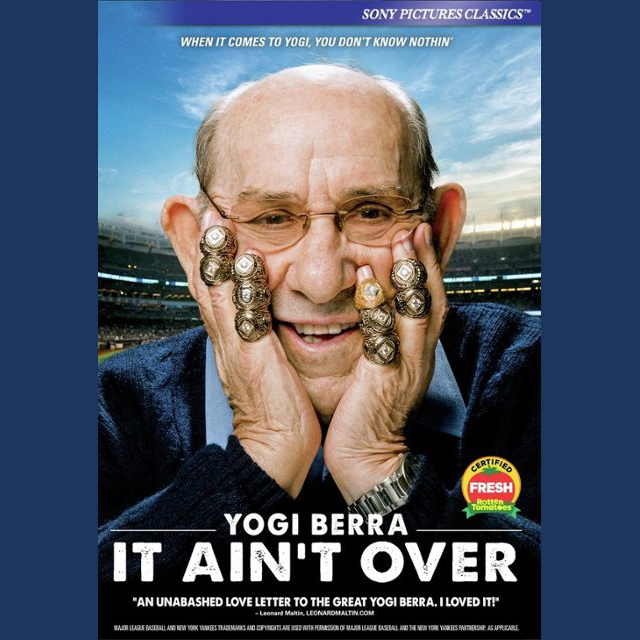
It Ain’t Over

United States, 99 min.

To many younger Americans, Yogi Berra (1925-2015) wasn’t a Hall of Fame baseball player and a cog in the New York Yankees’ endless dynasty, but a lovable old font of folksy wisdom (“When you get to a fork in the road—take it!”) with a funny name and a teddy-bear physique. In this heartwarming documentary, director Sean Mullin—relying on interviews with the baseball legend’s friends, teammates and family members—examines Berra’s accomplishments as a baseball player and explores his personal life. Berra was a devoted family man who stormed Normandy in World War II. He happily bonded with younger ballplayers in his later years, instead of living in the curdled past. This is the rare sports documentary that hits a personal note, reminding us that a life lies behind every older person we dismiss or thoughtlessly categorize. Berra becomes a proxy for the older relative and neighbor we choose to know in a limited way.


Jerry and Marge Go Large

United States, 96 min. 

Since retiring, Jerry (Bryan Cranston) faces a string of endless days in his small Michigan town. During one, he reads the tiny print of a lottery game. Jerry, a math whiz, is stunned by his calculations. If he buys a certain number of tickets, he’s guaranteed to win and the more he spends, the more he gets. When his wife, Marge (Annette Bening), learns Jerry has been (successfully) testing his theory, she’s all in. “Let’s be stupid,” she says. “We need something for us.” The pair make regular road trips to buy tickets in Massachusetts, first for themselves, and then for seemingly the entire town in what becomes a lucrative investment strategy. But will the success last? What elevates Jerry and Marge Go Large beyond its “did-this-really-happen?” story line are Cranston and Bening’s winning performances as the long-married couple that find their second wind by throwing caution to it. Touching and authentic, the movie (based on a true story) never cheapens its characters or their journey. 

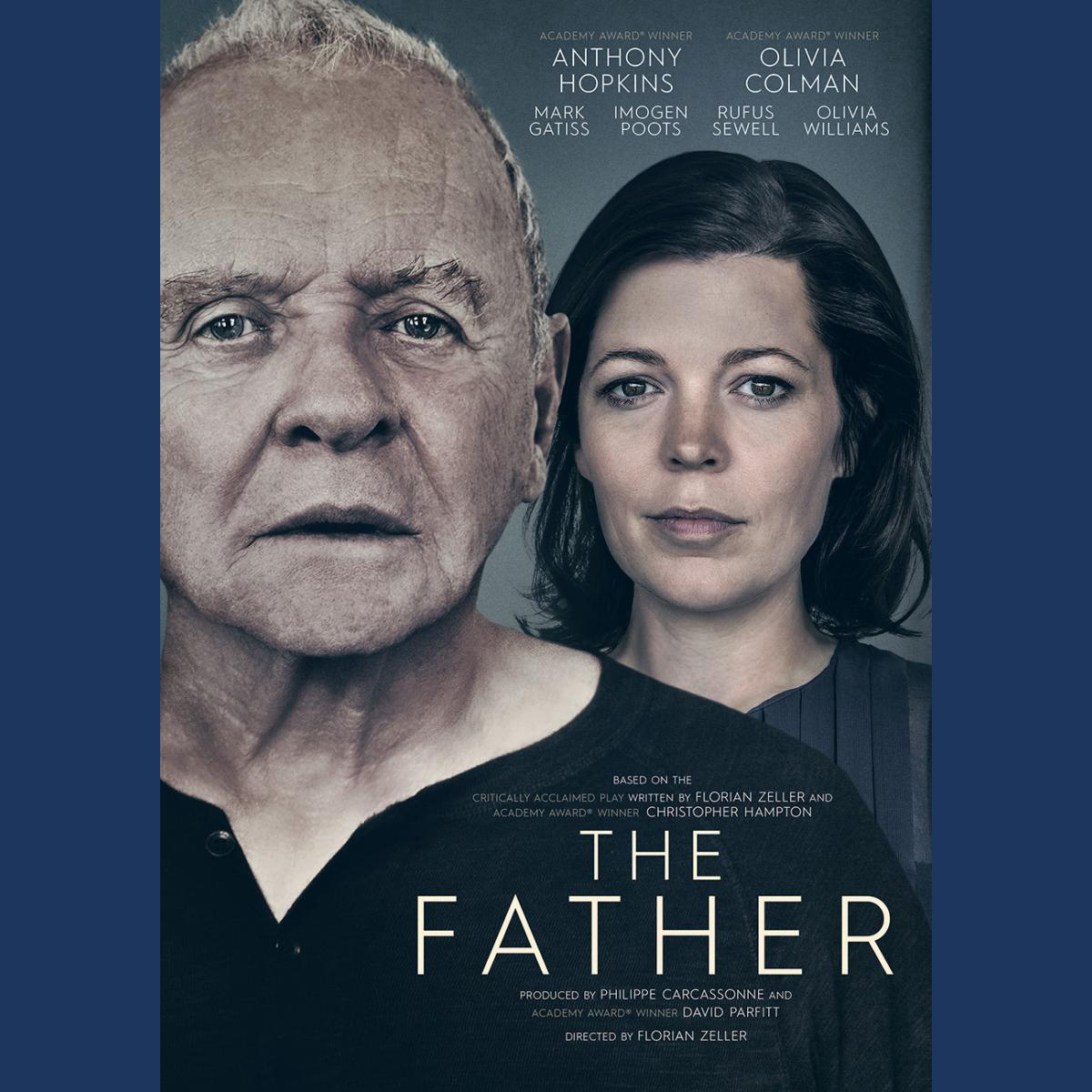
The Father:  Dementia from the Inside

The Father has received much attention and won two (in my opinion well-deserved) Academy Awards. It engages viewers as no other movie about dementia has because they experience the effects of the disease the way the person living with it does—a stunning artistic achievement by writer-director Florian Zeller and actors Anthony Hopkins and Olivia Colman.

The film has moments of humor and moments in which we admire Anthony, the father (played by Anthony Hopkins), for his determination to hold onto his independence. But overall, there’s no denying it is a heartbreaking movie.

Before you decide to see it, ask yourself if you want to see what it’s like to live with dementia. If fear dominates your view of Alzheimer’s, that may prevent you from reaping the rewards of this film.

But if you are truly interested in how the world looks and feels to people living with dementia and want to better understand them, this movie presents a unique opportunity. It broke my heart, but I’m grateful for the deeper insight it gave me into someone trying to cope with cognitive loss.

The Father opens with a familiar struggle between the person with the disease and his carer. Anthony lives in his own apartment in London. His daughter, Anne, feels he needs the help of a full-time aide, but he disagrees and keeps firing those she hires. She is under pressure to get him set up securely because she is planning to move to France. After being single for five years following a divorce, Anne has fallen in love with a man who lives in Paris.

This sets the baseline for the story—or so we assume.

But as scene two unfolds, everything in that baseline is thrown into doubt. We are no longer sure whose apartment Anthony is in after he finds a strange man sitting in the living room who claims it is his flat. He also claims to be Anne’s husband, so we are no longer certain if she is married or divorced. 

Understandably Anthony is confused by all this, so the husband decides to call Anne and summon her home from shopping.

Soon we hear the door open.

“It’s me!”

Anthony: “Ah. There she is.”

But when he sees her, Anthony looks frightened and bewildered.

“Is something wrong?” she asks.

“What is this nonsense?” he says.

“What are you talking about?”

“Where’s Anne?” Anthony demands.

“Sorry?”

Anne!”

“I’m here. I just went to do some shopping, and now I’m back.”

This scene could be from any film about dementia. It’s the uh-oh-now-he-doesn’t-recognize-his-own-daughter moment from many a caregiver’s story. And in another film what we would feel is the loss this represents for the family member.

But this time we feel something quite different because we are inside Anthony’s mind. We experience it the same way he does. Director Zeller accomplishes this by showing us exactly what Anthony sees and allowing us to know only what Anthony knows.

When Anne enters, it’s not only her father who doesn’t recognize her; neither do we. This isn’t the Anne we met in scene one! We immediately suspect that something nefarious is going on. 

Anthony speaks for us too when he says, “There’s something funny going on here, believe me!”

This film’s power comes from positioning the viewer so as to live the experience of the person with dementia, not just watch it. There is no way we can distance ourselves emotionally.

This is exactly Zeller’s intent: to have us feel what it is like to be losing our bearings. 

To achieve this, he confuses us about some of the things that someone with cognitive impairment finds hard to keep track of: time, place and person.

To let us feel Anthony’s vanishing sense of time, Zeller scrambles it. Are we in Anne’s post-divorce time or when she is still married? It’s hard to tell because for a good part of the movie, her husband is present as her husband. Events suggest that these may be bad memories that Anthony can’t stop from seeping into the present. Some scenes repeat in altered form. One scene even circles around and ends where it started.

Zeller disorients us to place by continually making small changes in the apartment where Anthony lives. A piano disappears and is replaced by a sideboard. Walls change color. Kitchen cabinets and backsplashes change. All this is done so subtly we barely notice, but it is enough to unsettle us.

Not at all subtle is Zeller’s way of confusing us about person. By casting a different actor as Anne in the second scene, he makes us feel how unnerving and frightening it is to be told that the stranger in front of you is your daughter or wife.

Frightening. In 28 years of talking about this very issue with caregivers in the support groups I lead, no one, not even I, has mentioned that fear. We didn’t detect it because our focus was elsewhere. On the caregiver’s hurt and loss.

I was as sure as Anthony was that the woman wasn’t Anne, and to hear her insisting that she was scared me. It felt as though the movie had taken a terrible turn. 

So effective is Zeller at making us share Anthony’s perspective, we hear things others say to him in a new way. Things we ourselves may have at least thought, if not said.

Anne’s husband says to Anthony in exasperation, “Sometimes I wonder if you are doing it deliberately.” By this time, Anthony’s bewilderment has become our own, and the statement feels cruel.

Anne is a kind and loving daughter but under pressure makes the same mistakes we all do. We see with shame how dismissive we can be of the concerns of the person with dementia because we don’t give them due weight.

Here’s an exchange between Anthony and Anne. They are at breakfast and awaiting the arrival of an aide he had decided he liked. Anthony is in his pajamas. The doorbell rings and Anthony panics because he is not yet dressed.

Anne: “You can get dressed later.”

Anthony: “No. No. I must get dressed!”

Anne replies, “It doesn’t matter.”

Anthony, desperately: “It does matter!”

Anne: “She’s outside the door!”

Anthony: “Please don’t leave me alone. What will she think of me? I’ve got to be properly dressed.” 

Anne continues to dismiss his concern as she goes down the hall to answer the door.

This amounts to emotional abandonment.

It won’t come as a surprise to caregivers that Anthony can dole out plenty of cruelty himself. He fights to maintain control. With judgment and inhibition failing, he lashes out at Anne and derogates her to others. The hurt registers immediately on Olivia Colman’s marvelously expressive face.

This intimate step into a life with dementia is heartbreaking. But if you let it break your heart open to compassion, you’ll find it’s also surprisingly uplifting. Your awakened compassion will show you the deep humanity—and the need for love—that dementia can’t erase. 

The Father is showing in theaters as pandemic restrictions ease, or you can rent it on streaming platforms such as Amazon Prime Video, Apple, Fandango, Google, YouTube and Vudu. Seeing it more than once is possible with streaming and can help you sort out some of the contradictions.

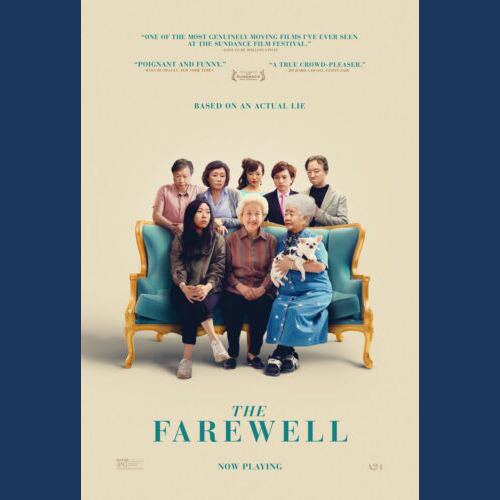
The Farewell

United States/China, 100 min.

Billi (Awkafina) is an independent, Chinese-American woman who receives two pieces of shocking news. First, her beloved grandmother in China, Nai Nai (Shuzen Zhao), has a terminal cancer diagnosis—and that is hidden from her by her sister. Then, instead of dealing with the grim news directly, her family is heading back to say goodbye via a hastily arranged wedding for her grandson. The arrangement enrages Billi, but she plays along and discovers that there’s no one definition of love. For a movie focused on an elaborate ruse, director-writer Lulu Wang (working from an event in her own life) eschews the broad and obvious. Her characters are regular people, struggling with their life choices, whether it’s Billi realizing that her grandmother is the last remnant of her childhood in China or a dinner conversation on American education that turns into a thinly veiled debate on opportunity abroad versus domestic loyalty. But this winning, finely crafted movie runs through Zhao’s sly, winning performance, which reveals that tradition, coupled with flexibility and self-awareness, is a balm for life’s onslaught.

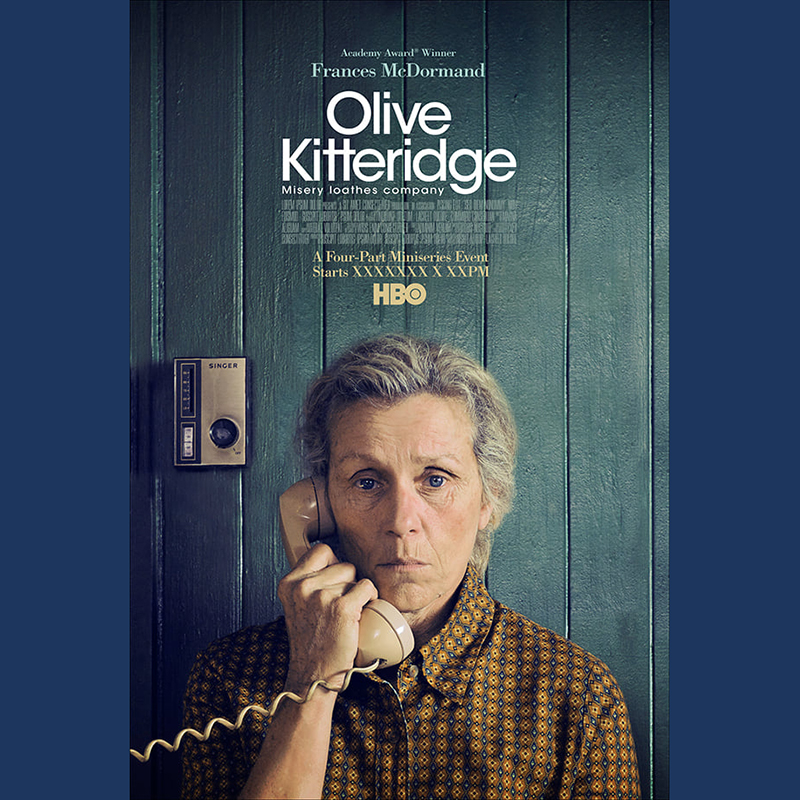
Olive Kitteridge

United States, miniseries

Prickly and curt, lifelong Mainer Olive Kitteridge (Frances McDormand) revels in control. She maintains the upper hand in her marriage to kindly Henry (Richard Jenkins), the beloved town pharmacist, and their sensitive son, Christopher (John Gallagher Jr.). Olive exists in a disgruntled, self-satisfied equilibrium, but over 25 years, crises force emotions to surface. Henry’s endless patience and health wobble; Christopher grows up and cannot comprehend his mother’s indifference toward his churning turmoil. The world Olive spent her life cultivating is eroding. Can she regain her footing? Working from Elizabeth Strout’s Pulitzer Prize-winning 2008 novel, director Lisa Cholodenko has crafted a gut-punch to our souls. One woman’s inability to compromise forces everyone in her orbit to recalibrate their lives. Olive Kitteridge feels both grand and intimate, painful and joyous, because we can all relate to what unfolds. 

Max Rose

United States, 83 min.

The death of his wife is hard enough for Max Rose (Jerry Lewis), a former jazz pianist. Then, in the middle of discarding her belongings, Max makes a discovery that casts grave doubts on their sixty-five-year marriage. Max’s emotional turmoil further erodes his already rickety health. His meek, kind, adult granddaughter (Kerry Bishé) and his frustrated son (Kevin Pollak) serve as his support system. They’re also emotional punching bags—you can see the heaviness of that role in every gesture and interaction. Max’s attempt to confirm his past happiness allows him to soothe those relationships and to form new ones. That’s great, but is it enough? What Max Rose lacks in subtlety—Lewis, even in a tortured, dramatic role like this, cannot stop mugging — it makes up for in the title character’s poignant quest to quell the aching of his soul.


BE THE FUEL

MAKE A DONATION TODAY

Your generosity is truly the fuel that empowers CMAP to change lives and to help older adults discover their “why!”

We invite you to donate to the 2023–2024 Annual Giving Campaign by June 30 to help us reach our goal.