
Important Update: Temporary Closure of the Nancy S. Klath Center Due to water damage, the Nancy S. Klath Center (101 Poor Farm Road) is temporarily closed for construction. For your safety, please do not visit the building. We will share updates as soon as it is ready to reopen.

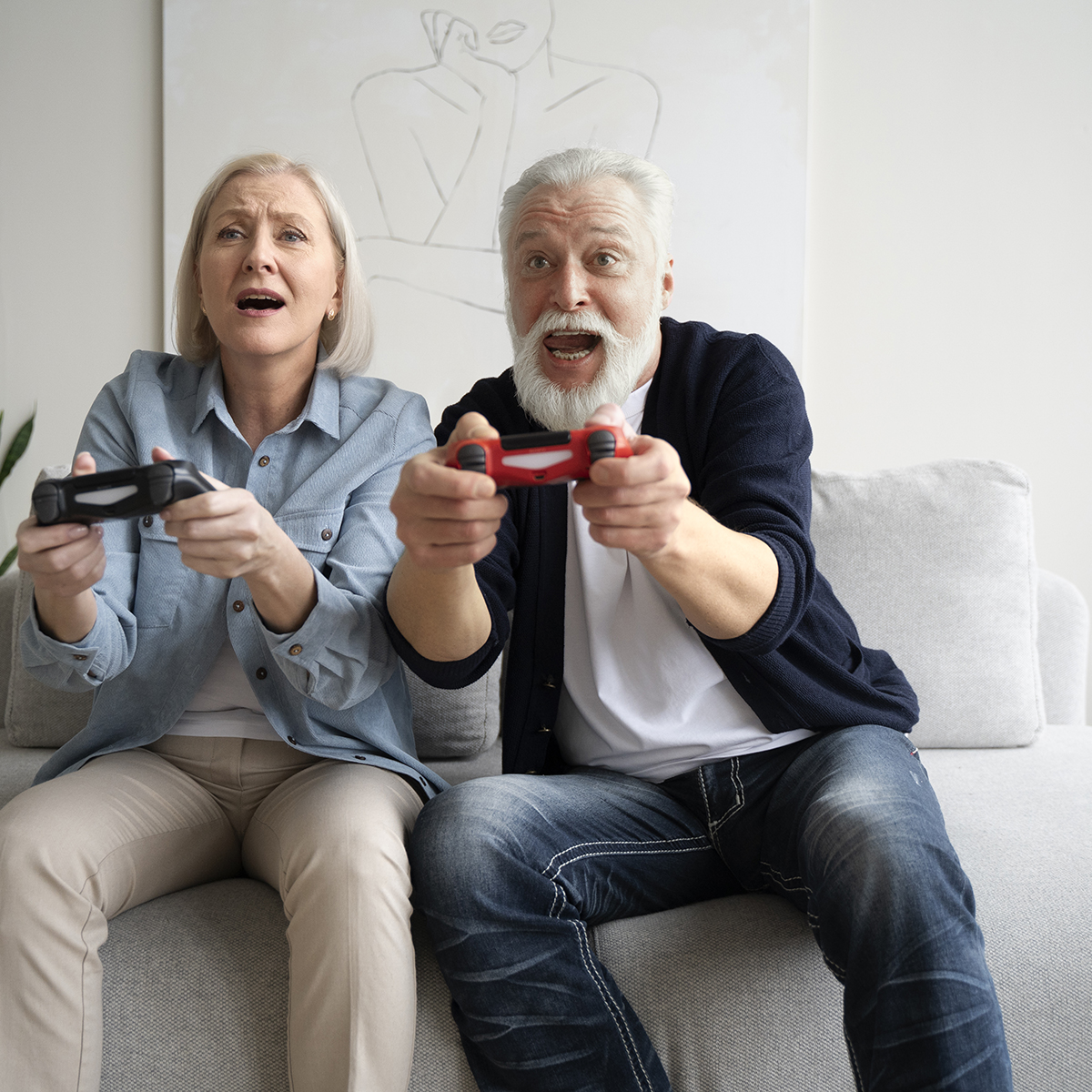
Gaming: A Way to Exercise Older Brains

Video games have always been part of Shawn Etheridge’s life. His interest was first sparked as a young teen, when he toted rolls of quarters to a nearby mall to play arcade games like Pong. As a young adult, as technology evolved, he began playing games like Call of Duty on his personal computer. Later, he even began playing online with his grandchildren, who chortled “Pop Pop” each time they spotted his avatar on the screen, leading Etheridge to adopt “2Pop” as his screen name. 

Now, at age 64, Etheridge unwinds after work each night by playing Halo while his wife watches her favorite TV show nearby. He mainly plays for fun, but as he gets older, he also thinks gaming keeps his brain limber. 

“The more you play, the more proficient you get, and I’ve got to believe that helps with cognition,” he said. 

Etheridge is one of some 57 million Americans over 50 who enjoy gaming, according to recent data from the Entertainment Software Association. Nearly half of Americans in their 60s and 70s play some form of PC, mobile or console video game every week, as do 36 percent of people in their 80s. 

The ranks of older gamers are growing too, by more than 12 million, an uptick of 30 percent from 2017 until 2023, according to AARP Research. Whether it’s a lifelong passion or a new endeavor, many older adults are discovering—or rediscovering—gaming as a source of entertainment, a way to stay socially connected and a tool to keep cognitive skills sharp.

Not Just Young Men 

Many assume “gamers” are teen or young adult males who play combat games. It is true that fast-paced, real-time games may be more challenging for older adults, as reaction times slow with age. And young “digital natives” can learn the ins and outs of games more quickly and adapt more easily to updates and changes. In fact, older adults are less likely to play video games on consoles such as Nintendo Switch or PlayStation Vita—only about 10 percent of those older than 70 own consoles, according to a 2020 AARP study. 

But there are many gaming options that offer a relatively level playing field for players of all ages, including older adults. There are role-playing games and world-building games, where people create virtual environments and characters. There are sports games, like NBA 2K, and simulated racing games, like iRacing.  

Some video games involve competing in real time against other players via the internet. But other games are turn-based (i.e. players take actions one after the other, rather than all at once, allowing time to think strategically without the pressure of immediate real-time action.) Many games offer the option to play alone, with the goal of “leveling up” or pursuing an objective rather than competing against others. 

Connecting older adults to games they’ll enjoy is a key goal of LevelUpLand, a program of the Franklin County Office on Aging in Columbus, OH. Its centerpiece is a weekly Senior Gaming Day. Participants 60 and up gather at a game arena to try PC games, console-based games, racing simulators and virtual reality headsets, all with the guidance of trained staff. Participants can also enjoy computer-based and online versions of card and board games. The program regularly attracts participants in their 80s and 90s; a 101-year-old is the oldest participant to date. 

Participants have formed a community. Many schedule doctors’ appointments around their weekly gaming day. If a regular fails to show up, someone calls to check on him or her. 

“Gaming provides a sense of community and a sense of belonging,” said Melita Moore, MD, founder of Levels Unlocked Enterprises, which partners with Franklin County to offer the program. 

In role-playing games, an older person’s life experience can be an asset. 

Discovering the right games to fit his changing skills and interests has kept Ian Russell, 63, involved in gaming throughout his life. His first foray in gaming was in his 20s, playing Dungeons and Dragons with a group of friends who are still meeting regularly today. His interest shifted to video games, but as he got older, Russell noticed his reaction skills diminishing, making it harder to compete with younger players in combat and racing games. 

“Your hand-eye coordination is just not as good or as quick when you’re older,” Russell said. “I find I’m less interested in real-time action and more interested in turn-based role-playing games,” which allow him time to consider each move. 

At the same time, Russell notes, the wisdom of older age sometimes comes in handy in role-playing games. As an example, he has played Thief, a game where players navigate a warren of streets in an unfamiliar urban environment, without the benefit of a GPS. 

“Navigating around a new town is something that I did in the past,” he said. “If you want to find the center of town, for example, I know that you look for a church spire. So, there’s a lived experience that helps me solve the puzzle.”

However, game developers often don’t design new games with easy access for older adults or newbies in mind. Just a little help from a tech-savvy person can go a long way in getting an older adult started. That’s another key advantage of LevelUpLand. For older adults with mobility challenges, program leaders offer accessibility options, such as an adaptive mouse for those with arthritis. Or they adjust the settings within individual games, such as fine-tuning the speed or changing camera angles to adapt for an older player’s abilities. 

LevelUpLand also serves as an educational platform to teach cybersecurity and “healthy digital lifestyles.” Older adults who venture online can be vulnerable, with risks, ranging from bullying and “trash talking” by other competitors, to frauds and scams. LevelUpLand’s online activities take place in secure private chat rooms on Discord, ensuring that scammers don’t have access. 

“We’re providing those guardrails so that older adults can be online, play and have fun in a safe environment,” said Chanda Wingo, director of the Office on Aging in Franklin County. 

Intergenerational Connections 

For many older adults, competition isn’t the goal. Many say gaming helps connect them with younger people.

Vinny Minchillo, 63, plays Pokémon and other “grandchild-appropriate” video games with his 6-year-old grandson. Both play on Nintendo Switch consoles—a regular one for Minchillo and a mini version for the grandson. 

Minchillo also enjoys playing more mature games like Assassin’s Creed on PlayStation 5. However, he doesn’t play against other competitors. Instead, he and his wife play collaboratively against the game. 

“I don’t keep up with everything that’s going on, which I’d need to do to be competitive,” he said. 

Gaming has also built a bond between Russell and his 25-year-old daughter, especially as she’s developed an interest in “vintage” games.

“She has become aware of the video and board games I played 30 years ago and has been buying revamped versions of those games,” he said. “I get a great deal of pleasure from playing them all over again. It’s a massive nostalgia kick.” 

Older people have become stars in the video-gaming world on YouTube

Gaming also opened an unexpected career avenue for Russell. As a voice actor, he has played a host of characters in online role-playing video games, such as Vernon Locke in Payday 3 and Abelard Werserian in Warhammer 40,000: Rogue Trader. With his booming, mature voice and British accent, Russell is a natural for “the wise, kindly old uncle” roles, he said with a laugh. His characters have a sizable fan base, most of them young adults, and Russell often converses with them via platforms like Reddit and X. 

“I get messages occasionally from young people who say, ‘This game helped me through a difficult time in my life,’” he said.  

Russell is far from the only older star in the video-gaming world. A few years ago, Lenovo sponsored the Silver Snipers, a team of over-60 gamers who competed in esports tournaments. There’s Shirley Curry, 89, aka “Gamer Grandma,” who built a following of 900,000 YouTube subscribers who watched video walk-throughs of her plays on The Elder Scrolls V: Skyrim, a role-playing game. And Michelle Statham, aka “TacticalGramma,” a 57-year-old grandmother who loves first-person shooter games. She calls her followers her “grandkids.” 

When she started posting, Statham assumed no one would watch, but younger players gravitated toward her friendly, supportive online persona. 

“Most people think that older people don’t play games or don’t like games,” she said. “Being an older female has helped me stand out.” 

Staying Sharp Cognitively

Research in recent decades has boosted awareness of gaming’s effects on older brains. A number of studies suggest that older people who played video games regularly showed significant improvement in cognitive functions, depressive symptoms, sleep quality and anxiety. One theory posits that video games may simulate novel environments, which are associated with improved memory. In one study, participants ages 60 to 80 played Angry Birds and Super Mario for 30 to 45 minutes per day for four weeks. The video game players showed improved memory compared to a control group that played a card game, Solitaire.

Further research is needed to tease out what types of video games might best support cognitive function. But according to research by the Entertainment Software Association, almost 90 percent of boomer and Silent Generation players cited “using my brain/keeping my mind sharp” as a key reason why they play video games, compared to just one in five Gen Z and millennials. 

And while some research suggests that extensive “screen time” may be harmful for young brains, engagement in technology seems to benefit older people’s brains. One recent analysis found that people over 50 who used computers, smartphones, the internet or a mix did better on cognitive tests, with lower rates of cognitive impairment or dementia diagnoses, compared to those who used technology less often or avoided it altogether.

Regardless of the research, many gamers are certain their game play boosts their cognitive function. 

“A thousand percent,” said Minchillo. “My PS5 controller has about a dozen different buttons and different combinations of buttons that do different things. To process all the information that’s coming at you very quickly and to respond to it in the appropriate manner—I think it’s great for my brain.” 
Sex after Sixty-five: Friskier but Riskier

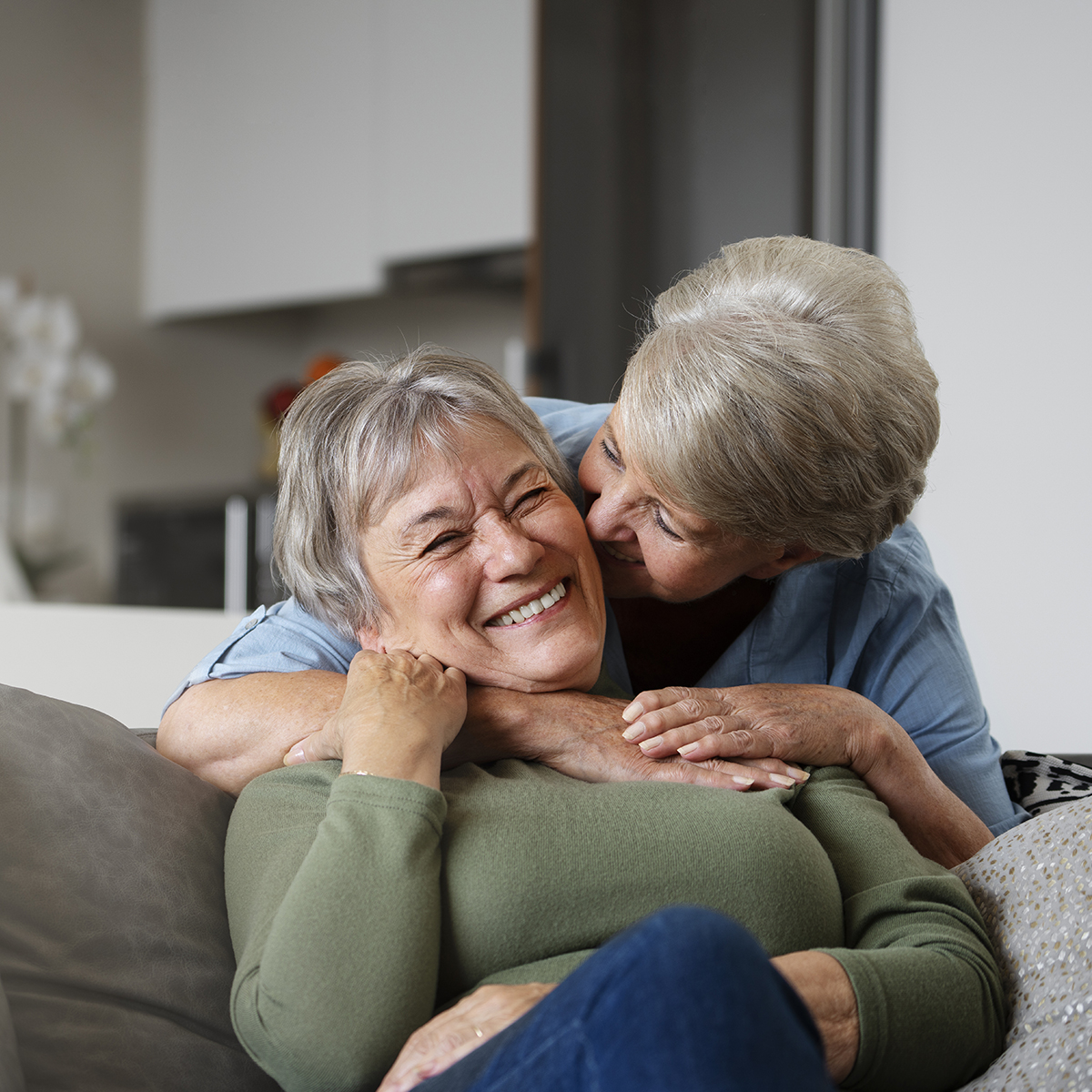
At eighty-one, Hélène Bertrand, MD, and her ninety-year-old husband continue to enjoy a fulfilling sex life. Once every week or two, they share intimate moments that lead to orgasm and, as Bertrand puts it, “a very good night’s sleep.”

“Over thirty-six years of marriage, we’ve learned the moves that our partners like and delight in giving each other pleasure,” said Bertrand, a retired physician. “Our satisfying sex life improves the quality of our marriage. You don’t have to be twenty years old to have a good sex life.” 

Research shows that many older adults maintain active sex lives well beyond sixty-five. According to a 2018 National Poll on Healthy Aging, 40% of those aged sixty-five to eighty are sexually active. Among respondents with a romantic partner, more than half reported engaging in sexual activity.  

Yet as the population ages, medical care has not kept pace with this reality. Gaps in knowledge and understanding persist. Senior living communities often lack policies that respect sexual expression, particularly for LGBTQ residents. Even health care professionals frequently underestimate or neglect the sexual needs of older adults, influenced by stereotypes that dismiss them as asexual or deem sex “unnecessary” after reproductive age. 

“Sexuality is a critical aspect of quality of life, yet it’s rarely discussed,” said Sivan Perdue, LCPAT, an art therapist certified in dementia care and sexual health.

The Longevity of Love

Several factors explain why older adults are enjoying more sexual longevity. Many are living longer, healthier lives. Those shaped by the sexual revolution often retain more open attitudes toward sexuality as they age. Medical advances, including treatments for erectile dysfunction, and hormonal therapies, have extended the potential for satisfying sex lives. 

For those seeking connections after the death of a partner or divorce, dating apps like OurTime and SeniorMatch open a wider pool of possible partners for romance and intimacy. One in six Americans ages fifty and older (17%) have tried using a dating site or app at least once, according to research from the Pew Research Center. 

“Today, older adults are more likely to participate in the hook-up culture of casual encounters and condomless sex,” according to a 2023 report in The Lancet, “Sexual activity of older adults: let’s talk about it.”

Positive portrayals of later-life romance in pop culture also play a role. Movies like It’s Complicated and TV series like Grace and Frankie show older adults embracing active sex lives and candidly discussing intimacy. Even reality TV, with shows like The Golden Bachelor, portrays romance as ageless.

Bertrand credits hormone therapy and a healthy lifestyle for the enduring intimacy she and her husband enjoy. Both have taken hormones since their fifties. She started using an estrogen patch in her fifties to counter menopause symptoms like depression, insomnia and hot flashes. Hormone therapy poses potential downsides—including a higher risk for breast cancer—but Bertrand thinks it’s worth the risk.

“Life’s too short,” she said.

Decreasing Libido

While 40% of older adults report they are sexually active, that leaves 60% who are not. It’s common for men and women to experience a gradual decline in libido beginning in their fifties, often triggered by factors like hormonal changes and chronic disease or disability. 

Sagging skin and other age-related physical changes may make some feel more inhibited sexually. Many medications prescribed to older adults can also dampen desire or affect functioning, including blood pressure medications, pain medications, statins and others. Obesity can interfere with sexual function, both at the hormonal and psychological level.

Some older adults simply lack partners. More than one-third of Baby Boomers aren’t currently married. Compared to previous generations, fewer Boomers got married in the first place, and among those who did, more ended up divorced or separated. Also, as people are living longer, the divorce rate for those fifty or older is rising. 

Some older adults lose partners to death. Jo McCormack (not her real name), seventy-two, grew up during the sexual revolution and made the most of it, enjoying multiple liaisons with men in her youth. She never married but entered a long-term, monogamous relationship in her thirties that lasted thirty-three years, until her partner’s death.

“We had a very satisfying sex life, but when he died, my libido died with him,” she said. “I’ve always had a lot of men in my life, but now, I have no desire.” 

Online dating does widen the pool of potential love matches for older adults—if they’re comfortable using dating apps. Some find the technology too daunting. And online dating can be frustrating. 

“Many of us [people over fifty] have to swim through a dispiriting sea of hundreds of people, most of whom we are unlikely to ever want to date,” writes Maggie Jones in the New York Times. “That includes profiles that are fake, created by scammers to try to lure private information from users. And while most profiles are real, sometimes their photos are not so much. More than one person told me that photos can be so outdated or filtered that they barely recognized their date when they met.”

Rising Risks

Increased sexual activity among older adults has coincided with a surge in STIs [sexually transmitted infections]. Between 2010 and 2023, STI rates among adults over sixty-five skyrocketed, with chlamydia tripling, gonorrhea increasing sixfold, and syphilis, nearly tenfold. Overall, STI rates among those fifty-five and older climbed from three to five cases per 100,000 in 2010 to 17.2 per 100,000 in 2020.

Despite these trends, older adults often lack basic STI knowledge. Few health care providers address sexual health with patients over sixty-five proactively. Among sexually active older adults, only 17.3% reported discussing sexual health with a provider in the past two years, and in most cases, patients initiated the conversation. 

Maggie Syme, PhD, a research psychologist at Massachusetts General Hospital, noted that the U.S. Preventive Services Task Force only recommends STI screening for patients up to age sixty-five. By contrast, doctors routinely ask younger patients about their sexual health and habits. For people ages sixteen to twenty-five, sex education is readily available in schools and colleges.

“But there are very few resources for older cohorts,” Syme said. “So, we have more older people engaging in sexual relations with new partners but lacking the resources and information to help them minimize risk.” 

Syme would like to see more public health campaigns aimed at older adults, such as the “Age is not a condom” social media campaign launched by ACRIA, an HIV-related nonprofit in New York state. 

If there’s one man with multiple partners in an assisted living community, that’s a recipe to start an STI outbreak.

—Martha Kempner

Condoms aren’t a foolproof solution, however. Condom use can pose practical challenges for older couples, cautions Leanna Wolfe, PhD, author of 177 Lovers and Counting: My Life as a Sex Researcher (Rowman and Littlefield, 2024.) 

“An older man needs a certain amount of stimulation, and a condom may not allow for that,” she said. Also, it’s difficult to apply a condom when the male isn’t fully erect, or if the couple is employing lubricants for vaginal dryness, a common problem for older women. (If condoms aren’t fail-safe, other preventive options include regular testing for STIs, limiting sexual partners to a mutually monogamous relationship, and possibly getting relevant vaccinations, such as HPV.)  

Many senior living communities lack policies that ensure residents’ safety while supporting their right to sexual expression. Sivan Perdue helps communities craft guidelines that address the reality of residents enjoying sexual activity. 

“It’s a matter of educating staff that sexuality is completely normal, that residents have a right to their privacy and that staff should not impose their beliefs,” she said.  “Policies should also ensure inclusivity for LGBTQ residents. No one should feel they have to go back into the closet in their later years.”

Residents living with dementia pose special issues. People with dementia have the right to sexual relationships if they desire them, Perdue adds. But whether an individual has the capacity to give consent is a complex question that requires careful, case-by-case consideration. 

The gender imbalance among older adults may also contribute to the rise in STIs, according to Martha Kempner, author of the Sex on Wednesday newsletter and co-author with Pepper Schwartz of 50 Great Myths of Human Sexuality (Wiley-Blackwell, 2015.) Because women live nearly six years longer than men, on average, there are fewer male partners available for older women. 

“If there’s one man with multiple partners in an assisted living community, that’s a recipe to start an STI outbreak,” Kempner said.  

Waning Desire

While more people are enjoying longer sex lives, sexual activity does change as people age. 

“I think the common misconception is that nothing works after a certain age,” Kempner said. “Things get a little more complicated as we age, but there are ways around that. Viagra and other performance enhancing treatments can help address erectile dysfunction in men. Lubricants can combat vaginal dryness.”

Developing a satisfying sex life in later life often means expanding one’s sexual vocabulary. 

“Many older adults have limited ideas of what constitutes ‘sex,’” according to Leanna Wolfe. “They think sex is only sex if it’s penile-vaginal intercourse.”

Partnered sex and intercourse may not be possible due to age-related issues such as arthritis, mobility limitations, effects of medication or serious health conditions. Oral sex, for example, often works better for older adults, according to Wolfe.  

Good communication, always key to a good sex life, is essential for older adults. However, sex is often a difficult topic to broach with a romantic partner, according to the National Poll on Healthy Aging. Only one in three respondents indicated they would talk to their partner about sexual health problems. 

But communication is critical for couples navigating changes in sexual desire. If both partners lose interest in sex in a relationship, that’s not necessarily a problem, but couples whose levels of interest and desire become unequal must negotiate those changes. Good communication can lead to effective compromises—like scheduling times for intimacy or agreeing to “maintenance sex” to enhance the relationship, even if one partner isn’t necessarily in the mood.  

To keep the spark alive, one woman sends her partner flirtatious text messages and makes sure he knows what “stokes the fire” for her.

When couples have unequal sex drives, it’s important not to sweep the issue under the rug, advises Maryon Stewart, author of Manage Your Menopause Naturally (New World Library, 2020.) 

“When your libido is low, expecting your partner to understand what is going on, without explaining, is an easy trap to fall into,” she said. 

Waning desire hasn’t happened with Lynn Johnson, sixty-two, and her seven-seven-year-old male partner. They’ve been together fifteen years.  

“We’re both a bit baffled by it,” she said. “That’s a long time to want someone badly. The best way I can describe it is chemistry.” 

Johnson was in a long marriage previously, which was sexless for many years. “I was determined never to be in a relationship again where that was the case,” she said. “I’m just really cognizant of how to keep that alive.” 

To keep the spark alive, Johnson incorporates playful gestures, like sending flirtatious text messages. She’s vocal with her partner about what “stokes the fire” for her, as well as what turns her off. If her partner spends too much time on his phone, or in his own head, she reminds him that that “dims the flame.”

That’s how good communication keeps the spark alive, Bertrand notes, and it’s important to be specific.  

“Tell your partner what pleases you and how you like it done,” she said. “Sex is a two-way street.”

BE THE FUEL

MAKE A DONATION TODAY

Your generosity is truly the fuel that empowers CMAP to change lives and to help older adults discover their “why!”

We invite you to donate to the 2023–2024 Annual Giving Campaign by June 30 to help us reach our goal.