

Important Update: Temporary Closure of the Nancy S. Klath Center Due to water damage, the Nancy S. Klath Center (101 Poor Farm Road) is temporarily closed for construction. For your safety, please do not visit the building. We will share updates as soon as it is ready to reopen.

Older Americans Quit Weight Loss Drugs in Droves

Year after year, Mary Bucklew strategized with a nurse practitioner about losing weight. “We tried exercise,” like walking thirty-five minutes a day, she recalled. “And 39,000 different diets.”

But five pounds would come off and then invariably reappear, said Bucklew, seventy-five, a public transit retiree in Ocean View, Delaware. Nothing seemed to make much difference — until 2023, when her body mass index slightly exceeded forty, the threshold for severe obesity.

“There’s this new drug I’d like you to try, if your insurance will pay for it,” the nurse practitioner advised. She was talking about Ozempic.

Medicare covered it for treating Type 2 diabetes but not for weight loss, and it cost more than $1,000 a month out-of-pocket. But to Bucklew’s surprise, her Medicare Advantage plan covered it even though she wasn’t diabetic, charging just a $25 monthly copay.

Pizza, pasta, and red wine suddenly became unappealing. The drug “changed what I wanted to eat,” she said. As twenty-five pounds slid away over six months, she felt less tired and found herself walking and biking more.

Then her Medicare plan notified her that it would no longer cover the drug. Calls and letters from her health care team, arguing that Ozempic was necessary for her health, had no effect.

With coverage denied, Bucklew became part of an unsettlingly large group: older adults who begin taking GLP-1s and related drugs — highly effective for diabetes, obesity, and several other serious health problems — and then stop taking them within months.

That usually means regaining weight and losing the associated health benefits, including lower blood pressure, cholesterol, and A1c, a measure of blood sugar levels over time.

Widely portrayed as wonder drugs, semaglutide (Ozempic, Wegovy, Rybelsus), tirzepatide (Zepbound, Mounjaro), and related medications have transformed the treatment of diabetes and obesity.

The FDA has approved several GLP-1s for additional uses, too — including to treat kidney disease and sleep apnea, and prevent heart attacks and strokes.

“They’re being studied for every purpose you can conceive of,” said Timothy Anderson, a health services researcher at the University of Pittsburgh and author of a recent JAMA Internal Medicine editorial about anti-obesity medications.

(Drug trials have found no impact on dementia, however.)

People sixty-five and older represent prime targets for such medications. “The prevalence of obesity hovers around 40%” in older adults, as measured by body mass index, said John Batsis, a geriatrician and obesity specialist at the University of North Carolina School of Medicine.

The proportion of people with Type 2 diabetes rises with age, too, to nearly 30% at age sixty-five and older. Yet a recent JAMA Cardiology study found that among Americans sixty-five and up with diabetes, about 60% discontinued semaglutide within a year.

Another study of 125,474 people with obesity or who are overweight found that almost 47% of those with Type 2 diabetes and nearly 65% of those without diabetes stopped taking GLP-1s within a year — a high rate, said Ezekiel Emanuel, a health services researcher at the University of Pennsylvania and senior author of the study.

Patients sixty-five and older were 20% to 30% more likely than younger ones to discontinue the drugs and less likely to return to them.

What explains this pattern? As many as 20% of patients may experience gastrointestinal problems. “Nausea, sometimes vomiting, bloating, diarrhea,” Anderson said, ticking off the most common side effects.

Linda Burghardt, a researcher in Great Neck, New York, started taking Wegovy because her doctor thought it might reduce arthritis pain in her knees and hips. “It was an experiment,” said Burghardt, seventy-nine, who couldn’t walk far and had stopped playing pickleball.

Within a month, she suffered several bouts of stomach upset that “went on for hours,” she said. “I was crying on the bathroom floor.” She stopped the drug.

Some patients find that medication-induced weight loss lessens rather than improves fitness, because another side effect is muscle loss. Several trials have reported that 35% to 45% of GLP-1 weight loss is not fat, but “lean mass” including muscle and bone.

Bill Colbert’s cherished hobby for fifty years, reenacting medieval combat, involves “putting on 90 pounds of steel-plate armor and fighting with broadswords.” A retired computer systems analyst in Churchill, Pennsylvania, he started on Mounjaro, successfully lowered his blood glucose, and lost 18 pounds in two months.

But “you could almost see the muscles melting away,” he recalled. Feeling too weak to fight well at age seventy-eight, he also discontinued the drug and now relies on other diabetes medications.

“During the aging process, we begin to lose muscle,” typically half a percent to 1% of muscle weight per year, said Zhenqi Liu, an endocrinologist at the University of Virginia who studies the effects of weight loss drugs. “For people on these medications, the process is much more accelerated.”

Losing muscle can lead to frailty, falls, and fractures, so doctors advise GLP-1 users to exercise, including strength training, and to eat enough protein.

The high rate of GLP-1 discontinuation may also reflect shortages; from 2022 to 2024, these drugs temporarily became hard to find. Further, patients may not grasp that they will most likely need the medications indefinitely, even after they meet their blood glucose or weight goals.

Re-initiating treatment involves its own hazards, Batsis cautioned. “If weight goes up and down, up and down, metabolically it sets people up for functional decline down the road.”

Of course, in considering why patients discontinue, “a large part of it is money,” Emanuel said. “Expensive drugs, not necessarily covered” by insurers. Indeed, in a Cleveland Clinic study of patients who discontinued semaglutide or tirzepatide, nearly half cited cost or insurance issues as the reason.

Some moderation in price has already occurred. The Biden administration capped out-of-pocket payments for all prescriptions that a Medicare beneficiary receives ($2,100 is the 2026 limit), and authorized annual price negotiations with manufacturers.

The reductions include Ozempic, Wegovy, and Rybelsus, though not until 2027. Medicare Part D drug plans will then pay $274, and since most beneficiaries pay 25% in coinsurance, their out-of-pocket monthly cost will sink to $68.50.

Perhaps even lower, if agreements announced in November between the Trump administration and drugmakers Eli Lilly and Novo Nordisk pan out.

The bigger question is whether Medicare will amend its original 2003 regulations, which prohibit Part D coverage for weight loss drugs. “An archaic policy,” said Stacie Dusetzina, a health policy researcher at the Vanderbilt University School of Medicine.

The Trump administration’s November announcement would expand Medicare eligibility for GLP-1s and related medications to include obesity, perhaps as early as spring. But key details remain unclear, Dusetzina said.

Medicare should cover anti-obesity drugs, many doctors argue. Americans still tend to think that “diabetes is a disease and obesity is a personal problem,” Emanuel said. “Wrong. Obesity is a disease, and it reduces life span and compromises health.”

But given the expense to insurers, Dusetzina warned, “if you expand the indications and extent of coverage, you’ll see premiums go up.”

For older patients, often underrepresented in clinical trials, questions about GLP-1s remain. Might a lower maintenance dose stabilize their weight? Can doses be spaced out? Could nutritional counseling and physical therapy offset muscle loss?

Bucklew, whose coverage was denied, would still like to resume Ozempic. But because of a recent sleep apnea diagnosis, she now qualifies for Zepbound with a $50 monthly copay.

She has seen no weight loss after three months. But as the dose increases, she said, “I’ll stay the course and give it a shot.”

The New Old Age is produced through a partnership with The New York Times.

KFF Health News is a national newsroom that produces in-depth journalism about health issues and is one of the core operating programs at KFF—an independent source of health policy research, polling, and journalism. Learn more about KFF.
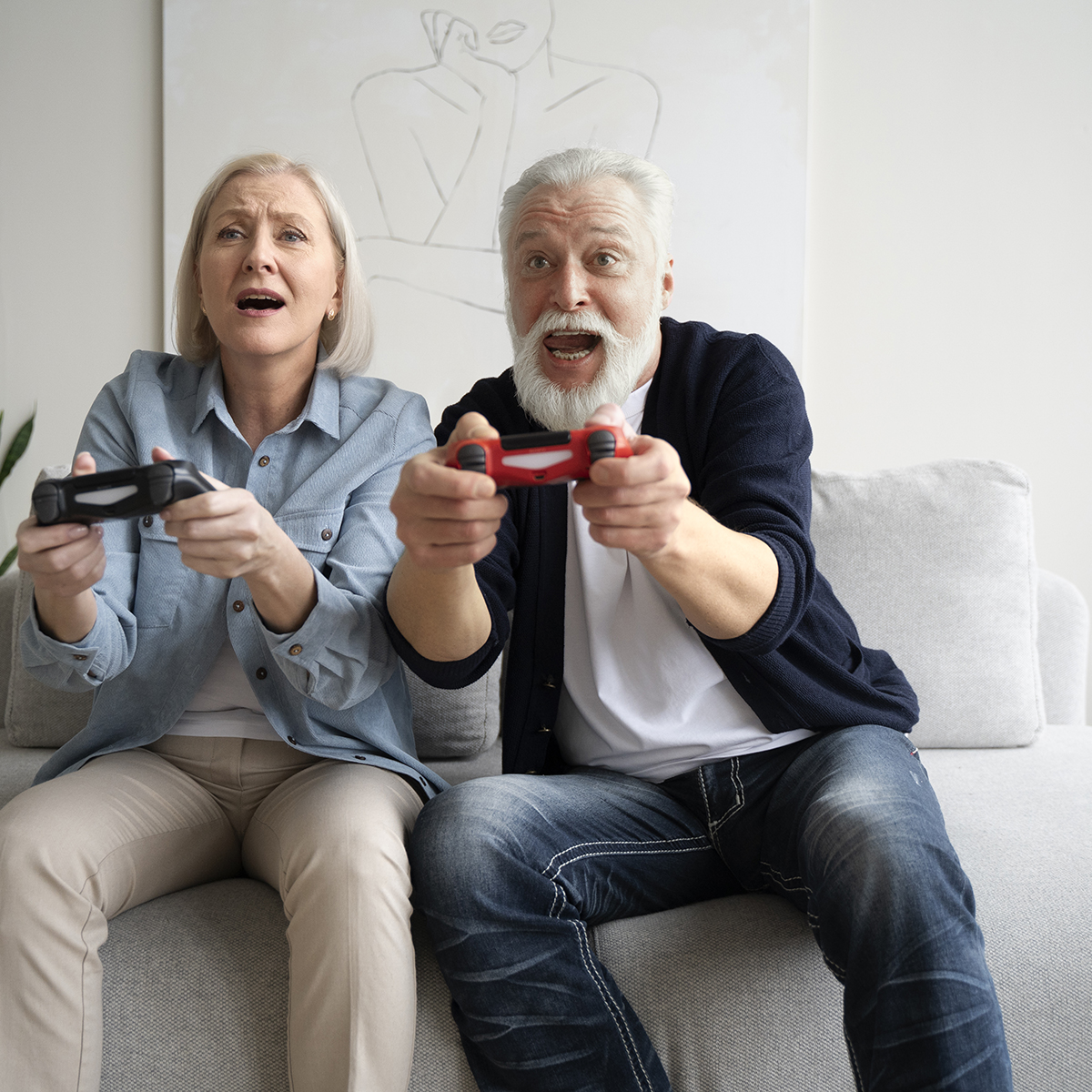
Gaming: A Way to Exercise Older Brains

Video games have always been part of Shawn Etheridge’s life. His interest was first sparked as a young teen, when he toted rolls of quarters to a nearby mall to play arcade games like Pong. As a young adult, as technology evolved, he began playing games like Call of Duty on his personal computer. Later, he even began playing online with his grandchildren, who chortled “Pop Pop” each time they spotted his avatar on the screen, leading Etheridge to adopt “2Pop” as his screen name. 

Now, at age 64, Etheridge unwinds after work each night by playing Halo while his wife watches her favorite TV show nearby. He mainly plays for fun, but as he gets older, he also thinks gaming keeps his brain limber. 

“The more you play, the more proficient you get, and I’ve got to believe that helps with cognition,” he said. 

Etheridge is one of some 57 million Americans over 50 who enjoy gaming, according to recent data from the Entertainment Software Association. Nearly half of Americans in their 60s and 70s play some form of PC, mobile or console video game every week, as do 36 percent of people in their 80s. 

The ranks of older gamers are growing too, by more than 12 million, an uptick of 30 percent from 2017 until 2023, according to AARP Research. Whether it’s a lifelong passion or a new endeavor, many older adults are discovering—or rediscovering—gaming as a source of entertainment, a way to stay socially connected and a tool to keep cognitive skills sharp.

Not Just Young Men 

Many assume “gamers” are teen or young adult males who play combat games. It is true that fast-paced, real-time games may be more challenging for older adults, as reaction times slow with age. And young “digital natives” can learn the ins and outs of games more quickly and adapt more easily to updates and changes. In fact, older adults are less likely to play video games on consoles such as Nintendo Switch or PlayStation Vita—only about 10 percent of those older than 70 own consoles, according to a 2020 AARP study. 

But there are many gaming options that offer a relatively level playing field for players of all ages, including older adults. There are role-playing games and world-building games, where people create virtual environments and characters. There are sports games, like NBA 2K, and simulated racing games, like iRacing.  

Some video games involve competing in real time against other players via the internet. But other games are turn-based (i.e. players take actions one after the other, rather than all at once, allowing time to think strategically without the pressure of immediate real-time action.) Many games offer the option to play alone, with the goal of “leveling up” or pursuing an objective rather than competing against others. 

Connecting older adults to games they’ll enjoy is a key goal of LevelUpLand, a program of the Franklin County Office on Aging in Columbus, OH. Its centerpiece is a weekly Senior Gaming Day. Participants 60 and up gather at a game arena to try PC games, console-based games, racing simulators and virtual reality headsets, all with the guidance of trained staff. Participants can also enjoy computer-based and online versions of card and board games. The program regularly attracts participants in their 80s and 90s; a 101-year-old is the oldest participant to date. 

Participants have formed a community. Many schedule doctors’ appointments around their weekly gaming day. If a regular fails to show up, someone calls to check on him or her. 

“Gaming provides a sense of community and a sense of belonging,” said Melita Moore, MD, founder of Levels Unlocked Enterprises, which partners with Franklin County to offer the program. 

In role-playing games, an older person’s life experience can be an asset. 

Discovering the right games to fit his changing skills and interests has kept Ian Russell, 63, involved in gaming throughout his life. His first foray in gaming was in his 20s, playing Dungeons and Dragons with a group of friends who are still meeting regularly today. His interest shifted to video games, but as he got older, Russell noticed his reaction skills diminishing, making it harder to compete with younger players in combat and racing games. 

“Your hand-eye coordination is just not as good or as quick when you’re older,” Russell said. “I find I’m less interested in real-time action and more interested in turn-based role-playing games,” which allow him time to consider each move. 

At the same time, Russell notes, the wisdom of older age sometimes comes in handy in role-playing games. As an example, he has played Thief, a game where players navigate a warren of streets in an unfamiliar urban environment, without the benefit of a GPS. 

“Navigating around a new town is something that I did in the past,” he said. “If you want to find the center of town, for example, I know that you look for a church spire. So, there’s a lived experience that helps me solve the puzzle.”

However, game developers often don’t design new games with easy access for older adults or newbies in mind. Just a little help from a tech-savvy person can go a long way in getting an older adult started. That’s another key advantage of LevelUpLand. For older adults with mobility challenges, program leaders offer accessibility options, such as an adaptive mouse for those with arthritis. Or they adjust the settings within individual games, such as fine-tuning the speed or changing camera angles to adapt for an older player’s abilities. 

LevelUpLand also serves as an educational platform to teach cybersecurity and “healthy digital lifestyles.” Older adults who venture online can be vulnerable, with risks, ranging from bullying and “trash talking” by other competitors, to frauds and scams. LevelUpLand’s online activities take place in secure private chat rooms on Discord, ensuring that scammers don’t have access. 

“We’re providing those guardrails so that older adults can be online, play and have fun in a safe environment,” said Chanda Wingo, director of the Office on Aging in Franklin County. 

Intergenerational Connections 

For many older adults, competition isn’t the goal. Many say gaming helps connect them with younger people.

Vinny Minchillo, 63, plays Pokémon and other “grandchild-appropriate” video games with his 6-year-old grandson. Both play on Nintendo Switch consoles—a regular one for Minchillo and a mini version for the grandson. 

Minchillo also enjoys playing more mature games like Assassin’s Creed on PlayStation 5. However, he doesn’t play against other competitors. Instead, he and his wife play collaboratively against the game. 

“I don’t keep up with everything that’s going on, which I’d need to do to be competitive,” he said. 

Gaming has also built a bond between Russell and his 25-year-old daughter, especially as she’s developed an interest in “vintage” games.

“She has become aware of the video and board games I played 30 years ago and has been buying revamped versions of those games,” he said. “I get a great deal of pleasure from playing them all over again. It’s a massive nostalgia kick.” 

Older people have become stars in the video-gaming world on YouTube

Gaming also opened an unexpected career avenue for Russell. As a voice actor, he has played a host of characters in online role-playing video games, such as Vernon Locke in Payday 3 and Abelard Werserian in Warhammer 40,000: Rogue Trader. With his booming, mature voice and British accent, Russell is a natural for “the wise, kindly old uncle” roles, he said with a laugh. His characters have a sizable fan base, most of them young adults, and Russell often converses with them via platforms like Reddit and X. 

“I get messages occasionally from young people who say, ‘This game helped me through a difficult time in my life,’” he said.  

Russell is far from the only older star in the video-gaming world. A few years ago, Lenovo sponsored the Silver Snipers, a team of over-60 gamers who competed in esports tournaments. There’s Shirley Curry, 89, aka “Gamer Grandma,” who built a following of 900,000 YouTube subscribers who watched video walk-throughs of her plays on The Elder Scrolls V: Skyrim, a role-playing game. And Michelle Statham, aka “TacticalGramma,” a 57-year-old grandmother who loves first-person shooter games. She calls her followers her “grandkids.” 

When she started posting, Statham assumed no one would watch, but younger players gravitated toward her friendly, supportive online persona. 

“Most people think that older people don’t play games or don’t like games,” she said. “Being an older female has helped me stand out.” 

Staying Sharp Cognitively

Research in recent decades has boosted awareness of gaming’s effects on older brains. A number of studies suggest that older people who played video games regularly showed significant improvement in cognitive functions, depressive symptoms, sleep quality and anxiety. One theory posits that video games may simulate novel environments, which are associated with improved memory. In one study, participants ages 60 to 80 played Angry Birds and Super Mario for 30 to 45 minutes per day for four weeks. The video game players showed improved memory compared to a control group that played a card game, Solitaire.

Further research is needed to tease out what types of video games might best support cognitive function. But according to research by the Entertainment Software Association, almost 90 percent of boomer and Silent Generation players cited “using my brain/keeping my mind sharp” as a key reason why they play video games, compared to just one in five Gen Z and millennials. 

And while some research suggests that extensive “screen time” may be harmful for young brains, engagement in technology seems to benefit older people’s brains. One recent analysis found that people over 50 who used computers, smartphones, the internet or a mix did better on cognitive tests, with lower rates of cognitive impairment or dementia diagnoses, compared to those who used technology less often or avoided it altogether.

Regardless of the research, many gamers are certain their game play boosts their cognitive function. 

“A thousand percent,” said Minchillo. “My PS5 controller has about a dozen different buttons and different combinations of buttons that do different things. To process all the information that’s coming at you very quickly and to respond to it in the appropriate manner—I think it’s great for my brain.” 

BE THE FUEL

MAKE A DONATION TODAY

Your generosity is truly the fuel that empowers CMAP to change lives and to help older adults discover their “why!”

We invite you to donate to the 2023–2024 Annual Giving Campaign by June 30 to help us reach our goal.