
Important Update: Temporary Closure of the Nancy S. Klath Center Due to water damage, the Nancy S. Klath Center (101 Poor Farm Road) is temporarily closed for construction. For your safety, please do not visit the building. We will share updates as soon as it is ready to reopen.

CMAP remains fully operational. Staff are working remotely and from the Suzanne Patterson Building (45 Stockton Street). Programs will continue as scheduled at the Suzanne Patterson Building and in virtual formats. Thank you for your understanding.

My Father’s Frugal Habits Make Sense Now

This thoughtful blog about a change of heart was originally posted on both Next Avenue and Forbes on May 12. It appears here with the permission of the author.

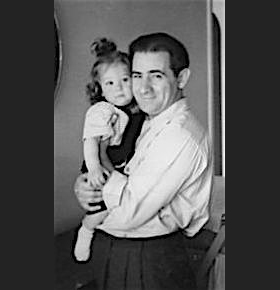
My father had plenty of habits that irritated my mother. But nothing irritated her more than “Marty being cheap.” As a child, I didn’t understand it either.

For instance, my father turned off the lights in rooms that people had just left. Sometimes we were leaving just to come right back in, but whenever he was home, he would march across the little hallway from wherever he was at either end of the house to click the light switches down. Did he like a dark house?

With the lights off, the forest-green end of the house was as dismal as a real Hansel and Gretel woods. My mother would march right back from wherever she had been to defiantly flick the switches up.

My father also saved things. He wore the same, plaid, flannel shirts year after year, one on top of another, even indoors. In the basement shop, when I was invited, he took long, thick, crooked nails that had been pulled out of boards with the claw end of the hammer and smashed them with the fat, butt end, so they straightened out like new.

He saved rusted nails, which had turned a delicate, copper color I liked. Each size went into its own unmatched, little, glass jar: screws, screw-eyes, all the iron nails: the tenpenny, brads, roofing nails, slender, white, finish nails and even some upholstery nails with stubby shanks hidden by golden, curving, indented tops.

But the frugal habit my mother mocked most was my father’s taking the little, bitty soap ends and mashing them together, so they made a small, irregular cake or many-sided, oily, squashed muffin.

He didn’t explain to me why he was doing any of those things. He didn’t explain anything, except, rarely, American politics. He was a silent man.

Maybe in those days, my mother flattened him. But she was a good mother to me, and you don’t judge your parents when you are still so young it’s difficult to tell them apart. Later, when I was married, they came to visit to say they were a happy couple now. My mother, as it were, apologized. She said gaily, because it was all in the past, “I didn’t let him be the captain of his own ship.” They had a good year before he got sick with ALS.

As an adult, I used to tell friends those amusing, childhood stories about my freaky father—straightening  bent nails, turning lights off, saving soap ends. People recognized he did those things to save money.

In the middle class, where my husband and I had slowly risen to occupy a fairly secure place, saving money had begun to seem odd. It was “cheap,” just as my upwardly mobile mother had said, even before the postwar boom really got started lifting our boat.

My generation’s goal, as we were moving up economic ladders, was to spend on visible objects, showing taste as well as means.

But over time, I noticed that as I told the stories, they had lost the tinge of being amusing foibles. They began to edge toward being about thrift. Conspicuous consumption had seemed cruelly elite during the Great Depression, which marked both my parents, though in opposite ways.

Likewise, after the Great Recession of 2008, waste of any kind began to seem excessive, ostentatious, brutal and stupid. Saving became not a mere trend, but a value and a virtue of those who could manage it. The planet cannot take the rapid, steady diminution of its resources forever.

Plenty of people are replicating some of my dad’s frugal habits. Anyone with any sense now wants to save electricity, because so much of it still comes from fossil fuels. Everyone goes around smoothing down the dimmers.

I’ve come to see differently what I once thought of as my father’s eccentricities. I’ve come closer to him in spirit.

Since he gave me his jars, my own basement shop has held his nail collection and I draw on the legacy.

Just recently, when I mentioned the soap ends, a close friend said with a smile that was only slightly embarrassed, “How do you do that?”

“Oh, it’s quick and easy,” I began. “You get a few slivers wet and soft and slimy, and you crush them and press them and rub them around until they hold together. It feels so nice.”



Older and Wiser—but Dizzier

Carol Kuhlman vividly remembers a weekend trip with friends about two years ago—because that’s when she started feeling dizzy. The lightheaded, unsteady sensation came on gradually and quickly got worse. 

“It was very uncomfortable,” said Kuhlman, 66. “I had to hold onto things just to keep from falling. By Monday I was so dizzy, I couldn’t go to work.”

Her physician diagnosed her with vertigo, noticing her rapid eye movements, recommended some exercises and prescribed meclizine, which didn’t prove a practical solution. 

“I took one tablet in the middle of the day and immediately slept for five hours,” she said. 

The doctor wrote a note to excuse Kuhlman from work—for just two days. She was still dizzy when she went back. Her colleagues immediately noticed something wasn’t right. “I was very unsteady on my feet and weaving all over the place,” she said. 

Many times, dizziness is caused by something benign, but it’s still emotionally and psychologically devastating. 

Kuhlman’s struggle wasn’t an atypical one for older adults. Dizziness can affect anyone, but older people are more prone—about 70 percent of adults over 65 have suffered from it in some form. And compared to younger people, dizziness in older adults tends to be more persistent, have more causes and be more incapacitating. 

“We see patients with dizziness very frequently, and we take it very seriously,” said Anupama Gangavati, MD, an assistant professor in internal medicine in the division of geriatric medicine at UT Southwestern Medical Center in Dallas. 

A patient’s experience of dizziness may come in a variety of forms: a feeling of lightheadedness or imbalance; a sensation of blacking out; or vertigo, the perception that the patient—or the surrounding environment—is spinning, tilting or moving. 

Several studies show that older people with a history of dizziness are at higher risk of falling, which is a leading cause of hospitalization and accidental death among those over age 65.

While many causes of dizziness turn out to be benign, the effects can be emotionally and psychologically devastating. Dizziness is disorienting and unnerving. Sudden bouts are frightening; chronic cases can be debilitating. 

“It’s a quality of life issue,” said Gangavati. “Dizziness can lead to a lot of psychological distress if you’re not able to control it. Patients should not let it go just because a physician has not addressed it successfully on the first try.”  

What Causes Dizziness?

Accurate diagnosis can be a challenge. Dizziness can stem from a range of issues, including problems affecting the inner ear, brain, eyes, nervous system, vascular system or heart, all of which are subject to aging-related changes, according to Kathleen Stross, PT, a neurological and vestibular therapist.

Many older adults take multiple medications; dizziness may be a side effect of one or the result of an interaction between drugs. Neurological conditions like Parkinson’s can cause dizziness. Even health issues that might seem unrelated—such as neuropathy (numbness or loss of feeling) in the feet—can cause a patient to feel unbalanced and dizzy. Stress, depression or a lack of exercise may also contribute, as can dehydration or hot weather conditions. 

Among older people, one of the most common causes of dizziness is dysfunction of the peripheral vestibular system—the inner ear and its pathways to the brain. This controls a person’s balance and spatial perception. Neurologists call the vestibular system “the sixth sense” and, just like other sensory functions, it changes as people age. 

“As we age, just as our vision changes and our hearing may be affected, the vestibular system ages as well and may not function as well as it did when we were younger,” said Stross.

Patients can help their medical providers to diagnose the cause more accurately by giving a clear description of their dizziness. Stross gives new patients a questionnaire to help pinpoint their experience—what it feels like, how often it occurs and what, if anything, seems to trigger it. 

“The way people describe it can really vary, so I ask patients to tell me how they feel without using the word ‘dizzy,’” said Stross. “For some, it’s a feeling of being lightheaded or off-balance. Some describe it as feeling ‘heavy headed’ or a sense of floating or pressure. Others say they feel as if they’re spinning or moving.”  

Steve Lavine, 65, of Plano, TX, began experiencing dizzy spells when standing up from a chair. They got progressively worse, to the point where he felt he might black out. Lavine checked his blood pressure and found it was low, almost dangerously so. After consulting with his physician, Lavine stopped the blood pressure medication he had been taking for more than six months with no problems. Lavine had since lost 15 pounds through diet and exercise. The medication was now overcorrecting and making his blood pressure too low, causing the dizzy spells. When he stopped the medicine, the problem disappeared in a few days.

A thorough medication review is absolutely important.

Anupama Gangavati, MD

When a patient complains of dizziness, one of the first things Gangavati checks is the person’s list of medications. Blood pressure medications are common culprits, as are antidepressants, beta blockers, prostate medications and diuretics.   

“Medications are one of the most common contributors of lightheadedness or dizziness,” she said. “A thorough medication review is absolutely important.” 

Gangavati also performs an exam, reviews the patient’s medical history and asks about triggers—when the dizziness occurs and what seems to be causing it. 

Beyond drug side effects, Gangavati said she sees three common causes of dizziness among her older adult patients: benign paroxysmal position vertigo (BPPV), orthostatic hypotension and postprandial hypotension. 

BPPV occurs when tiny calcium particles (canaliths) clump up in canals of the inner ear, interfering with normal perception about head and body movements relative to gravity. Doctors diagnose the condition by observing patients’ eyes while they’re moving their heads. Patients with BPPV exhibit rapid, uncontrollable eye movements. The symptoms may be severe, making the patient feel as if the room is spinning, and may lead to nausea and vomiting. 

“BPPV tends to occur in episodic bouts of a few hours,” Gangavati said. “It’s triggered by head movement, and if you stop moving your head and keep it in one position, it subsides or goes away.” 

Orthostatic hypotension is a bout of dizziness or lightheadedness due to a lack of blood supply to the brain, typically triggered when a person stands from a sitting or lying position. Postprandial hypotension occurs when patients feel dizzy or faint after eating a meal, because their blood supply is geared to the stomach to digest the meal.

Trial and Error

Imani Calicutt, 65, of Dallas, sometimes experiences bouts of dizziness, and her doctor’s not sure why.

“Lately, it’s been constant,” she said. “It’s really limiting me because I can’t go very far without having to sit down.”

She’s working with her doctor (now via telemedicine due to the COVID-19 crisis) to determine the cause. Because Calicutt takes an array of medications for arthritis, diabetes, chronic pain and kidney disease, she’s expecting it may take some trial-and-error to find the cause.  

That’s not uncommon, Stross said. 

“In our experience, patients usually need to see three physicians before they get an answer,” said Stross. Because dizziness could relate to any number of areas of the body, finding the right specialist isn’t easy. 

After a visit to a primary care physician, the patient’s next step might be an appointment with an ENT (ear-nose-throat) specialist or a neurologist, or possibly a cardiologist (if vascular issues are suspected) or hematologist (if anemia is suspected). 

Brief moments of lightheadedness are probably not serious but do mention them to your doctor.

To treat dizziness, a physician may prescribe medications or dietary and behavioral modifications. That can include basic steps like ensuring the patient is drinking enough fluids and getting enough rest and exercise. 

For problems relating to the inner ear, including BPPV, vestibular rehabilitation therapy can be effective. Vestibular therapy ranges from simple exercises (a well-known one is the Epley maneuver, which involves positioning the head to help dislodge the tiny particles that cause BPPV) to physical therapy that helps the patient learn to compensate for imbalance and maintain physical activity. Vestibular therapy, when indicated, may provide immediate relief, or it may take some time to see results.

Gangavati added that many older people will experience brief moments of lightheadedness that likely don’t signal any serious problem. But she recommends at least mentioning it on the next visit to the doctor. “I think any dizziness should be discussed with your physician.” 

If acute dizziness occurs and is accompanied by other symptoms—like chest pain, difficulty walking or slurred speech—it could be a medical emergency, like a heart attack or stroke. In that case, Gangavati advises, head to the emergency room.  

Chronic Dizziness

Twelve years ago, as he walked out of the hospital after finishing his rounds, Tom Davis began to feel dizzy. 

“I’ve been dizzy ever since,” said Davis, 58, a physician in St. Louis, MO. Over the years, specialists have come up with different diagnoses: vestibular neuronitis, vestibulitis and Meniere’s disease, among others. None of the prescribed treatments fixed the problem permanently. Vestibular therapy made it worse. He considered surgery, which would destroy the nerve in the inner ear, but that would leave him deaf in one ear and offered no guarantees. At this point, instead of searching for a diagnosis, he’s focused on managing the symptoms as best he can. 

“It really doesn’t matter what’s causing it, because there’s no way to fix it,” he said. “You just have to work your way around that reality.” Regular exercise keeps him strong and helps reduce the risk of falls. On bad days, he takes a low-dose sedative and rests.

Unfortunately, like Davis, some people may have to contend with dizziness as a chronic or recurring issue. He says getting social support is important, especially for older people who might be tempted to isolate or become sedentary, for fear of falls. 

“If you have chronic dizziness, you’re not alone,” he said. “There are many groups on Facebook where you can get support from others.” 

Patients with chronic dizziness can also find helpful information and links to providers on the website for the Vestibular Disorders Association. Several other organizations offer support groups and other resources.   

Carol Kuhlman has been more fortunate. She did find some relief. She returned to work, still dizzy, a few days after her symptoms first appeared. She’s an administrative assistant at a medical school and, as luck would have it, an expert on vestibular disorders was visiting her department that day. 

Coworkers arranged for her to see the specialist, who diagnosed acute peripheral vestibulopathy (inflammation of the inner ear). He prescribed vestibular therapy, which helped reduce the dizziness and restored her sense of balance. Kuhlman still has flare-ups from time to time, but she’s found a way to manage them. Exercise and stress management seem to help.

“When it recurs, I go back to the balancing exercises, which help,” she said. “And when I have a flare-up, I just have to push through.” 


BE THE FUEL

MAKE A DONATION TODAY

Your generosity is truly the fuel that empowers CMAP to change lives and to help older adults discover their “why!”

We invite you to donate to the 2023–2024 Annual Giving Campaign by June 30 to help us reach our goal.