
Important Update: Temporary Closure of the Nancy S. Klath Center Due to water damage, the Nancy S. Klath Center (101 Poor Farm Road) is temporarily closed for construction. For your safety, please do not visit the building. We will share updates as soon as it is ready to reopen.

CMAP remains fully operational. Staff are working remotely and from the Suzanne Patterson Building (45 Stockton Street). Programs will continue as scheduled at the Suzanne Patterson Building and in virtual formats. Thank you for your understanding.

Love to Travel? Don’t Let Aging or a Disability Stop You

As a cultural attaché for the US Department of State, Teresa Wilkin lived abroad and traveled the world, and she kept traveling, extensively, after retiring in 2004.

But it wasn’t until last year that Wilkin, 69, had what she wryly calls her “first geriatric health challenge” on the road—a bout with deep vein thrombosis (DVT), a potentially life-threatening blood clot. She had traveled without incident on a long, multicountry tour with stops in Portugal, Rome and Crete, but the last leg, a four-hour flight from Chicago to Seattle, sent her to the emergency room.

“I was in a middle seat and didn’t want to get up or bother anybody, so I slept the entire flight,” she said. “I knew something was wrong the moment I got off the plane.”

Wilkin is now in good health and still traveling—she just got back from a trip to Martinique for Carnival. But as she’s learned, travel becomes more problematic as we age. Even the most seasoned traveler must adjust for health issues, limited mobility or stamina, and take steps to avoid ailments like jet lag, motion sickness and DVT.

For older adults who want to travel, or for younger adults who wish to travel with them, the key is thorough, needs-specific research and planning. How much walking or stair climbing is on the itinerary? Can wheelchairs be used? Does the hotel have an elevator? Will there be time to rest or nonstop activities? Will restaurants be able to meet dietary restrictions? Are trustworthy medical services available?

Even a seemingly unremarkable situation can make a trip difficult and less enjoyable, said Michael Zimring, MD, director of the Center for Wilderness and Travel Medicine at Mercy Medical Center in Baltimore. On a recent trip to San Miguel de Allende in Mexico,
Zimring saw how cobblestones and narrow sidewalks turned a simple walking tour into a hair-raising ride for an older man in a wheelchair who was in his tour group.

“Older travelers really need to prepare,” he said. “The last thing you need is to be stuck in an airport because you didn’t bring the right documents for your medical syringe, or stranded in a foreign country without an adequate supply of an essential medication.”

Traveling in the Face of Ableism

Older travelers must also confront ableism—the tendency of airlines, hotels or other providers to overlook the needs of individuals with disabilities. Large hotel chains in the United States comply with the Americans with Disabilities Act (ADA); smaller hotels, both at home and in other countries, often are not held to similar standards. In some cities overseas, taxis that can accommodate wheelchairs are virtually nonexistent.

Often, ableism shows up as overlooked obstacles that are unintentional or careless, according to Debra Kerper, owner of Easy Access Travel, a Dallas-based agency that caters to older travelers and people with disabilities. She recommends using Google—her favorite travel tool—to find a travel agent or tour operator experienced in serving people with physical limitations.

“A tour guide without that specialized experience is not going to look for curb cuts or notice seemingly small obstacles that are almost impossible to navigate on a scooter,” she said.

If you’re going overseas, find out what immunizations you’ll need and have those shots at least six weeks before you set out.

Kerper prechecks each itinerary herself or contracts with local guides who’ve already led disabled travelers on the route. An inexperienced guide might assume that a restaurant with a wheelchair ramp and wide aisles is accessible, not noticing that the only bathroom requires descending a flight of stairs. A cruise ship might be designed for accessibility, but if the ship anchors and passengers are tendered (transferred from ship to shore via a smaller boat), travelers with limited mobility might be unable to join the excursion.

Kerper, 68, knows what she’s talking about, firsthand. She is a double amputee with a variety of medical conditions, including lupus; she travels along on all of the trips she organizes. Some of her clients have severe disabilities, but she says travel can be almost as challenging for people with “hidden disabilities,” such as a person with diabetes who must stop often to check blood-sugar levels or a person with a bad back who can’t sit still for long periods. Preparation is the best medicine.

Preparing for Medical Situations

One of the most important considerations is the availability of trustworthy medical care. An emergency easily handled at home could turn into a costly nightmare in an unfamiliar city, Zimring said. A hospital outside the United States may refuse to provide service unless the patient pays up front, in cash. And remote areas might not have good medical facilities. Travelers should find out in advance what health care options will be at their destination.

Zimring’s advice for healthy travel, especially overseas: consult a physician who specializes in travel medicine at least six weeks before your trip.

“If you wait until the last minute to think about immunizations, it may be too late,” he said. A vaccination for Hepatitis B, for example, is normally given as a series over a period of six months, although it can be accelerated to a six-week period.

All adult travelers should be up-to-date on routine vaccinations: seasonal flu, measles/mumps/rubella (MMR) and tetanus/diphtheria/pertussis (Tdap). Additionally, the Centers for Disease Control (CDC) recommends the shingles vaccine for those 50 and older, and pneumococcal vaccines for those over 65.

Bring copies of your prescriptions. And before you leave home, make sure your meds are legal in the countries you’ll be visiting.

Some destinations may require additional vaccines, such as polio or yellow fever; the CDC website maintains a list by destination. These vaccines may pose risks for older people, and some travelers with health conditions, like diabetes, may require additional immunizations. To navigate these complexities, Zimring recommends consulting in advance with a physician certified by the International Society of Travel Medicine; travelers can visit ISTM.org to find a practitioner in their area.

It’s also crucial to make sure all prescriptions are filled. You may need an override from an insurance carrier to make sure you have enough medication for the entire trip, plus a few extra days’ worth in case of a delay. Bring copies of your prescriptions when you travel, and make sure your medications are legal in the countries you’re visiting. (Even a legally prescribed medication can lead to disastrous consequences—a UK citizen was sentenced to three years in prison in Egypt for bringing in Tramadol, an opioid painkiller, for her husband’s back pain.) Check with the embassy of the country you’re visiting if you’re unsure. If a traveler requires oxygen, be sure to check airline policies well in advance.

If you’re traveling abroad, understand what your medical insurance will, or won’t, cover and obtain supplemental insurance as needed. (Generally, Medicare does not cover overseas care.) Read the fine print. Some policies may exclude injuries related to specific, risky activities, like riding a motorbike in Southeast Asia. Be sure to pack information on how to use your policy if needed.

If you have specific medical concerns, such as heart disease, Zimring advises doing some advance research to find out if good quality, specialized care is available, even for domestic travel. Reputable tour operators are prepared to triage emergencies—getting injured or ill travelers to a hospital, for example—but beyond that, you’ll need guidance to find good specialists. Most carriers who offer medical insurance for travelers have networks of clinicians and hospitals overseas and can assist if needed. Some credit card concierge services may also be able to assist.

Think about What You Might Not Know Before You Go

Before traveling, Wilkin always signs up online for the US State Department’s Smart Traveler Enrollment Program (STEP) for every country she’s visiting overseas. This allows her to receive safety and security advisories via email (including health-related alerts, such as Zika virus updates) and enables the US embassy to contact her should an emergency arise, whether natural disaster, civil unrest or family emergency.

Make sure you have relevant contact information (both in your phone and written down on paper) and know how to call foreign numbers if you plan to use your cellphone; check with your carrier about international limitations on your service plan. Consider downloading an app like TravelSmart from Allianz Global Assistance, which uses geolocation to find nearby hospitals, doctor’s offices and embassies, with recommendations for hospitals vetted by Allianz. (The app is free and available to all travelers but there are extra features for Allianz Travel Insurance policyholders, like claim filing.)

If one or more people on your trip has mobility issues, plan early. Accessible rooms on cruise ships fill up months in advance. Kerper is leading a cruise from Dublin to Amsterdam in 2019, and in early 2018 it was almost booked.

Visualize how you’ll navigate every step. Don’t just make reservations for a flight and a hotel; consider how you’ll move from the airplane to the curb and then to the hotel and to your room. Will you be able to easily find a taxi that can accommodate a wheelchair or should you arrange that in advance? Will you encounter cobblestones, narrow sidewalks or many stairs at the hotel? Ask your tour guide or travel agent, call the hotel or destination or go online for answers.

If you haven’t much stamina, think about renting a wheelchair or scooter at your destination. You can have it delivered to your hotel.

For group programs, read tour and excursion descriptions carefully. Many tour companies rate the accessibility and difficulty of their programs. Road Scholar, for example, has a seven-level rating system for its programs catering to older travelers, ranging from “easy going” (typically bus trips with minimal walking or stairs) to “outdoor: challenging” (vigorous exertion in rugged and steep terrain).

Kerper encourages older travelers with joint problems or limited stamina to consider renting a scooter or wheelchair even if they don’t normally need one at home. Both can be reserved in advance for delivery at a hotel or other destination. Kerper uses a rental agency like Special Needs at Sea, which serves cruise lines and hotels in all port cities. (Elsewhere, she turns to Google for local agencies; in that case, it’s a good idea to check reviews first.)

Find out about options for travelers with limited mobility. The regular tour of the famous opera house in Sydney, Australia, for example, involves a climb of more than 200 steps. But there’s also another tour for those with limited mobility, available with advance reservations.

During plane travel, Zimring said, you can help prevent DVT by choosing an aisle seat, wearing loose clothing and drinking plenty of water. Walk before and during the flight as much as possible and do leg stretches (foot flexes, ankle rotations) when seated. To minimize jet lag, Zimring advises starting to adjust your sleep schedule gradually about seven days before departure.

On the trip, avoid heavy meals, alcohol and caffeine before bedtime. Melatonin supplements may help; ask your doctor first for advice on the best time to take them.

Connecting Generations through Travel

Valerie Grubb never expected she’d become traveling companions with her mother, let alone that the two of them would cover some 400,000 miles together over 20 years, visiting destinations like Italy, Australia, China, Thailand and Cambodia.

“Travel has brought my mother and me together in a way that no number of phone calls could,” said Grubb, who has put her lessons learned and tips into a book, Planes, Canes, and Automobiles: Connecting with Your Aging Parents Through Travel (2015).

Intergenerational travel offers a way to carve out time together, reconnect in a meaningful way and have fun. Even when plans go awry, Grubb said, “It makes for a great story when we’re back home.”

If you’re planning an intergenerational trip, make sure to include activities for every member of the group to enjoy. A cruise may offer a range of options from active to sedentary; one family member can relax on the boat while another opts for an active excursion on shore. Road Scholar offers a wide array of educational, group programs designed for grandparents and their grandchildren, such as the “Exploring the Northwoods with Your Grandchild” hiking trip or “Surf and Sea San Diego,” an active outdoor adventure. Kids spend time with their grandparents but also have time to make friends with other youngsters in the group.

As the younger traveler in her duo, Grubb said it’s important for her to know her mother’s current physical condition when planning a trip. This can change significantly in a year or two. She suggests visiting the older person in advance of a major overseas vacation, to get a good sense of his or her abilities. Then, be flexible and adjust travel plans if needed.

“When Mom and I first started traveling, we’d pack lots of sights in one day,” Grubb said. “Those days are gone.”

Gradually, their travel itineraries became simpler and less demanding. In the last year or so, they’ve had to limit their travels to car trips, due to new medical problems that preclude air travel. Grubb has also noticed that her mother, now 88, has become less tolerant of cultural differences and less adaptable to change as she’s aged, and this has altered their choice of destinations.

Expect the Unexpected

Even the most thoroughly researched and mapped trips can be thrown off kilter. Chances are, there will be glitches: delayed flights, missed connections, reservations that don’t show up in the system, unanticipated health issues, weather emergencies and plain old human error.

“Glitch-free trips are the odd ones these days,” Grubb said. “Something is going to go wrong. Set your mind up for it. Expect it.”

Kerper’s advice: try to roll with unexpected snafus and see them as part of the adventure. Recently, on a Caribbean cruise, as she was leading a group of travelers who used wheelchairs, they came to a shop on Bonaire that wasn’t accessible.

“We told the shop owner that we were looking to spend our money in his shop and asked if he could put out a ramp for us,” Kerper said. The shop didn’t have a ramp, so the employees brought trays of merchandise outside and mingled with the group as they made their selections. A routine shopping stop turned into a fun cultural encounter.

Kerper added that when she makes requests for accommodations, proprietors often say they will make the changes needed so that their establishments will be accessible in the future.

And that’s one of the most rewarding parts of the job, Kerper said: she’s not just helping clients have fun, she’s building awareness. “Just because you have limitations doesn’t mean you have to stay at home,” she said.

How to Save Yourself and Those You Love During a Disaster

When Hurricane Harvey struck his neighborhood on August 28, 2017, the Rev. John Stephens of Chapelwood United Methodist Church in Houston helped launch a “boat ministry.” He and several men in the church navigated privately owned boats into the rising flood waters to rescue neighbors stranded in their homes.

Stephens quickly noticed something victims had in common: most were older people.

“Maybe they were thinking, ‘I’ve seen Hurricane Allison, I’ve seen Rita, I’ve seen Ike,’ and thought they could weather the storm in their homes,” he said.

Maybe. But what Stephens discovered is something emergency-management experts already know—and struggle with: when disaster strikes, older adults are particularly vulnerable.

Almost three-quarters of the 739 people who died in Chicago’s deadly heat wave of 1995 were 65 or older, according to Eric Klinenberg, author of Heat Wave: A Social Autopsy of Disaster in Chicago (2002). Similarly, when Hurricane Katrina struck New Orleans in 2005, three-quarters of those who died were over 60, according to a Knight Ridder analysis, and among those, about half were over 75.

“The victims of Katrina were not disproportionately poor; they were disproportionately old,” wrote Amanda Ripley, author of The Unthinkable: Who Survives When Disaster Strikes—and Why (2008).

The key to surviving a disaster is clear thinking, ahead of time when possible, and during the event itself—making a plan will greatly improve your chance of survival. It’s also important to understand why older adults are more vulnerable, so family, neighbors and communities can help reduce complications and casualties as much as possible.

Planning to Survive

Not all disasters are predictable; forecasters can predict a hurricane, communities can know they are in tornado alleys, yet many emergencies are sudden—earthquakes, transportation accidents, an active shooter. Many people watch these events unfold elsewhere on the news and feel helpless, thinking that there’s no way to prepare. However, surprisingly simple measures—in advance, during and after the emergency—can mean the difference between life and death in an emergency, especially for older adults.

“Even a minor amount of preparation can pay major dividends,” wrote Russel L. Honoré in Survival: How Being Prepared Can Keep You and Your Family Safe (2010). Honoré, a retired US Army lieutenant general, led planning and response operations following several hurricanes, including Katrina.

The American Red Cross’s publication, Disaster Preparedness for Seniors by Seniors, offers three steps for preparedness: get a kit; make a plan; be informed.

Assemble a disaster kit for sheltering at home. The kit should contain enough food, water, medication and medical supplies (hearing aids, glasses, etc.) to last at least three days. Plan on at least one gallon of water per person per day. Include food items that are nonperishable and that don’t require cooking, such as peanut butter, granola bars and canned tuna, meats or beans. (Be sure to store a can opener in your kit, and replenish food periodically to ensure your supply is fresh.)

A flashlight and weather radio are also recommended. Stock extra batteries or buy hand-cranked models. Store vital records and documents (including passports, driver’s licenses, birth and marriage certificates and social security cards) in a fireproof, waterproof container, and make sure it is accessible to grab in an immediate evacuation.

Know how to turn off gas and electric utilities in your home. Keep your car’s gas tank at least half full at all times.

Discuss an emergency plan with family members, or with friends, neighbors, church acquaintances—people who will know to check on you as soon as possible. Decide where you’ll shelter in your home in severe weather, and where you might go if evacuated for an anticipated disaster such as a hurricane. Make a plan for how you’ll stay in touch with family members if you’re separated. Know how to turn off utilities (gas, electricity) in your home. Review your plan every six months and update as needed. Be sure to include out-of-town relatives in your planning and discuss how you’ll let them know your whereabouts should you evacuate.

Power outages after a disaster may drag on for days, even weeks, making it difficult to replenish basic supplies such as gasoline or medication. Keep your gas tank at least half full at all times. If possible, work with your pharmacist and insurance company to obtain a seven-day, emergency supply of all medications. Store them in a waterproof container and rotate them through your medication schedule to keep them fresh. Keep a supply of cash on hand too—ATMs and credit card machines often don’t work if the power is out.

Be prepared to communicate. During Hurricane Harvey, many people called for help with their cell phones, via 911 or social media. Keep your cell phone charged and protected from the elements. Consider investing in a protective case (like an OtterBox) and extra batteries, or a hand-cranked or solar charger. Write down important phone numbers because when your cell battery dies, you won’t be able to access your contacts. Learn steps to minimize power consumption on your cell phone—such as dimming the background light or selecting low-power mode—to extend battery life.

After an emergency, cell service is often overloaded but texting may still work when the network is busy. Don’t forget to try your landline, if you have one, as it may work when cell service is out or slow. Discuss your plans for communication with out-of-town relatives as well as immediate family members.

Finally, stay informed through reliable media sources and community notifications.

Pets and Valuables

If you have a pet, the family disaster kit should include enough food, medicine and water for each animal for at least three days. Prepare to evacuate your animals too.

“If it’s not safe for you to stay behind, then it’s not safe to leave pets behind either,” according to the Red Cross’ online pet-preparation guide. Ready leash or carrier, copies of medical records and any special, care instructions (in a waterproof container or bag), as well as current photos of your pets if you have them, in case an animal gets lost. Ensure that your pet’s vaccinations are up to date. Consider having it microchipped by your veterinarian, which may help you find it should you become separated.

Most American Red Cross shelters do not accept pets, although they do accept service animals. You’ll need to make alternate arrangements to shelter your pet. Find out which hotels along your evacuation route will accept animals. Some will waive no-pet policies in an emergency but call first to confirm. Make a list, with phone numbers, of friends, relatives, boarding facilities, animal shelters or veterinarians that might care for your animals in an emergency.

The ASPCA recommends placing a rescue alert sticker near the front door of your home to notify emergency personnel of animals in the house. Some fire departments provide these. If you do leave with your pets, write “evacuated” on the sticker, so responders don’t waste time looking for them.

In an emergency, your first priority is to keep family members safe. But if time permits, consider moving valuables to safer locations. If you’re anticipating flooding, for example, family photos might be stored upstairs or on a high shelf in a sealed, plastic, storage container. High-value items like jewelry may be moved to a safe or other secure storage.

But Why Are Older People So at Risk?

If you’re concerned about helping an older adult, it helps to understand why they are so vulnerable in disasters.

If an older person has problems with mobility, can’t drive, has no access to transportation or becomes easily confused, evacuation can be difficult. Social isolation contributes too, because they might feel as if they have nowhere to go or no one to ask for help.

In Hurricane Katrina, many low-income older adults were hampered by an unlucky quirk of timing, noted Honoré. The hurricane made landfall in southeastern Louisiana on August 29, 2005—a few days before Social Security or disability checks arrived. For some, that meant there was no money to buy a tank of gas, a bus ticket or an extra bag of groceries.

“When a hurricane hits at the end of the month, the poor, elderly and disabled people who rely on government checks will not have the money to evacuate,” Honoré wrote.

Along with the heroes come the exploiters. When older people go into crisis mode, they’re more vulnerable, scared and not quite as wary.

–Liz Loewy

Older adults are not just physically more vulnerable; they’re also more likely to suffer financially in a disaster’s aftermath. An older adult’s home may have been paid off long ago and thus may not be adequately insured. Applying for disaster aid is a complex and often confusing process that may require multiple visits to an agency office. And then there are the fraudsters—bogus repair services, fake charities and identity thieves—who show up in the wake of every disaster, targeting older adults.

“Along with the heroes come the exploiters,” said Liz Loewy, co-founder of EverSafe, an identity protection service, and former chief of the Elder Abuse Unit in the Manhattan district attorney’s office. “Anyone can fall for a scam, but when older people go into crisis mode, they’re more vulnerable, scared and not quite as wary and able to recognize a scam.”

Loewy adds that even those outside of the disaster area may be vulnerable, as fake charities crop up, purporting to help victims, but actually pocketing donations instead.

Preparing for the Unexpected

Sudden disasters can take many forms and occur in many places: an active shooter, a sinking cruise ship, a car accident, a hostage situation, a terrorist attack.

While it’s not possible to anticipate every emergency, some basic habits can help. Being aware of your surroundings will boost your chances of survival in almost any situation. For example, if you enter a public space like a movie theater, make a note of the location of the exits. If you’re on a cruise, attend the safety demonstration, pay attention and take notes if you think you might forget details.

You can’t guarantee your safety, but you can improve your odds. Many assume plane crashes are generally unsurvivable, but among all passengers involved in serious accidents between 1983 and 2000, more than half survived. (Serious accidents are defined by the National Transportation Safety Board as those involving fire, serious injury or substantial aircraft damage.) Survival often depended on simple steps: paying attention to the flight attendants’ safety briefing, noting the location of exits or evacuating the plane quickly, without pausing to grab luggage.

Preparing as a Nation

About 70 people died in Hurricane Harvey; still too many, but far fewer than the more than 1,800 deaths in Hurricane Katrina. The two disasters were different—for one thing, the water rose much faster in Katrina—but the contrast points to some progress in national preparedness to help keep seniors safe.

“We learned a lot of lessons during Katrina,” said Carrie Reyes, director of emergency
management for Plano, TX. “The best way we can help seniors to be more prepared is through education. We need to demystify disaster and make them aware of the tools to help them prepare.”

She notes that emergency managers at local levels have become much more proactive in establishing connections with older adults in their communities. Reyes, for example, frequently visits older-adult living communities and meets with groups to provide education and to involve them in community disaster planning.

After the events of Hurricanes Katrina and Rita, special needs issues—such as limited mobility, medical conditions or cognitive issues, all of which affect many older adults—were fully integrated into all phases of emergency management. (This was part of an amendment to the Robert T. Stafford Disaster Relief and Emergency Assistance Act, which established laws guiding federal natural-disaster assistance for state and local governments.)

“Emergency managers are now tasked by federal legislation to engage our entire community,” Reyes said. “That includes the very young, the very old and those who may have access or functional needs.”

Some communities have developed systems to better track older adults and those with special needs; several counties in Florida, for example, offer vulnerable-population registries. Residents register their name, location and any special needs in the system. In the event of disaster, the registry may be used to help locate registrants during search and rescue operations.

The neighbor, whom they’d never met, said, “My house is dry and I have a second floor. We’d like you to stay until the water recedes.”

— Carrie Reyes

Reyes, who was deployed after Hurricane Harvey to Port Aransas, TX, to assist local emergency managers in rescue and recovery, also thinks that there’s more awareness of older adults’ needs in disasters.

“There was a lot of spontaneous sheltering and neighbors checking on neighbors with Harvey,” she said. Someone with a key to a local school, for example, might open it as a makeshift shelter if the school was located on higher ground.

Reyes’ great uncle and aunt, both in their 80s, live in Houston; when their house began taking on water, a neighbor knocked on their door. “The neighbor, whom they’d never met, said, ‘My house is dry and I have a second floor. We’d like you to stay until the water recedes.’”

Family members and neighbors can help older adults prepare. If you live close by, include them in family or neighborhood disaster planning. Offer to assemble a disaster kit or to purchase supplies for one.

Reach out to older adults in your community who may not have family nearby or other sources of social support. Provide your contact information and check in on them before a known emergency and after an event occurs.

Simply staying in touch with an older-adult neighbor or family member can be crucial. Author Klinenberg believes isolation contributed to the high death rate among seniors in the Chicago heat wave.

“Decades of migration out of Chicago, where the total population decreased by more than a million between 1950 and 1990, and several neighborhoods lost more than half their residents, increased the likelihood that the city’s seniors would be isolated and alone,” he wrote. By contrast, in neighborhoods like Little Village, where social ties were strong and residents enjoyed congregating in public spaces, older adults fared better during the heat wave.

Even after Preparing, Leaving Might Be Best

Sometimes, older adults may resist evacuation, simply because they’ve lived long enough to survive disasters before. Many who died in Hurricane Katrina, for example, were middle aged when Hurricane Camille struck in 1969; having survived, they felt they could manage.

“I think Camille killed more people during Hurricane Katrina than it did in 1969,” said Max Mayfield, former director of the National Hurricane Center. “Experience is not always a good teacher.”

When an older adult doesn’t want to evacuate, Reyes recommends a realistic but respectful conversation.

“Say, ‘Hey, Mom, Dad, if you stay here, it might get bad and I might not be able to come get you for a couple of days; is that what you want?’” she said. “Respect their wishes but make sure both of you understand the outcome of those decisions.”

Bill and Paulette Rogers of Port Aransas, TX, both in their 60s, learned just how bad it can get during Harvey. They decided to ride out the storm at home, even though their grown children begged them to evacuate. When the storm struck, a tree tore through their upstairs bedroom and water began to surge into the house. The couple ended up spending the night in their pick-up truck, with water up to their shoulders, expecting to die.

Thankfully, they survived.

“This is the dumbest thing I’ve ever done,” Bill Rogers later told a reporter.

Save on Health Care at the Playground

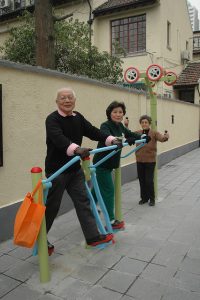
When Ronni Bennett discovered elder playgrounds online a few years ago, she immediately fell in love with the concept. She began researching how the outdoor parks, designed specifically for the social and fitness needs of older adults, have become popular in Asia and Europe. She interviewed designers and looked into the special equipment involved.

Bennett, 75, a retired web producer who writes an influential blog about “what it’s really like to get old,” began lobbying her city council to build an elder playground in Lake Oswego, OR, the town where she lives. She was successful: her community now has a fitness park with 10 pieces of equipment designed specifically for older adults, including three that are wheelchair-friendly.

But, claiming it would be impossible to enforce an “elders only” policy, Lake Oswego officials named the park “FIT Spot.”

Bennett blames ageism. “I am so sorry the word ‘elder’ is not in the name,” she said. “But that is how things go in a culture as terrified of aging as ours is. Nobody wants to say there are old people here.”

Bennett’s experience may help explain why elder playgrounds are taking off much more slowly in the United States than in other parts of the world. While interest is growing, only a handful of dedicated “elder playgrounds” have been installed in the United States. Convincing communities to give money and space to parks that are for elders only is proving to be a hard sell.

Roots in China

Elder playgrounds have been around for about 20 years in other countries. In 1995, with the adoption of the “Physical Health Law of the People’s Republic of China” along with an “Outline of Nationwide Physical Fitness Program,” China began building outdoor fitness centers geared to all ages. In 2003, the University of Lapland in Finland, partnering with manufacturer Lappset, designed and built a playground for elders for research. Around the same time, Japan began repurposing children’s playgrounds as “Nursing Home Prevention Parks,” with specialized workout stations and classes, in response to the nation’s aging demographics. The concept quickly spread to Germany, England, Spain and Canada.

Elder playgrounds typically feature low-impact exercise equipment designed for the specific fitness priorities of older adults, such as building balance, coordination and flexibility. Equipment is lower to the ground and equipped with seats or grips geared to people who might have limited mobility or strength.

Regular use of an elder playground can boost older adults’ physical fitness and help prevent illness. One study found improvements in balance, coordination and speed after just three months.

Some elder playgrounds have been built in the United States, and there are hopeful signs that more are on the way. Colin Milner, founder and CEO of the International Council on Active Aging (ICAA), notes that many manufacturers of outdoor playground and fitness equipment have added or expanded lines of equipment specifically for older adults in recent years.

“These companies don’t jump on board unless they feel there is a significant opportunity,” Milner said.

While ICAA hasn’t tracked elder playgrounds specifically, its 2015 survey of health clubs, senior centers, retirement communities and continuing care retirement communities (CCRCs) found that 21 percent planned to purchase outdoor exercise equipment by 2017. At the time of the survey, some 41 percent planned to add game courts by 2017, 38 percent intended to create outdoor fitness or exercise trails and 57 percent aimed to install walking trails or paths.

From Kids to Elders

Michael Cohen, a veteran designer of children’s playgrounds, first became intrigued with spaces devoted exclusively to older adults when he saw a Good Morning America report on a “pensioners’ playground” in Manchester, England. That led him to found Must Have Play, an Ithaca, NY-based design group exclusively focused on innovative playgrounds for older adults. He has designed several elder playgrounds for parks in US cities, but so far none have actually been built.

Cohen envisions elder playgrounds as places that offer more than a good workout. He’d like to see elder playgrounds promote play in forms suited for older adults’ abilities, with courts or equipment for sports like pickleball, paddle ball, bankshot basketball or bocce ball, and loaded with features like water elements, walking paths and game tables.

“Ideally, an elder playground is not just a place to exercise,” Cohen said. “It’s an inviting space where you’d want to spend time.”

In the United States, playgrounds that cater to multiple generations are catching on more quickly than those designed exclusively for older adults.

That’s what happened at Carbide Park, in Galveston County, TX, which added an elder playground in 2014. The park has become a favorite destination for field trips from three local senior centers. On days when the weather is not too hot, busloads of older adults arrive to enjoy the park, according to Julie Diaz, director of parks and cultural services for Galveston County.

“If they want to go outside, they know they can come here to exercise, to swing or just to sit and talk with other seniors,” Diaz said. “The elder playground provides the type of exercise they need, and it’s very specific to them.”

Some elder playgrounds have arisen as outdoor extensions of local senior centers, such as the fitness park at the Rockville (MD) Senior Center. Cohen says that’s a big plus—proximity to a senior center or a senior residence gives visitors access to clean bathrooms and a place to go for help in the event of emergency.

The Rockville park features equipment developed especially for the needs of older adults, according to Chris Klopfer, the center’s senior sports and fitness supervisor.

“The playground encourages functional training, which incorporates more than one muscle group at a time, and that helps them with their day-to-day function, so that they can stay healthy and strong and age in place,” Klopfer said. “In today’s society we rely on medication for different ailments. I think we need to continue to push in the direction of physical exercise.”

The Rockville playground’s equipment has hand grips on everything, so that older exercisers can stabilize themselves. If they do fall, a non-slip surface made from rubberized tires makes injuries less likely.

One local trainer regularly brings older adult clients to the park for workouts when the weather is good. One of the trainer’s clients, Ellie Rouff, 72, adjusted her workout schedule to allow for more sessions at the park.

“I’m still working in an office and sit at a desk five days a week, so if I can be outside, I love it,” Rouff said. She likes the fact that the equipment has usage instructions and allows her to do exercises she couldn’t otherwise. She can no longer do push-ups on the floor but can perform them on one of the machines.

Boosting Fitness

Research suggests that regular use of an elder playground can boost older adults’ physical fitness and help prevent illness. The University of Lapland studied one group of 40 people, ages 65 to 81, and found significant improvements in balance, speed and coordination after just three months of guided exercise (90 minute, once-a-week sessions) on an elder playground.

Increased fitness not only improves quality of life, it can also help keep the cost of health care down, ICAA’s Milner notes, citing a study that found that adults who do 90 minutes of cardio exercise a week can save $2,500 annually on health care.

“By age 80, 46 percent of Americans can’t lift 10 pounds,” Milner said. “If you can’t lift 10 pounds, that’s a precursor to moving into a nursing home. Just simply getting people outdoors five to 10 minutes can make a huge difference in their mental health, attitude, overall health and well-being.”

Elder playgrounds also promote social engagement, an important factor given that many older adults become isolated and lose social ties. Numerous studies have linked isolation with poorer health among older adults.

Cohen designs elder playgrounds with conversational seating, to make them inviting even to people who may not wish to exercise. The exposure to sunlight helps reduce vitamin D deficiency and may help older adults sleep better at night.

The Multigenerational Option

In the United States, playgrounds that cater to multiple generations, instead of being designed exclusively for older adults, are catching on more quickly than elder playgrounds. These multigenerational playgrounds offer features and equipment appropriate for children as well as older adults. To motivate more adults to take their kids to play more often, the nonprofit KaBOOM! has built more than 50 multigenerational playgrounds in the United States since 2012 through a partnership with Humana and the Humana Foundation. (To build the playgrounds, local communities apply for KaBOOM! grants, enlist funding partners and recruit volunteers.)

But while multigenerational spaces offer great benefits, they’re not designed exclusively with seniors’ needs in mind, Cohen said.

“In reality, many multigenerational designs tend to pay short shrift to the needs of older adults,” he said. Many are essentially children’s playgrounds with a walking path added nearby or a few exercise machines located in adjacent space.

Milner agrees. “Multigenerational can be a little bit intimidating to older adults,” he said. “The noise might be overbearing.” Children who play raucously can be overwhelming to those living with dementia and possibly a safety issue if the children are underfoot among adults with mobility issues.

A study at Germany’s Wiesbaden Polytechnic indicated that many older adults found it embarrassing to exercise in the presence of younger people and were more inclined to use more private playground settings visited mostly by generational peers.

Another factor: some older people simply don’t feel comfortable around children. As a single, older man, Cohen says he’d personally feel uncomfortable on a playground and thinks some parents might feel that way too.

“I want a place where I can maybe meet a friend for a game of bocce, or where I can read,” he said. “I don’t necessarily want a lot of kids around.”

The Lake Oswego FIT Spot has naturally attracted some multigenerational use—it’s located near a children’s playground, so some grandparents and parents use the equipment while keeping an eye out as kids play nearby. But Ronni Bennett thinks it’s important to have dedicated spaces where elders, especially those who can’t afford a health-club membership, know they can meet peers and exercise comfortably and safely.

“With so much concern over health care costs, to me, elder playgrounds are a money-saving no brainer,” she said. “The point is to keep moving and to have fun at it. When people don’t exercise, they die younger than they should.”

Medical Tourism: Are Local Doctors Always the Best Choice?

Patients travel from around the United States and the world to see Richard Guyer, MD, an orthopedic spine surgeon at the Texas Back Institute in Plano, TX, because he is a recognized, widely published expert in disc-replacement surgery.

But when Guyer, 66, recently needed surgery himself—a complex procedure to remove a benign tumor—he flew to Florida. Good care was available in his own hospital, but he chose a surgery center where surgeons perform the procedure, on average, 50 times a week, using advanced techniques.

Guyer’s experience—both as sought-after surgeon and as traveling patient—is becoming more common. Proximity no longer determines health care. A growing number of Americans are willing to travel to other states or overseas as part of a trend called “medical tourism.”

Medical tourists travel to save money, to get cutting-edge or high quality care or for procedures not available locally.

Medical tourists leave home to access the best available care or to save money or, in some cases, both. Patients Beyond Borders, an information service for consumers, estimates that 1.7 million Americans will go overseas for elective medical care in 2017. The global medical tourism market is estimated to be $45 to $72 billion annually, with approximately 14 million patients crossing borders worldwide, including those who travel to the United States for medical care.

Data on domestic medical tourism—traveling within the United States to another state for health services—is scarce and largely anecdotal. But, noting a growing willingness to travel for care, physicians and medical centers are adjusting their practices to attract patients, particularly for out-of-pocket elective procedures.

What Sends Patients Packing

Within the United States, medical travel typically takes patients to centers of excellence for highly complex procedures, such as the Cleveland Clinic for heart surgery, or to research hospitals offering the latest and best care, such as Memorial Sloan Kettering Cancer Center.

Older Americans are driving the trend. Josef Woodman, CEO of Patients Beyond Borders, estimates that about 85 percent of overseas medical travelers fall within the ages of 45 to 65—too young to qualify for Medicare but at an age more likely to develop complex medical conditions.

Other drivers include the relatively inexpensive cost of travel and wide disparities in care and treatment pricing at home and abroad. Also, the Internet makes it easier for patients to research options and for providers at different locations to share medical records.

Gaps in health care insurance are also a factor, especially as a growing number of patients rely on health plans with high deductibles.

“As health plans continue to become more expensive and less cost-efficient for the patient, the ‘underinsured’ patient can often realize cost savings on more expensive surgeries over and above their plan reimbursement,” Woodman wrote in an email interview.

A 2012 study by Woodman, published in AARP International’s Journal, identifies three categories of medical tourists:

  • Value patients, usually those 50 and older, who are uninsured or underinsured or who seek procedures that insurance doesn’t cover
  • Access patients, who live in areas where available health care lacks quality or where specific procedures may not be available
  • Quality patients, who are willing to travel for exceptional specialty care, including cutting-edge surgeries or new therapies

Bill Ruth falls into the quality category. When the 64-year-old retired teacher and coach learned that he needed heart surgery, he called on a few physician friends for advice. They steered Ruth to the Cleveland Clinic or Baylor University Medical Center in Dallas, even though Ruth lives in Estes Park, CO. After researching his options and interviewing physicians, Ruth chose Baylor. He traveled to Dallas, where the procedure was successfully performed. Within a few days, Ruth was up and walking five miles at a time. And within a few weeks, he went to the high school in Pennsylvania, where he once taught, for his induction into the school’s athlete hall of fame.

Ruth’s insurance plan, through the teachers’ union, covered all of his medical costs; he picked up the cost of travel for himself and for his wife.

As a triathlete who organizes health and fitness programs in his community, Ruth said he would never consider just going to the nearest provider without doing his research.

Treatment abroad can be 20 to 80 percent less expensive, depending on the country and the procedure, and including the cost of travel.

“You want the best care possible,” he said. “Why shouldn’t people travel to get the best medical care?

“Some people put more research into buying a car (than medical care). But when you really care about your health and your activity level, you do what it takes to find the best care.”

Typically, for necessary procedures like Ruth’s, insurance will cover the treatment at most US locations, although often at out-of-network rates. (Be sure to confirm coverage with the insurance provider before any procedure.) Patients almost always pay the cost of travel.

But in some cases, medical travel is paid for by an employer. Home-improvement retailer Lowe’s sends employees in need of complex, non-emergency heart surgery to the Cleveland Clinic. Lowe’s, which self-insures its employees, struck deals for bundled prices with the Cleveland Clinic, allowing Lowe’s to save money even after paying all medical and travel costs. By going to a center of excellence for heart surgery, patients enjoy better outcomes and fewer readmissions, which in turn helps employees return to work healthier.

Lowe’s typically picks up the cost of the trip for a caregiver too and sometimes pays the deductible as an added incentive. (Employees who don’t wish to travel may choose a local provider and receive normal coverage.) Other large, self-funding companies, including Walmart, Boeing and PepsiCo, have similar approaches.

Heading Overseas

Patients are traveling to Thailand for plastic surgery, Germany for cancer treatments, Costa Rica and Mexico for dental care, Turkey for eye specialists, Israel for fertility treatments, Poland for dental implants, the United Arab Emirates for bariatric surgery, to list a few.

About 70 percent of Americans who go overseas for medical care do so for elective treatments that insurance typically doesn’t cover, such as dental work, cosmetic surgery, bariatrics or fertility treatments, Woodman said.

Opting for treatment abroad can be 20 to 80 percent less expensive, depending on the country and the procedure, even after the cost of travel. What’s problematic, however, is judging quality of care.
Leigh Turner, PhD, associate professor at the Center for Bioethics, University of Minnesota, cautions that much of the information available online is created by providers, who have a financial stake in painting a positive picture.

When you travel for care, coordinating long-term follow-up and managing postsurgical complications can be problematic.

“It’s not so easy to spot the bad actors,” Turner said. Overseas providers are “businesses that are trying to attract patients, and they are quite savvy in painting a positive picture. While the Internet gives patients more access to information, it’s also creating more misinformation.”

It’s extremely important for medical tourists to do their homework. Patients must have a good understanding of the desired procedure and make careful assessments of the quality of the provider. Patients Beyond Borders advises contacting physicians in advance for references and to check accreditations.

“If the doctor is evasive, hurried, or frequently interrupted, or if you cannot understand his or her language, then either dig deeper or move on,” Woodman writes in his book, Patients Beyond Borders: Everybody’s Guide to Getting Affordable, World-Class Healthcare (2015).

Medical-tourism concierge services can help you locate clinics and arrange travel, but they are not regulated and do not provide medical advice. Some may steer patients toward clinics that pay commissions. You should get recommendations from former customers, ask how the agency is compensated and use a US-based agency if possible.

Those who use overseas hospitals have little recourse in the event of poor outcomes. Regulation and oversight can vary widely, although that may be changing. The Joint Commission International (an independent, not-for-profit accrediting organization for US hospitals and medical providers) now accredits more than 400 hospitals worldwide, giving patients some reassurance as to quality.

Costs of Medical Tourism

Medical travel remains an option largely for those who can afford it. With very few exceptions, you must cover your own travel costs, as well as those of any accompanying caregiver.

Medicare patients may seek care at any US provider that accepts their plan, but aside from a very few rare circumstances, Medicare doesn’t pay for overseas procedures or travel costs, foreign or domestic. (Some Medicare Advantage plans might cover the cost of the trip for those who must go to a distant US facility for transplant surgery.)

Patients must also consider nondollar costs. There will be additional time spent traveling to the location and recovering there. You may need to avoid air travel, especially very long flights, for a period of time after surgery. When you are overseas, language and cultural differences can create additional stress. “Receiving care at a facility where you do not speak the language fluently might increase the chance that misunderstandings will arise about your care,” warns the Centers for Disease Control and Prevention’s website.

Some overseas hospitals offer hotels or resorts where patients may stay for recovery and post-op care before returning home. However, coordinating long-term follow-up and managing postsurgical complications can be problematic. Studies suggest that when patients are admitted for complications at a different hospital than where the original surgery took place, mortality rates are higher.
Guyer, the Texas surgeon, sees that as a key difference between domestic medical travel and overseas travel.

“If a patient comes here from Montana for surgery and later has problems, they can send pictures, we can consult over the phone, and they can fly back if need be,” he said. “If somebody goes abroad for surgery and then has a problem, we don’t like to take care of it here, because we weren’t there for the surgery.”

Effects of Medical Travel

Many hope that the trend toward medical tourism could drive improvements in quality and help keep costs down in the United States.

“Theoretically, it makes sense—as you expand patients’ options, there’s increased competition in terms of quality and price,” said Steve Wojcik, vice president of public policy for the National Business Group on Health. “That benefits everybody.”

When employers like Lowe’s send patients to the Cleveland Clinic, for example, that takes patients away from local providers.

“In those cases, a local provider might approach a big employer and say, ‘We know you’re sending people out of town; here’s our data, and here’s what we can offer you,’” Wojcik said.

But while increased competition should reduce prices and improve quality in theory, price transparency in the United States is still spotty, especially for nonelective procedures, and price disparity is wide. A 2013 Journal of the American Medical Association study of domestic providers found a wide range in pricing for hip replacement surgery: as low as $11,000 or as high as $125,000. Also, when researchers posed as patients prepared to pay cash, more than half of the hospitals queried would not provide prices upon request.

Some US medical centers offer a concierge service to assist with trip arrangements.

“There’s no correlation between cost and quality,” said Jesse Gomez, executive vice president of sales and marketing for BridgeHealth, a Denver health consulting firm that negotiates bundled rates for self-insured employers for procedures at centers of excellence. “But fortunately for consumers, objective provider data is becoming increasingly more accessible.”

Gomez notes that patients can now find average prices for common procedures from the Health Care Cost Institute by way of its consumer website and hospital quality ratings by way of websites like www.carechex.com.

But some foreign providers make it even easier. Bumrungrad International Hospital in Bangkok, a top destination for global medical tourism, publishes costs online for some 30 procedures and offers package pricing in many specialty areas.

“We can only hope for this kind of transparency to visit us sooner than later here in the US,” said Woodman of Patients Beyond Borders.

The desire to attract patients is clearly changing the way some medical providers do business. The Cleveland Clinic’s website offers extensive information for foreign and domestic travelers, plus a concierge service to assist with trip arrangements. Other centers of excellence that attract domestic medical travelers are improving the ways they integrate post-treatment and follow-up care with local providers.

Some of those providers are becoming more transparent and consumer-friendly on pricing, especially those that cater to cash patients. For example, Guyer’s clinic negotiated with the Texas Health Center for Diagnostics & Surgery to offer a package price, which allows out-of-pocket patients to pay up front and avoid unexpected charges.

The option of medical tourism is also encouraging people to become more educated and more proactive in their own medical care.

“The patients who travel to see me have done their homework,” Guyer said. “They know all about the procedure and they know what questions to ask.”

BE THE FUEL

MAKE A DONATION TODAY

Your generosity is truly the fuel that empowers CMAP to change lives and to help older adults discover their “why!”

We invite you to donate to the 2023–2024 Annual Giving Campaign by June 30 to help us reach our goal.