Important Update: Temporary Closure of the Nancy S. Klath Center Due to water damage, the Nancy S. Klath Center (101 Poor Farm Road) is temporarily closed for construction. For your safety, please do not visit the building. We will share updates as soon as it is ready to reopen.

CMAP remains fully operational. Staff are working remotely and from the Suzanne Patterson Building (45 Stockton Street). Programs will continue as scheduled at the Suzanne Patterson Building and in virtual formats. Thank you for your understanding.

Dementia: The Numbers Are Climbing but the Risk Is Not

I’ve said it before, and I’ll keep saying it: dementia rates are dropping. There are more cases because there are more older people as a percentage of the population, and age is the biggest risk factor.  But your risk is lower than the risk for your parents’ generation. Most of that risk doesn’t emerge until after age 85. And people are being diagnosed at later ages. That’s according to new research reported by Paula Span in the New York Times and published in JAMA

Want to hold dementia at bay? Check your age bias. Study after study shows that attitudes toward aging affect how our minds and bodies function. People with more positive feelings about aging—fact- rather than fear-based, that is—walk faster, heal quicker, live longer and are less likely to develop dementia—even if they carry the gene that predisposes them to the disease

Much of the research has been conducted by Yale’s Becca Levy, PhD, whose latest finding is remarkable: positive age beliefs help prevent cognitive decline. Not only that, they can reverse it and improve memory. And not only that: participants with more accurate, positive beliefs about aging were also significantly less likely to experience cognitive impairment at all.

Dementia is a wretched disease. We don’t understand what causes it, and we’re nowhere near a cure. We do know that anxiety about dementia is itself a health risk. There’s a lot about growing older that we can’t control. We are in charge of what we know and how we feel about it. 

On the Unsung Pleasures of Very Long Friendships

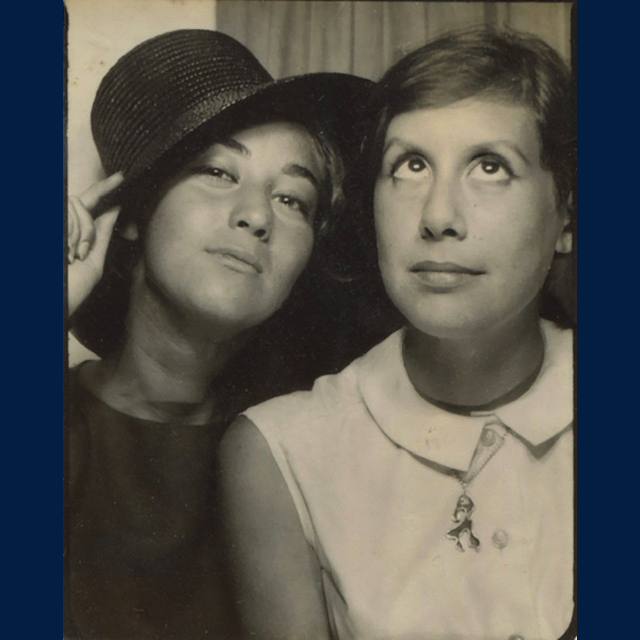
I made my first real friend when I was 11 and she was 12. Marsha moved in on the block. Soon after, her mother saw my mother in the backyard and said she had a daughter about my age. My mother said, let her come for lunch. Marsha wrote me recently, “Loved your mom. I remember the first time we met and I had lunch at your house. We had grilled cheese w tomato.” That was 72 years ago. 

We had an enriched childhood together. Her jokes cracked me up. We played pickup sticks for hours, practicing the small motor control that would enable us to paint and draw later. We started a “firm” that didn’t do anything, but whose mere name, Morgan and White, let us believe we were real artists and writers. 

We argued about whether the modernist movie theater, the Midwood, was more beautiful than the baroque Loews Kings on Flatbush Avenue. We did puppet theater in her basement for neighborhood kids. We put out a newspaper of our doings called The Little Issue. Only my uncle Jack bought a copy; he paid 25 cents, probably to encourage writing, typing and doing layout. We started a novel that began “Doctor Boshkov pressed the tips of his well-manicured fingers together.” On the anniversary of the day we met, we had an outing to Manhattan.

Marsha visited me in college. She kept me from putting on a hoity-toity North Shore of Boston accent by laughing her head off the first time I tried it on. We shared the travails of dating. We did our first trip to Europe together, living on $5 a day, going our separate ways in museums as art lovers do and telling our finds at dinner.   

After college we never lived in the same city again. She married. I went to various graduate schools, married and settled around Boston. In the child-raising years, we saw little of each other but kept up. When she divorced, her ex-husband kindly called to tell me she would like to hear from me. We picked up the friendship again. I have one of her paintings where I see it every day. When her second husband died, when she moved, we talked more often.  

Nowadays, in our 80s, we email about our kids and grandkids, we discuss independent living and Continuing Care Retirement Communities. She’s as instinctually funny as she ever was. Her Facebook posts are either beautiful or a hoot. “Morgan and White” was a prologue to a working life: “Morgan” became a writer and “White” an artist—under our real names, of course.

I’m averse to nostalgia, I want to share my day to day and my opinions on the world’s current events. But it matters that I remember her parents, and she, mine. Marsha’s still one of my besties. She’s like my cousins—also childhood allies whose lives still crisscross with mine.

I’ve made newer friends, of course. But it’s delightful how many friends from college or graduate school are still lunchtime and Facetime and email pals. Andrea, in Andover, is a friend from college who became a bestie in our middle years, when both of us were starting second careers. 

Some friends are distant in space. Connie is in LA, Penny is in Baltimore, Caroline in Maine. I’m in touch by email with one middle school friend, two high school friends. My women college classmates meet on Zoom once a month. We are more politically alike than we used to be; we are all feminists now. 

Who said, “The last of life, for which the first was made”? It was Browning, of course, from “Rabbi Ben Ezra,” not a very good poem but worth it for this line. We never stop needing the old friends and relatives who have known us through many changes of our life course. Indeed, we cherish them more in later life, as some loved ones die and others move away. 

My granddaughter, starting college, meeting many people, goes through the normal selection and elimination processes. She seems enchanted by the fact that I have kept so many close friends from those youthful years. Being accompanied as she grows up: it must seem miraculous. 

My life course ahead, like everyone’s, is still unknown territory. I prize the companionship, while growing older. And it’s axiomatic that my friends and I have more in common now than we ever did. How could it be otherwise? Anecdote by anecdote, story by story, we add to the Memory Palace we share. 


At the Heart of Good Care

This is the last in a series of five blogs about nursing home care.

My old friend Billy called me recently to ask:

“What the hell is ‘person-centered care’ supposed to mean? I toured three nursing homes and each of them gave a different answer.”

Billy’s wife has vascular dementia, and it’s getting too difficult for him to handle her care at home. 

“I had been told to choose a home that gives person-centered care,” he told me, “but one home described that as ‘the person comes first’ though they couldn’t say exactly what that meant. Another said the person could choose what they wanted to eat at every meal. And the last one said they learn from the family all the person’s quirks and try to work around them.” 

Billy had stumbled upon the confusion that surrounds person-centered care. Although the term itself has become ubiquitous, sometimes it amounts to little more than a marketing tool. 

Institutions are slow and reluctant to change. True person-centered care overturns the relationship between the resident, the caregiver and the institution. It is based on what’s important to the one being cared for rather than what’s convenient for the organization. Consequently, it’s hard to implement and thus hard to find perfect examples.

But increasing numbers of care homes are making an effort to move in that direction, as shown in the responses to Billy’s question. What follows here will help you understand the basis of person-centered care, and how to recognize it even when it’s only partially implemented.

The first barrier to this kind of enlightened care is the widespread stigma affecting people living with any kind of dementia. Two private duty aides working for a good friend of mine assured me one day that my friend, who did not have dementia, was much better off at home because nursing homes were full of “demented people who don’t know anything anymore. There’s nothing inside their heads.” 

Care homes must screen their prospective staff for any sign of attitudes like those that devalue people living with cognitive disorders, because the way we view people affects how we treat them.

Good care begins with respect. That’s what is missing also in the following interactions.

We’ve all probably seen a worker in a busy nursing home come up to someone in a wheelchair, release the brakes and wheel them off somewhere without a word of greeting or any hint about where they’re headed. That amounts to treating someone like an object, not a valued human being. 

Janice arrived one morning to find an aide dressing her mother. She knew her mother could do most of it herself, but the caregiver had seven other people to dress that morning and said it was faster to do it all herself. 

Not allowing someone to use the abilities she has is disempowerment. 

In good care, the person is more important than the task. If supporting the person’s strengths is highly valued and the task comes second, the caregiver will facilitate the resident dressing herself. This takes time and wreaks havoc in an institution where workers are expected to check off jobs-completed against a clock.  

Person-centered care becomes a partnership in which an activity, such as getting dressed, is done with the person, not to or for them. In that way, familiarity and connection are established.

The family plays an important part in helping the staff understand their loved one’s history and likes and dislikes.

When my mother was living in a nursing home late in her dementia, I compiled a history of her life in photographs and hung it in her room. The attention and enthusiasm it drew from her care partners made me regret that I hadn’t done it much sooner.

The picture of the resident is further filled out by learning her preferences. Her choices—when to wake, when and what to eat, and when to go to bed—are what determine her schedule, not the convenience of the institution.

New residents who continue on a schedule like the one they have followed most of their adult lives adjust more easily to living in a new environment. And having choices maintains some of their autonomy. 

The crucial thing to observe when you tour a memory-care unit is the relationship between staff and residents. Does the care partner engage the resident, calling her by name and in a warm manner? Is her tone natural, rather than an “elder speak” version of baby talk? Does the resident look relaxed and engaged? Do they often look into each other’s eyes?

Such a relationship is close to impossible to establish without dedicated staffing. Most care homes rotate their staff. That is, they move workers around from one unit in the building to another. That interferes with close relationships forming between resident and caregiver. With a dedicated staff, a resident has the same care partner every day.

That continuity fosters the close connections that are essential to someone with dementia. It ends their isolation, gives them a sense of security and trust, and creates a sense of belonging.

And the care partner feels more satisfaction: knowing the resident better, she is more able to solve problems, is more alert to new problems and simply cares more.

Anna had been Sam’s care partner for two years. His verbal communication was compromised, but because she knew him so well, she was able to understand his gestures and facial expressions.

She returned to work one Monday morning and learned that over the weekend, Sam had struck out at an aide trying to bathe him. A different care home might have resorted to giving him an antipsychotic drug. But this home knew to wait until Anna came back; she would solve it.

Anna suspected that the weekend aide had not respected Sam’s strong need for privacy. First, she checked him gently and carefully for any signs of pain, and when she found none, she left instructions that Sam should not be bathed on weekends.

A helper who cares—and is well-trained—will see a forceful expression as an attempt to communicate, rather than disruptive behavior. 

Dedicated staffing is a big factor contributing to successful person-centered care. It encourages relationships that benefit residents and staff, and it increases staff retention.    

In ”Dementia Beyond Disease,” G. Allen Power, MD, who specializes in dementia care, writes, “Any organization that does not provide dedicated assignments offers a lower quality of care than they could otherwise. End of discussion.”

If you can’t find a care home with dedicated staffing, be sure to choose one that has a low staff turnover rate.

The needs of a person with dementia—for security, trust, affection, a bit of control, connection, meaning—are all best met in the context of relationship.

A mutually caring relationship is at the very heart of humane care.

Workers who are open to close relationships with people in a memory unit are valued and respected. And they in turn treat residents with care and respect. You can pick up on that good will when you visit.

I remember arriving at my mother’s nursing home to visit her, and being greeted warmly by the receptionist and everyone I passed. I found my mother in the activities room, happily stroking a sleeping puppy on her lap. The nurse had brought in her own new pet especially to share with my mother. I thought how lucky my mother and I were to be part of this community of kindness.

I wish that for you and your loved one too.

My Father’s Frugal Habits Make Sense Now

This thoughtful blog about a change of heart was originally posted on both Next Avenue and Forbes on May 12. It appears here with the permission of the author.

My father had plenty of habits that irritated my mother. But nothing irritated her more than “Marty being cheap.” As a child, I didn’t understand it either.

For instance, my father turned off the lights in rooms that people had just left. Sometimes we were leaving just to come right back in, but whenever he was home, he would march across the little hallway from wherever he was at either end of the house to click the light switches down. Did he like a dark house?

With the lights off, the forest-green end of the house was as dismal as a real Hansel and Gretel woods. My mother would march right back from wherever she had been to defiantly flick the switches up.

My father also saved things. He wore the same, plaid, flannel shirts year after year, one on top of another, even indoors. In the basement shop, when I was invited, he took long, thick, crooked nails that had been pulled out of boards with the claw end of the hammer and smashed them with the fat, butt end, so they straightened out like new.

He saved rusted nails, which had turned a delicate, copper color I liked. Each size went into its own unmatched, little, glass jar: screws, screw-eyes, all the iron nails: the tenpenny, brads, roofing nails, slender, white, finish nails and even some upholstery nails with stubby shanks hidden by golden, curving, indented tops.

But the frugal habit my mother mocked most was my father’s taking the little, bitty soap ends and mashing them together, so they made a small, irregular cake or many-sided, oily, squashed muffin.

He didn’t explain to me why he was doing any of those things. He didn’t explain anything, except, rarely, American politics. He was a silent man.

Maybe in those days, my mother flattened him. But she was a good mother to me, and you don’t judge your parents when you are still so young it’s difficult to tell them apart. Later, when I was married, they came to visit to say they were a happy couple now. My mother, as it were, apologized. She said gaily, because it was all in the past, “I didn’t let him be the captain of his own ship.” They had a good year before he got sick with ALS.

As an adult, I used to tell friends those amusing, childhood stories about my freaky father—straightening  bent nails, turning lights off, saving soap ends. People recognized he did those things to save money.

In the middle class, where my husband and I had slowly risen to occupy a fairly secure place, saving money had begun to seem odd. It was “cheap,” just as my upwardly mobile mother had said, even before the postwar boom really got started lifting our boat.

My generation’s goal, as we were moving up economic ladders, was to spend on visible objects, showing taste as well as means.

But over time, I noticed that as I told the stories, they had lost the tinge of being amusing foibles. They began to edge toward being about thrift. Conspicuous consumption had seemed cruelly elite during the Great Depression, which marked both my parents, though in opposite ways.

Likewise, after the Great Recession of 2008, waste of any kind began to seem excessive, ostentatious, brutal and stupid. Saving became not a mere trend, but a value and a virtue of those who could manage it. The planet cannot take the rapid, steady diminution of its resources forever.

Plenty of people are replicating some of my dad’s frugal habits. Anyone with any sense now wants to save electricity, because so much of it still comes from fossil fuels. Everyone goes around smoothing down the dimmers.

I’ve come to see differently what I once thought of as my father’s eccentricities. I’ve come closer to him in spirit.

Since he gave me his jars, my own basement shop has held his nail collection and I draw on the legacy.

Just recently, when I mentioned the soap ends, a close friend said with a smile that was only slightly embarrassed, “How do you do that?”

“Oh, it’s quick and easy,” I began. “You get a few slivers wet and soft and slimy, and you crush them and press them and rub them around until they hold together. It feels so nice.”


BE THE FUEL

MAKE A DONATION TODAY

Your generosity is truly the fuel that empowers CMAP to change lives and to help older adults discover their “why!”

We invite you to donate to the 2023–2024 Annual Giving Campaign by June 30 to help us reach our goal.