
Important Update: Temporary Closure of the Nancy S. Klath Center Due to water damage, the Nancy S. Klath Center (101 Poor Farm Road) is temporarily closed for construction. For your safety, please do not visit the building. We will share updates as soon as it is ready to reopen.

CMAP remains fully operational. Staff are working remotely and from the Suzanne Patterson Building (45 Stockton Street). Programs will continue as scheduled at the Suzanne Patterson Building and in virtual formats. Thank you for your understanding.

Wheelchair? Hearing Aids? Yes. ‘Disabled’? No Way

That’s a shame because accommodations of all kinds are available for those willing to ask for them. Many are required by law. Journalist Paula Span reports on the situation in this column, posted on KFF Health News on December 11, 2025. It also ran in the New York Times. Funding from the Silver Century Foundation helps KFF Health News produce articles (like this one) on longevity and related health and social issues. 

In her house in Ypsilanti, MI, Barbara Meade said, “there are walkers and wheelchairs and oxygen and cannulas all over the place.”

Barbara, 82, has chronic obstructive pulmonary disease, so a portable oxygen tank accompanies her everywhere. Spinal stenosis limits her mobility, necessitating the walkers and wheelchairs and considerable help from her husband, Dennis, who serves as her primary caregiver.

“I know I need hearing aids,” Barbara added. “My hearing is horrible.” She acquired a pair a few years ago but rarely uses them.

Dennis Meade, 86, is more mobile, despite arthritis pain in one knee, but contends with his own hearing problems. Similarly dissatisfied with the hearing aids he once bought, he said, “I just got to the point where I say, ‘Talk louder.’”

But if you ask either of them a question included on a recent University of Michigan survey—“Do you identify as having a disability?”—the Meades answer promptly: No, they don’t.

Disability “means you can’t do things,” Dennis said. “As long as you can work with it and it’s not affecting your life that much, you don’t consider yourself disabled.”

Their daughter Michelle Meade, a rehabilitation psychologist and the director of the Center for Disability Health and Wellness at the university, accompanies her parents to medical appointments and tends to roll her eyes at their reluctance to acknowledge needing support.

Working with other researchers on the recent national poll has shown her how often older adults feel that they are not disabled despite ample evidence to the contrary.

Many people still feel like ‘disability’ is a dirty word.

— Megan Morris, PhD

The survey looked at nearly 3,000 Americans aged 50 and older and found that only a minority—fewer than 18 percent of participants over 65—saw themselves as having a disability.

Yet their responses to the six questions that the Census Bureau’s American Community Survey uses to track disability rates told a different story.

The survey asks whether respondents have difficulty seeing or hearing, limitations in walking or climbing stairs, difficulty concentrating or remembering, trouble dressing or bathing, difficulty working or problems leaving the home.

In the university’s survey, about a third of those aged 65 to 74 reported difficulty with one or more of those functions. Among those over 75, the figure was more than 44 percent.

Moreover, when respondents were asked about several additional health conditions that would require accommodations under the Americans with Disabilities Act, including respiratory problems or speech disorders, the proportion climbed even higher. Half the 65-to-74 group reported disabilities, as did about two-thirds of those over 75.

Yet only a sliver—fewer than one in five—of older adults had ever received an accommodation from their health care providers to which they are legally entitled under the ADA.

Even among the small minority who identified as disabled, only a quarter had asked for an accommodation (though a third received one, whether they asked or not).

“It’s a familiar story,” said Megan Morris, PhD, a rehabilitation researcher at NYU Langone Health and director of the Disability Equity Collaborative. When it comes to the way people describe themselves, “many people still feel like ‘disability’ is a dirty word,” she said.

It’s almost an American value to decline to seek help, even when the law requires that it be available, Michelle Meade added. Faced with a disability, she said, “we’re supposed to toughen up and battle through it.”

In health care settings, it helps a lot if you tell providers you have a disability and ask for help. 

That may be particularly true among older Americans whose attitudes formed before the landmark ADA became law in 1990, or even before the 50-year-old Individuals with Disabilities Education Act, which guaranteed access to public education.

“It’s going to be hard for that older generation,” Morris said. “Disability was something that was locked away. Younger folks are more open to seeing disability as being part of a community.”

In the University of Michigan survey, for instance, among people over 65 who had two or more disabilities, about half identified as a person with a disability. In the younger cohort, aged 50 to 64, it was 68 percent.

Why does that matter? “It greatly assists in health care settings if you disclose a disability and know to request an accommodation and support,” said Anjali Forber-Pratt, PhD, the research director at the American Association of Health and Disability.

Such accommodations “can make a stressful situation easier,” she added. They include mammography and X-ray machines that allow patients to remain seated, scales that wheelchair users can roll onto, examination tables that rise and lower so that patients don’t have to step onto a footstool and swivel around.

Health care providers may also offer amplification devices for people with hearing loss, as well as magnifiers and large print materials for the visually impaired. Buildings themselves must be accessible. Practices can send a staff member with a wheelchair to help patients traverse long distances.

Even with a disability parking placard, “you hike in, you wait for the elevator, you hike to the office,” said Emmie Poling, 75, a retired teacher in Menlo Park, CA.

Because of arthritis and spinal stenosis, “I can’t walk with an upright posture for more than a few minutes” without pain, she said. “I basically live on Tylenol.” Yet when she makes an appointment and the scheduler asks if she will need assistance, Poling replies that she won’t.

“My personal voice says, ‘Come on, you can do it,’” she said.

Patients who identify as disabled feel less depressed and anxious than those who don’t, according to research. 

Identifying as a person with a disability provides other benefits, advocates say. It can mean avoiding isolation and “being part of a community of people who are good problem-solvers, who figure things out and work in partnership to do things better,” Meade said.

Government programs and private organizations like the National Disability Rights Network,  the Americans with Disabilities Act National Network and the National Association of Councils on Developmental Disabilities help connect people with services and supports in their communities.

Several studies have found too that patients who identify as disabled have less depression and anxiety, higher self-esteem and a greater sense of self-efficacy than disabled people who don’t.

For years, despite a lifetime of surgeries for congenitally dislocated hips, as well as joint replacements and cancer treatment, Glenna Mills, an artist in Oakland, CA, told herself that she was not disabled.

“I suffered a lot by denying that I couldn’t walk very far,” she recalled. Although walking caused pain in her knees, hips and shoulders, “I didn’t want people to see me as someone who couldn’t keep up,” she added.

But about 10 years ago, “I stopped worrying about that,” said Mills, 82. “I was more willing to say, ‘I can’t do that activity. I can’t walk that far.’” She bought a scooter that allowed her to take walks with her husband and dog and to spend time in museums. “I’m happier now,” she said.

More often, older Americans resist a label that could help improve their care. Even those who do request accommodations may find that enforcement of the ADA remains spotty, in part because patients don’t always report violations.

The Meades, after years of pleading from their children, have made appointments to see an audiologist about new hearing aids.

But Poling intends to struggle on without seeking or accepting assistance. “I know that point will come,” she said. “I’ll attempt to surrender as gracefully as possible, given my personality.”

Until then, she said, “the mental picture that’s acceptable to me is not wanting to look like I’m disabled.”

Maybe It’s Not Just Aging. Maybe It’s Anemia.

Anemia is a common condition that can have serious medical consequences, but doctors often fail to recognize it. Journalist Paula Span investigates the situation here and has suggestions for patients. KFF Health News posted her column on July 17, 2025. It also ran in the New York Times. Funding from the Silver Century Foundation helps KFF Health News produce articles (like this one) on longevity and related health and social issues. 

Gary Sergott felt weary all the time. “I’d get tired, short of breath, a sort of malaise,” he said. He was cold even on warm days and looked pale with dark circles under his eyes.

His malady was not mysterious. As a retired nurse anesthetist, Sergott knew he had anemia, a deficiency of red blood cells. In his case, it was the consequence of a hereditary condition that caused almost daily nosebleeds and depleted his hemoglobin, the protein in red blood cells that delivers oxygen throughout the body.

But in consulting doctors about his fatigue, he found that many didn’t know how to help. They advised Sergott, who lives in Westminster, MD, to take iron tablets, usually the first-line treatment for anemia.

But like many older people, he found a daily regimen of four to six tablets hard to tolerate. Some patients taking iron complain of severe constipation or stomach cramps. Sergott felt “nauseated all the time.” And iron tablets don’t always work.

After almost 15 years, he found a solution. Michael Auerbach, MD, a hematologist and an oncologist who is the co-director of the Center for Cancer and Blood Disorders in Baltimore, suggested that Sergott receive iron intravenously instead of orally.

Now Sergott, 78, gets an hourlong infusion when his hemoglobin levels and other markers show that he needs one, usually three times a year. “It’s like filling the gas tank,” he said. His symptoms recede, and “I feel great.”

His story reflects, however, the frequent dismissal of a common condition, one that can not only diminish older adults’ quality of life but also lead to serious health consequences, including falls, fractures and hospital stays.

One study found that 20 percent of nearly 2,000 people who were tested were anemic.

Anemia’s symptoms—tiredness, headaches, leg cramps, coldness, decreased ability to exercise, brain fog—are often attributed to aging itself, William Ershler, MD, a hematologist and researcher said. (Some people with anemia remain asymptomatic.)

“People say, ‘I feel weak, but everybody my age feels weak,’” Ershler said.

Even though hemoglobin levels are likely to have been included in their patients’ records, as part of the complete blood count, or CBC, routinely ordered during medical visits, doctors often fail to recognize anemia.

“The patients come to the clinic and get the blood tests, and nothing happens,” he said.

Anemia affects 12.5 percent of people over 60, according to the most recent survey data from the National Health and Nutrition Examination Survey, and the rate rises thereafter.

But that may be an underestimate. In a study published in the Journal of the American Geriatrics Society, Ershler and his colleagues examined the electronic health records of almost 2,000 outpatients over 65 at Inova, the large health system based in Northern Virginia from which he recently retired.

Based on blood test results, the prevalence of anemia was much higher: about one in five patients was anemic,  with hemoglobin levels below normal as defined by the World Health Organization.

Yet only about a third of those patients had anemia properly documented in their medical charts.

One possible cause of anemia: blood loss, due to internal bleeding from ulcers, polyps, diabetes or other disorders.

Anemia “deserves our attention, but it doesn’t always get it,” said George Kuchel, MD, a geriatrician at the University of Connecticut, who wasn’t surprised by the findings.

That’s partly because anemia has so many causes, some more treatable than others. In perhaps a third of cases, it arises from a nutritional deficiency—usually a lack of iron—but sometimes of vitamin B12 or folate (called folic acid in synthetic form).

Older people may have decreased appetites or struggle to shop for food and prepare meals. But anemia can also follow blood loss from ulcers, polyps, diabetes and other causes of internal bleeding.

Surgery can also lead to iron deficiency. Mary Dagold, 83, a retired librarian in Pikesville, MD, underwent three abdominal operations in 2019. She remained bedridden for weeks afterward and needed a feeding tube for months. Even after she healed, “the anemia didn’t go away,” she said.

She remembers feeling perpetually exhausted. “And I knew I wasn’t thinking the way I usually think,” she added. “I couldn’t read a novel.” Her primary care doctor and Auerbach both advised that oral iron was unlikely to help.

Iron tablets, available over the counter, are inexpensive. Intravenous iron, becoming more widely prescribed, can cost $350 to $2,400 per infusion depending on the formulation, Auerbach said.

Some patients find a single dose sufficient, while others will need regular treatment. Medicare covers it when tablets are hard to tolerate or ineffective.

For Dagold, a 25-minute intravenous iron infusion every five weeks or so has made a startling difference. “It takes a few days, and then you feel well enough to go about your daily life,” she said. She has returned to her water aerobics class four days a week.

In about one-third of cases, the cause of the patient’s anemia is never pinned down. 

In other cases, anemia arises from chronic conditions like heart disease, kidney failure, bone marrow disorders or inflammatory bowel diseases.

“These people don’t lack iron, but they’re not able to process it to make red blood cells,” Kuchel said. Since iron supplements won’t be effective, doctors try to address the anemia by treating patients’ underlying illnesses.

Another reason to pay attention: “Loss of iron can be the first harbinger of colon cancer and stomach cancer,” Kuchel pointed out.

In about a third of patients, however, anemia remains frustratingly unexplained. “We’ve done everything, and we have no idea what’s causing it,” he said.

Learning more about anemia’s causes and treatments might prevent a lot of misery down the road. Besides its association with falls and fractures, anemia “can increase the severity of chronic illnesses—heart, lung, kidney, liver,” Auerbach said. “If it’s really severe and hemoglobin goes to life-threatening levels, it can cause a heart attack or stroke.”

Among the unknowns, however, is whether treating anemia early and restoring normal hemoglobin will prevent later illnesses. Still, “things are happening in this field,” Ershler said, pointing to a National Institute on Aging workshop on unexplained anemia held last year.

The American Society of Hematology has appointed a committee on diagnosing and treating iron deficiency and plans to publish new guidelines next year. The Iron Consortium at Oregon Health & Science University convened an international panel on managing iron deficiency and recently published its recommendations in The Lancet Haematology.

In the meantime, many older patients can gain access to their CBC results and thus their hemoglobin levels. The World Health Organization defines 13 grams of hemoglobin per deciliter as normal for men, and 12 for nonpregnant women (though some hematologists argue that those thresholds are too low).

Asking health care providers about hemoglobin and iron levels, or using a patient portal to check the numbers themselves, could help patients steer conversations with their doctors away from fatigue or other symptoms as inevitable results of aging.

Perhaps they’re signs of anemia, and perhaps it’s treatable.

“Chances are, you’ve had a CBC in the last six months or a year,” Kuchel said. “If your hemoglobin is fine, great.”

But, he added, “If it’s really outside the normal boundaries, or it’s changed compared to a year ago, you need to ask questions.”

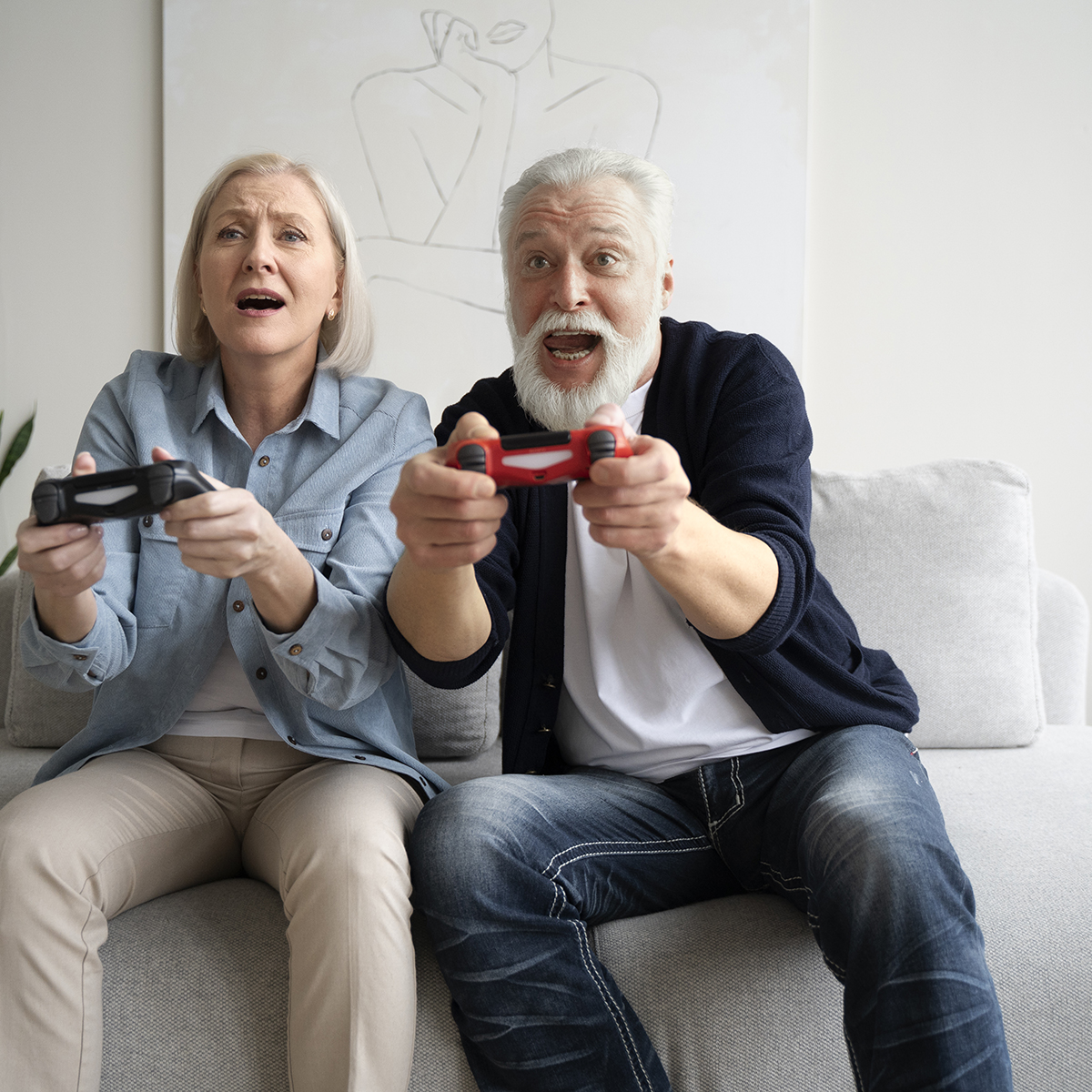
Gaming: A Way to Exercise Older Brains

Video games have always been part of Shawn Etheridge’s life. His interest was first sparked as a young teen, when he toted rolls of quarters to a nearby mall to play arcade games like Pong. As a young adult, as technology evolved, he began playing games like Call of Duty on his personal computer. Later, he even began playing online with his grandchildren, who chortled “Pop Pop” each time they spotted his avatar on the screen, leading Etheridge to adopt “2Pop” as his screen name. 

Now, at age 64, Etheridge unwinds after work each night by playing Halo while his wife watches her favorite TV show nearby. He mainly plays for fun, but as he gets older, he also thinks gaming keeps his brain limber. 

“The more you play, the more proficient you get, and I’ve got to believe that helps with cognition,” he said. 

Etheridge is one of some 57 million Americans over 50 who enjoy gaming, according to recent data from the Entertainment Software Association. Nearly half of Americans in their 60s and 70s play some form of PC, mobile or console video game every week, as do 36 percent of people in their 80s. 

The ranks of older gamers are growing too, by more than 12 million, an uptick of 30 percent from 2017 until 2023, according to AARP Research. Whether it’s a lifelong passion or a new endeavor, many older adults are discovering—or rediscovering—gaming as a source of entertainment, a way to stay socially connected and a tool to keep cognitive skills sharp.

Not Just Young Men 

Many assume “gamers” are teen or young adult males who play combat games. It is true that fast-paced, real-time games may be more challenging for older adults, as reaction times slow with age. And young “digital natives” can learn the ins and outs of games more quickly and adapt more easily to updates and changes. In fact, older adults are less likely to play video games on consoles such as Nintendo Switch or PlayStation Vita—only about 10 percent of those older than 70 own consoles, according to a 2020 AARP study. 

But there are many gaming options that offer a relatively level playing field for players of all ages, including older adults. There are role-playing games and world-building games, where people create virtual environments and characters. There are sports games, like NBA 2K, and simulated racing games, like iRacing.  

Some video games involve competing in real time against other players via the internet. But other games are turn-based (i.e. players take actions one after the other, rather than all at once, allowing time to think strategically without the pressure of immediate real-time action.) Many games offer the option to play alone, with the goal of “leveling up” or pursuing an objective rather than competing against others. 

Connecting older adults to games they’ll enjoy is a key goal of LevelUpLand, a program of the Franklin County Office on Aging in Columbus, OH. Its centerpiece is a weekly Senior Gaming Day. Participants 60 and up gather at a game arena to try PC games, console-based games, racing simulators and virtual reality headsets, all with the guidance of trained staff. Participants can also enjoy computer-based and online versions of card and board games. The program regularly attracts participants in their 80s and 90s; a 101-year-old is the oldest participant to date. 

Participants have formed a community. Many schedule doctors’ appointments around their weekly gaming day. If a regular fails to show up, someone calls to check on him or her. 

“Gaming provides a sense of community and a sense of belonging,” said Melita Moore, MD, founder of Levels Unlocked Enterprises, which partners with Franklin County to offer the program. 

In role-playing games, an older person’s life experience can be an asset. 

Discovering the right games to fit his changing skills and interests has kept Ian Russell, 63, involved in gaming throughout his life. His first foray in gaming was in his 20s, playing Dungeons and Dragons with a group of friends who are still meeting regularly today. His interest shifted to video games, but as he got older, Russell noticed his reaction skills diminishing, making it harder to compete with younger players in combat and racing games. 

“Your hand-eye coordination is just not as good or as quick when you’re older,” Russell said. “I find I’m less interested in real-time action and more interested in turn-based role-playing games,” which allow him time to consider each move. 

At the same time, Russell notes, the wisdom of older age sometimes comes in handy in role-playing games. As an example, he has played Thief, a game where players navigate a warren of streets in an unfamiliar urban environment, without the benefit of a GPS. 

“Navigating around a new town is something that I did in the past,” he said. “If you want to find the center of town, for example, I know that you look for a church spire. So, there’s a lived experience that helps me solve the puzzle.”

However, game developers often don’t design new games with easy access for older adults or newbies in mind. Just a little help from a tech-savvy person can go a long way in getting an older adult started. That’s another key advantage of LevelUpLand. For older adults with mobility challenges, program leaders offer accessibility options, such as an adaptive mouse for those with arthritis. Or they adjust the settings within individual games, such as fine-tuning the speed or changing camera angles to adapt for an older player’s abilities. 

LevelUpLand also serves as an educational platform to teach cybersecurity and “healthy digital lifestyles.” Older adults who venture online can be vulnerable, with risks, ranging from bullying and “trash talking” by other competitors, to frauds and scams. LevelUpLand’s online activities take place in secure private chat rooms on Discord, ensuring that scammers don’t have access. 

“We’re providing those guardrails so that older adults can be online, play and have fun in a safe environment,” said Chanda Wingo, director of the Office on Aging in Franklin County. 

Intergenerational Connections 

For many older adults, competition isn’t the goal. Many say gaming helps connect them with younger people.

Vinny Minchillo, 63, plays Pokémon and other “grandchild-appropriate” video games with his 6-year-old grandson. Both play on Nintendo Switch consoles—a regular one for Minchillo and a mini version for the grandson. 

Minchillo also enjoys playing more mature games like Assassin’s Creed on PlayStation 5. However, he doesn’t play against other competitors. Instead, he and his wife play collaboratively against the game. 

“I don’t keep up with everything that’s going on, which I’d need to do to be competitive,” he said. 

Gaming has also built a bond between Russell and his 25-year-old daughter, especially as she’s developed an interest in “vintage” games.

“She has become aware of the video and board games I played 30 years ago and has been buying revamped versions of those games,” he said. “I get a great deal of pleasure from playing them all over again. It’s a massive nostalgia kick.” 

Older people have become stars in the video-gaming world on YouTube

Gaming also opened an unexpected career avenue for Russell. As a voice actor, he has played a host of characters in online role-playing video games, such as Vernon Locke in Payday 3 and Abelard Werserian in Warhammer 40,000: Rogue Trader. With his booming, mature voice and British accent, Russell is a natural for “the wise, kindly old uncle” roles, he said with a laugh. His characters have a sizable fan base, most of them young adults, and Russell often converses with them via platforms like Reddit and X. 

“I get messages occasionally from young people who say, ‘This game helped me through a difficult time in my life,’” he said.  

Russell is far from the only older star in the video-gaming world. A few years ago, Lenovo sponsored the Silver Snipers, a team of over-60 gamers who competed in esports tournaments. There’s Shirley Curry, 89, aka “Gamer Grandma,” who built a following of 900,000 YouTube subscribers who watched video walk-throughs of her plays on The Elder Scrolls V: Skyrim, a role-playing game. And Michelle Statham, aka “TacticalGramma,” a 57-year-old grandmother who loves first-person shooter games. She calls her followers her “grandkids.” 

When she started posting, Statham assumed no one would watch, but younger players gravitated toward her friendly, supportive online persona. 

“Most people think that older people don’t play games or don’t like games,” she said. “Being an older female has helped me stand out.” 

Staying Sharp Cognitively

Research in recent decades has boosted awareness of gaming’s effects on older brains. A number of studies suggest that older people who played video games regularly showed significant improvement in cognitive functions, depressive symptoms, sleep quality and anxiety. One theory posits that video games may simulate novel environments, which are associated with improved memory. In one study, participants ages 60 to 80 played Angry Birds and Super Mario for 30 to 45 minutes per day for four weeks. The video game players showed improved memory compared to a control group that played a card game, Solitaire.

Further research is needed to tease out what types of video games might best support cognitive function. But according to research by the Entertainment Software Association, almost 90 percent of boomer and Silent Generation players cited “using my brain/keeping my mind sharp” as a key reason why they play video games, compared to just one in five Gen Z and millennials. 

And while some research suggests that extensive “screen time” may be harmful for young brains, engagement in technology seems to benefit older people’s brains. One recent analysis found that people over 50 who used computers, smartphones, the internet or a mix did better on cognitive tests, with lower rates of cognitive impairment or dementia diagnoses, compared to those who used technology less often or avoided it altogether.

Regardless of the research, many gamers are certain their game play boosts their cognitive function. 

“A thousand percent,” said Minchillo. “My PS5 controller has about a dozen different buttons and different combinations of buttons that do different things. To process all the information that’s coming at you very quickly and to respond to it in the appropriate manner—I think it’s great for my brain.” 

Why Brittle Bones Aren’t Just a Woman’s Problem

Women are more likely to develop osteoporosis than men are, but that doesn’t mean men are in the clear. As journalist Pamela Span explains in this article, it does mean that they’re seldom screened for the disease or treated for it in time to make a difference. KFF Health News posted Span’s piece on October 14, 2025; it also ran in the New York Times. Funding from the Silver Century Foundation helps KFF Health News produce articles (like this one) on longevity and related health and social issues. 

Ronald Klein was biking around his neighborhood in North Wales, PA, in 2006 and tried to jump a curb. “But I was going too slow—I didn’t have enough momentum,” he recalled.

As the bike toppled, he thrust out his left arm to break the fall. It didn’t seem like a serious accident, yet “I couldn’t get up,” he said.

At the emergency room, X-rays showed that he had fractured both his hip, which required surgical repair, and his shoulder. Klein, a dentist, went back to work in three weeks, using a cane. After about six months and plenty of physical therapy, he felt fine.

But he wondered about the damage the fall had caused. “A 52-year-old is not supposed to break a hip and a shoulder,” he said. At a follow-up visit with his orthopedist, “I said, ‘Maybe I should have a bone density scan.’”

As Klein suspected, the test showed he had developed osteoporosis, a progressive condition, increasing sharply with age, that thins and weakens bones and can lead to serious fractures. Klein immediately began a drug regimen and, now 70, remains on one.

Osteoporosis occurs so much more commonly in women, for whom medical guidelines recommend universal screening after age 65,  that a man who was not a health care professional might not have thought about getting a scan. The orthopedist didn’t raise the prospect.

But about one in five men over age 50 will suffer an osteoporotic fracture in their remaining years, and among older adults, about a quarter of hip fractures occur in men. 

When they do, “men have worse outcomes,” said Cathleen Colón-Emeric, MD, a geriatrician at the Durham VA Health Care System and Duke University and the lead author of a recent study of osteoporosis treatment in male veterans.

“Men don’t do as well in recovery as women,” she said, with higher rates of death (25 to 30 percent within a year), disability and institutionalization. “A 50-year-old man is more likely to die from the complications of a major osteoporotic fracture than from prostate cancer,” she said.

(What’s “major”? Fractures of the wrist, hip, femur, humerus, pelvis or vertebra.)

Should some (or all) older men be screened for osteoporosis, as women are? 

In her study of 3,000 veterans ages 65 to 85, conducted at Veterans Affairs health centers in North Carolina and Virginia, only 2 percent of those assigned to the control group had undergone bone-density screening.

“Shockingly low,” said Douglas Bauer, MD, a clinical epidemiologist and osteoporosis researcher at the University of California-San Francisco, who published an accompanying commentary in JAMA Internal Medicine. “Abysmal. And that’s at the VA, where it’s paid for by the government.”

But establishing a bone health service—overseen by a nurse who entered orders, sent frequent appointment reminders and explained results—led to dramatic changes in the intervention group, who had at least one risk factor for the condition.

Forty-nine percent of them said yes to a scan. Half of those tested had osteoporosis or a forerunner condition, osteopenia. Where appropriate, most of them began medications to preserve or rebuild their bones.

“We were pleasantly surprised that so many agreed to be screened and were willing to initiate treatment,” Colón-Emeric said.

After 18 months, bone density had increased modestly for those in the intervention group, who were more likely to stick to their drug regimens than osteoporosis patients of either sex in real-world conditions.

The study didn’t continue long enough to determine whether bone density increased further or fractures declined, but the researchers plan a secondary analysis to track that.

The results revive a longtime question: given how life-altering, even deadly, such fractures can be, and the availability of effective drugs to slow or reverse bone loss, should older men be screened for osteoporosis, as women are? If so, which men and when?

Men would like to believe they’re indestructible, so a fracture doesn’t have the implication that it should. 

—Eric Orwoll, MD

Such issues mattered less when lifespans were shorter, Bauer explained. Men have bigger and thicker bones and tend to develop osteoporosis five to 10 years later than women do. “Until recently, those men died of heart disease and smoking” before osteoporosis could harm them, he said.

“Now, men routinely live into their 70s and 80s, so they have fractures,” he added. By then, they have also accumulated other chronic conditions that impair their ability to recover.

With osteoporosis testing and treatment, “a man could see a clear-cut improvement in mortality and, more importantly, his quality of life,” Bauer said.

Both patients and many doctors still tend to regard osteoporosis as a women’s disease, however. “There’s a bit of a Superman idea,” said Eric Orwoll, MD, an endocrinologist and osteoporosis researcher at Oregon Health & Science University.

“Men would like to believe they’re indestructible, so a fracture doesn’t have the implication that it should,” he added.

One patient, for example, for years resisted entreaties from his wife, a nurse, to “see someone” about his visibly rounded upper back.

Bob Grossman, 74, a retired public school teacher in Portland, blamed poor posture instead and told himself to straighten up. “I thought, ‘It can’t be osteoporosis—I’m a guy,’” he said. But it was.

Another obstacle to screening: “Clinical practice guidelines are all over the place,” Colón-Emeric said.

Professional associations like the Endocrine Society and the American Society for Bone and Mineral Research recommend that men 50 and older who have a risk factor, and all men over 70, should seek screening. 

As osteoporosis develops, it typically produces no symptoms, so without screening, men don’t know their bones have deteriorated until one breaks. 

But the American College of Physicians and the U.S. Preventive Services Task Force have deemed the evidence for screening of men “insufficient.” Clinical trials have found that osteoporosis drugs increase bone density in men, as in women, but most male studies have been too small or lacked enough follow-up to show whether fractures also declined.

The task force’s position means that Medicare and many private insurers generally won’t cover screening for men who haven’t had a fracture, though they will cover care for men diagnosed with osteoporosis.

“Things have been stalled for decades,” Orwoll said.

So it may fall to older men themselves to ask their doctors about a DXA (pronounced DECKS-ah) scan, widely available at $100 to $300 out-of-pocket. Otherwise, because osteoporosis is typically asymptomatic, men (and women, who are also undertested and undertreated) don’t know their bones have deteriorated until one breaks.

“If you had a fracture after age 50, you should have a bone scan—that’s one of the key indicators,” Orwoll advised.

Other risk factors: falls, a family history of hip fractures, and a fairly long list of other health conditions including rheumatoid arthritis, hyperthyroidism and Parkinson’s disease. Smoking and excessive alcohol use increase the odds of osteoporosis as well.

“A number of medications also do a number on your bone density,” Colón-Emeric added, notably steroids and prostate cancer drugs.

When a scan reveals osteoporosis, depending on its severity, doctors may prescribe oral medications like Fosamax or Actonel, intravenous formulations like Reclast, daily self-injections of Forteo or Tymlos, or twice-annual injections of Prolia.

Lifestyle changes like exercising, taking calcium and vitamin D supplements, stopping smoking, and drinking only moderately will help but aren’t sufficient to stop or reverse bone loss, Colón-Emeric said.

Although guidelines don’t universally recommend it, at least not yet, she would like to see all men age 70 and up be screened, because the odds of disability after hip fractures are so high—two-thirds of older people will not regain their prior mobility, she noted—and the medications that treat it are effective and often inexpensive.

But informing patients and health care professionals that osteoporosis threatens men too has progressed “at a snail’s pace,” Orwoll said.

Klein remembers attending a seminar to instruct patients like him in using the drug Forteo. “I was the only male there,” he said.


Many Older People Are Eager for Vaccines

Researchers have found that, not only are the main vaccines recommended for older people effective, but a pair of them also reduce the risk of dementia. Journalist Paula Span sums up what you need to know in this piece that appeared in Kaiser Health News on June 23, 2025. It also ran in the New York Times. Funding from the Silver Century Foundation helps KFF Health News produce articles (like this one) on longevity and related health and social issues. 

Kim Beckham, an insurance agent in Victoria, TX, had seen friends suffer so badly from shingles that she wanted to receive the first approved shingles vaccine as soon as it became available, even if she had to pay for it out of pocket. 

Her doctor and several pharmacies turned her down because she was below the recommended age at the time, which was 60. So, in 2016, she celebrated her 60th birthday at her local CVS.

“I was there when they opened,” Beckham recalled. After getting her Zostavax shot, she said, “I felt really relieved.” She has since received the newer, more effective shingles vaccine, as well as a pneumonia shot, an RSV vaccine to guard against respiratory syncytial virus, annual flu shots and all recommended COVID-19 vaccinations.

Some older people are really eager to be vaccinated.

Robin Wolaner, 71, a retired publisher in Sausalito, CA, has been known to badger friends who delay getting recommended shots, sending them relevant medical studies. “I’m sort of hectoring,” she acknowledged.

Deana Hendrickson, 66, who provides daily care for three young grandsons in Los Angeles, sought an additional MMR shot, though she was vaccinated against measles, mumps and rubella as a child, in case her immunity to measles had waned.

For older adults who express more confidence in vaccine safety than younger groups, the past few months have brought welcome research. Studies have found important benefits from a newer vaccine and enhanced versions of older ones, and one vaccine may confer a major bonus that nobody foresaw.

The new studies are coming at a fraught political moment. The nation’s health secretary, Robert F. Kennedy Jr., has long disparaged certain vaccines, calling them unsafe and saying that the government officials who regulate them are compromised and corrupt.

Studies show that enhanced flu vaccines are more effective than standard flu shots. 

On June 9, Kennedy fired a panel of scientific advisers to the Centers for Disease Control and Prevention and later replaced them with some who have been skeptical of vaccines. But so far, Kennedy has not tried to curb access to the shots for older Americans.

The evidence that vaccines are beneficial remains overwhelming.

The phrase “Vaccines are not just for kids anymore has become a favorite for William Schaffner, MD, an infectious diseases specialist at Vanderbilt University Medical Center.

“The population over 65, which often suffers the worst impact of respiratory viruses and others, now has the benefit of vaccines that can prevent much of that serious illness,” he said.

Take influenza, which annually sends from 140,000 to 710,000 people to hospitals, most of them seniors, and is fatal to 10 percent of hospitalized older adults. 

For about 15 years, the CDC has approved several enhanced flu vaccines for people 65 and older. More effective than the standard formulation, they either contain higher levels of the antigen that builds protection against the virus or incorporate an adjuvant that creates a stronger immune response. Or they’re recombinant vaccines, developed through a different method, with higher antigen levels.

In a meta-analysis in the Journal of the American Geriatrics Society, “all the enhanced vaccine products were superior to the standard dose for preventing hospitalizations,” said Rebecca Morgan, PhD, a health research methodologist at Case Western Reserve University and an author of the study.

Compared with the standard flu shot, the enhanced vaccines reduced the risk of hospitalization from the flu in older adults by at least 11 percent and up to 18 percent. The CDC advises adults 65 and older to receive the enhanced vaccines, as many already do.

The RSV vaccine is 75 percent effective in protecting you from an illness serious enough that you need to see a doctor. 

More good news: vaccines to prevent respiratory syncytial virus in people 60 and older are performing admirably.

RSV is the most common cause of hospitalization for infants, and it also poses significant risks to older people. “Season in and season out,” Schaffner said, “it produces outbreaks of serious respiratory illness that rivals influenza.”

Because the FDA first approved an RSV vaccine in 2023, the 2023-24 season provided “the first opportunity to see it in a real-world context,” said Pauline Terebuh, MD, an epidemiologist at Case Western Reserve School of Medicine and an author of a recent study in the journal JAMA Network Open.

In analyzing electronic health records for almost 800,000 patients, the researchers found the vaccines to be 75 percent effective against acute infection, meaning illness that was serious enough to send a patient to a health care provider.

The vaccines were 75 percent effective in preventing emergency room or urgent care visits, and 75 percent effective against hospitalization, both among those ages 60 to 74 and those older.

Immunocompromised patients, despite having a somewhat lower level of protection from the vaccine, will also benefit from it, Terebuh said. As for adverse effects, the study found a very low risk for Guillain-Barré syndrome, a rare condition that causes muscle weakness and that typically follows an infection, in about 11 cases per 1 million doses of vaccine. That, she said, “shouldn’t dissuade people.”

The CDC now recommends RSV vaccination for people 75 and older, and for those 60 to 74 if they’re at higher risk of severe illness (from, say, heart disease).

As data from the 2024-25 season becomes available, researchers hope to determine whether the vaccine will remain a one-and-done or whether immunity will require repeated vaccination.

Shingles vaccines protect you against shingles and also reduce the risk that you’ll develop dementia. 

People 65 and up express the greatest confidence in vaccine safety of any adult group, a KFF survey found in April. More than 80 percent said they were “very “or “somewhat confident” about MMR, shingles, pneumonia and flu shots.

Although the COVID vaccine drew lower support among all adults, more than two-thirds of older adults expressed confidence in its safety.

Even skeptics might become excited about one possible benefit of the shingles vaccine: this spring, Stanford researchers reported that over seven years, vaccination against shingles reduced the risk of dementia by 20 percent, a finding that made headlines.

Biases often undermine observational studies that compare vaccinated with unvaccinated groups. “People who are healthier and more health-motivated are the ones who get vaccinated,” said Pascal Geldsetzer, PhD, an epidemiologist at the Knight Initiative for Brain Resilience at Stanford and lead author of the study.

“It’s hard to know whether this is cause and effect,” he said, “or whether they’re less likely to develop dementia anyway.”

So the Stanford team took advantage of a “natural experiment” when the first shingles vaccine, Zostavax, was introduced in Wales. Health officials set a strict age cutoff: People who turned 80 on or before Sept. 1, 2013, weren’t eligible for vaccination, but those even slightly younger were eligible.

In the sample of nearly 300,000 adults whose birthdays fell close to either side of that date, almost half of the eligible group received the vaccine, but virtually nobody in the older group did.

“Just as in a randomized trial, these comparison groups should be similar in every way,” Geldsetzer explained. A substantial reduction in dementia diagnoses in the vaccine-eligible group, with a much stronger protective effect in women, therefore constitutes “more powerful and convincing evidence,” he said.

The team also found reduced rates of dementia after shingles vaccines were introduced in Australia and other countries. “We keep seeing this in one dataset after another,” Geldsetzer said.

In the United States, where a more potent vaccine, Shingrix, became available in 2017 and supplanted Zostavax, Oxford investigators found an even stronger effect. 

By matching almost 104,000 older Americans who received a first dose of the new vaccine (full immunization requires two) with a group that had received the earlier formulation, they found delayed onset of dementia in the Shingrix group.

How a shingles vaccine might reduce dementia remains unexplained. Scientists have suggested that viruses themselves may contribute to dementia, so suppressing them could protect the brain. Perhaps the vaccine revs up the immune system in general or affects inflammation.

“I don’t think anybody knows,” said Paul Harrison, MD, a psychiatrist at Oxford and a senior author of the study. But, he added, “I’m now convinced there’s something real here.”

Shingrix, now recommended for adults over 50, is 90 percent effective in preventing shingles and the lingering nerve pain that can result. In 2021, however, only 41 percent of adults 60 and older had received one dose of either shingles vaccine.

A connection to dementia will require further research, and Geldsetzer is trying to raise philanthropic funding for a clinical trial.

And “if you needed another reason to get this vaccine,” Schaffner said, “here it is.”


The Health Benefits of Spending Time Outdoors

Rajiv Roy is semi-retired from venture capital, but he’s not slowing down. At age 66, he spends about half his time traveling—just in the past six months, he’s been to Colombia, China, India, Japan and Iceland—to capture birds and other wildlife through his camera lens. 

Roy took up wildlife photography about eight years ago, and he’s convinced it’s helping him age more healthfully. When he’s in nature, he’s mentally engaged and physically active. He’s often out by sunrise, scanning the horizon for wildlife, tracking and observing their behavior and moving constantly to position himself for a perfect shot.

“I’ve never had a bad day outdoors,” said Roy. “It gets you away from doomscrolling or stuffing your face mindlessly as you are triggered by political news.” 

A growing body of research confirms Roy’s observation: spending time in nature can help older adults stay physically active, mentally engaged, emotionally balanced, socially connected and even spiritually grounded. 

Compelling evidence is piling up for the health benefits of nature. A 2019 study of nearly 20,000 participants found that those who spent at least 120 minutes per week in nature were significantly more likely to report good health and well-being compared to those with no contact with nature. The positive association was consistent across different age groups and health statuses. 

Similarly, a systematic review of studies through 2017 found that exposure to green space (such as parks or trails) was associated with wide-ranging health benefits, including reduced diastolic blood pressure, heart rate, salivary cortisol, incidence of Type 2 diabetes and stroke, and mortality. Those who live in urban areas with more green spaces are also less likely to have cardiovascular disease, obesity, diabetes, asthma hospitalization or mental distress. 

The benefits are so significant that initiatives like PaRx are cropping up to encourage physicians to write “park prescriptions,” instructing patients to spend more time outdoors. PaRx, offered by the BC Parks Foundation in British Columbia, offers practical resources like quick tips and patient handouts to make prescribing time in nature easy and effective. 

“Health care providers are always looking for simple, practical interventions they can make to improve their patients’ lives,” according to the PaRx website. “The beauty of PaRx is that almost anyone can increase the time they spend in nature, no matter what their physical abilities are or where they live.”

Spiritual Ground

Many cultures have long recognized the value of the natural world to human health. Scandinavians embrace friluftsliv or “open-air living,” which can range from spending days in a remote mountain hut to simply taking a lunchtime run in the forest. In Finland, saunas are a weekly or daily ritual, involving meditative sessions in heated spaces, sometimes alternated with dips in cold water or a quick roll in the snow. 

In Japan, shinrin-yoku, or “forest bathing,” emerged in the 1980s as a kind of ecotherapy promoting mental and physical health. The practice involves spending time mindfully in the forest; other Asian countries, as well as Native American cultures, observe similar practices. 

John Dattilo, PhD, professor emeritus in Penn State University’s recreation, park and tourism management department, was part of a team that surveyed older adult forest bathers in Taiwan. The researchers found that fostering social connections around nature-based activities could improve health and quality of life for older adults.

“Nature seems to provide a platform for connecting with other people and for cultivating a sense of meaning and purpose in life,” he said. 

You hear the river running, the birds singing, and you smell the foliage or the flowers. There’s the sensation of snow or rain on your face. You don’t get that when you’re inside.

—Carol Hatch, MD

When they spend time in nature, Dattilo said, older adults often experience awe and wonder, which promotes a sense of appreciation and gratitude. 

“Gratitude is such an important aspect of healthy aging,” he said. “As we cultivate a sense of gratitude, we tend to be happier and healthier and to age more meaningfully.” 

Many older outdoor enthusiasts report experiencing spiritual connection and meaning outdoors. 

Carol Hatch, MD, 74, a retired pediatric neurologist, finds spiritual nourishment on a hiking trail near her home in Connecticut. Now that they’re retired, she and her husband help maintain the trails as volunteers. Over the decades, she has spent many hours on the trails—sometimes alone, in reflection, and sometimes with friends, talking about what’s going on in their lives. 

“It offers the possibility for introspection or for socialization, depending on how you choose to do it,” she said. “Being on the trail is a symphony of sensory delight. You can feel the sun on your skin and the wind cooling you off. You hear the river running, the birds singing, and you smell the foliage or the flowers. There’s the sensation of snow or rain on your face. You don’t get that when you’re inside.” 

Nature-Deficit Disorder

In 2005, author Richard Louv coined the term “nature-deficit disorder,” identifying “the human costs of alienation from nature,” such as behavioral and physical problems affecting children who never spend time outside. Louv noted that many children born in recent decades were among the first in human history to spend all their time indoors. 

Louv’s research focused on children, but many people who work with older adults observe that those who are confined indoors—whether due to isolation, mobility or health challenges—may suffer similar effects. 

“Small-world syndrome” was the term that Maureen McFadden, senior services manager in Marquette, MI, and her colleagues coined for the negative effects they’ve observed among older adults who never venture outside. 

“They develop a very consistent routine, they become more fearful, and they’re not exposed to new experiences or opportunities to build resilience and confidence,” she said.  

Barriers to Getting Out 

Since retiring about 15 years ago, outdoor activities have kept Don and Kay Wendell on the move. They chalk up about 3,000 miles a year on their bikes and spend time canoeing, skiing, snowshoeing and hiking.  

“It gets your heart rate up,” said Don Wendell, 77. “And I do some of my best thinking when I’m out biking or hiking.”

But having spent his career in recreation—he was director of parks and recreation in Plano, TX, when he retired in 2009—Wendell acknowledges that many older adults don’t get out to enjoy the outdoors. He thinks that many simply don’t know where to go or how to take advantage of outdoor recreation opportunities in their area. 

“I have a saying: ‘It is fun to have fun, but you have to know how,’” he said. 

Other barriers that may keep older adults from venturing out, according to McFadden, include lack of transportation to safe and accessible outdoor spaces; limited physical ability or fear of falling or injury, particularly without guidance or adaptive equipment; social isolation, which can reduce motivation to try new things or venture out alone; and financial constraints, which may make equipment rentals, park entry fees or guided tours inaccessible.

To help overcome those barriers, Marquette’s Senior Center created Silver Sampler, a program to encourage people 50 and older to try a variety of outdoor recreational activities at no cost. Since 2015, Silver Sampler has offered a long list of events, including winter sports like ice skating, cross-country skiing, snow biking and snowshoeing, as well as summer activities like kayaking, stand-up paddleboarding, hiking, rowing, tour biking, trail running, mountain biking, rock climbing and disc golf.   

Participants undergo an interview before joining the program. That serves two purposes, McFadden says: to assess their capabilities and to ensure their safety, but also to gently encourage participants to try new things. For example, McFadden worked with a 76-year-old woman who was hesitant to try kayaking. The woman could swim and was physically up to the challenge, so McFadden reassured her that she would stay near her and teach her paddling techniques. Not only did the woman enjoy kayaking, she came back for another kayaking trip, and with her confidence boosted, joined other Silver Sampler outings. 

Silver Sampler participant Carol Steinhaus says she tried activities through the program she never would have otherwise. 

“I would’ve never been on a fat-tire bike at this age,” she said. “I would not have tried downhill skiing. And I met people I would probably not have met otherwise, and I have really gained a lot from that. I’ve made lots of connections and it’s helped my life in many ways.” 

Overcoming Barriers

Getting outdoors has always been a challenge for Marjorie Turner, 69. In her 30s, brain surgery left her totally paralyzed on one side of her body. She’s able to walk now, using hiking poles, but the experience inspired her to publish a series of regional trail guides for hikers with mobility challenges. She says that getting outdoors may take a little more upfront research for older adults, especially those with mobility challenges. 

“It’s not always easy to gauge the accessibility of a trail before visiting,” she said. Most online sources are written for able-bodied people and often neglect to provide key information about trail surfaces or the availability of parking, benches and bathrooms. A trail rated as “easy” might be level but littered with rocks or roots, posing a fall hazard for an older person with foot drop or neuropathy.  

Turner notes that rail trails—hiking trails built along former railway routes—are often a good bet for older adults. Most are fairly level, paved and handicapped-accessible. Most are located near populated areas, with access to parking and bathrooms. (Find rail trails in your state at the Rails to Trails Conservancy website.) 

Turner advises older people who are venturing out into nature to never hike alone and to bring a cell phone, water and a fanny pack or light backpack. While it may take more planning to find safe, accessible places to enjoy nature, Turner says, it’s worth the effort. 

“As soon as I step outside, my heart is lighter,” she said. 

Transformations 

McFadden says outdoor recreation can transform the lives of older adults. She witnessed that with the Silver Sampler program. One participant, Don Bode, joined shortly after retiring and moving to Marquette. He was overweight, struggled with joint pain, had been physically inactive for many years and didn’t know anyone in the area. 

Bode started kayaking and hiking. He met new people and lost 60 pounds. He discovered asahi, a Finnish fitness practice, and even went to Finland to become a certified instructor. Now he teaches asahi at the Senior Center in Marquette. 

Joining Silver Sampler, Bode said, made him feel part of a community and gave him a sense of purpose. 

“You can wake up every morning and say to yourself, ‘What am I going to do today that’s going to keep me from aging in a poor manner?’” he said. “Or I can do something that the Silver Sampler taught me.’” 


Ministrokes Can Have Major Consequences

The symptoms of a TIA can be so mild that it’s tempting to ignore them. Journalist Paula Span describes the symptoms and reports on the latest research on ministrokes and the consequences of ignoring them. KFF Health News posted her story on May 27, 2025. It also ran in the New York Times. Funding from the Silver Century Foundation helps KFF Health News produce articles (like this one) on longevity and related health and social issues. 

Kristin Kramer woke up early on a Tuesday morning 10 years ago because one of her dogs needed to go out. Then, a couple of odd things happened.

When she tried to call her other dog, “I couldn’t speak,” she said. As she walked downstairs to let them into the yard, “I noticed that my right hand wasn’t working.”

But she went back to bed, “which was totally stupid,” said Kramer, now 54, an office manager in Muncie, IN, “it didn’t register that something major was happening,” especially because, reawakening an hour later, “I was perfectly fine.”

So she “just kind of blew it off” and went to work.

It’s a common response to the neurological symptoms that signal a TIA, a transient ischemic attack or ministroke. At least 240,000 Americans experience one each year, with the incidence increasing sharply with age. 

Because the symptoms disappear quickly, usually within minutes, people don’t seek immediate treatment, putting them at high risk for a bigger stroke.

Kramer felt some arm tingling over the next couple of days and saw her doctor, who found nothing alarming on a CT scan. But then she started “jumbling” her words and finally had a relative drive her to an emergency room.

By then, she could not sign her name. After an MRI, she recalled, “my doctor came in and said, ‘You’ve had a small stroke.’”

Did those early-morning aberrations constitute a TIA? Might a 911 call and an earlier start on anticlotting drugs have prevented her stroke? “We don’t know,” Kramer said. She’s doing well now, but faced with such symptoms again, “I would seek medical attention.”

A TIA can cause a cognitive decline that shows up years afterward. 

Now, a large epidemiological study by researchers at the University of Alabama-Birmingham and the University of Cincinnati, published in JAMA Neurology, points to another reason to take TIAs seriously: over five years, study participants’ performance on cognitive tests after a TIA drops as steeply as it does among victims of a full-on stroke.

“If you have one stroke or one TIA, with no other event over time and no other change in your medical status, the rate of cognitive decline is the same,” said Victor Del Bene, PhD, a neuropsychologist and lead author of the study.

An accompanying editorial by Eric Smith, MD, a neurologist at the University of Calgary, was pointedly headlined, “Transient Ischemic Attack — Not So Transient After All!”

The study showed that even if the symptoms resolve—typically within 15 minutes to an hour—TIAs set people on a different cognitive slope later in life, Smith said in an interview, “a long-lasting change in people’s cognitive ability, possibly leading to dementia.”

The study, analyzing findings from data on more than 30,000 participants, followed three groups of adults age 45 or older with no history of stroke or TIA. “It’s been a hard group to study because you lack the baseline data of how they were functioning prior to the TIA or stroke,” Del Bene said.

With this longitudinal study, however, researchers could separate those who went on to have a TIA from a group who went on to suffer a stroke and also from an asymptomatic control group. The team adjusted their findings for a host of demographic variables and health conditions.

Immediately after a TIA, “we don’t see an abrupt change in cognition,” as measured by cognitive tests administered every other year, Del Bene said. The stroke group showed a steep decline, but the TIA and control group participants “were more or less neck and neck.”

Five years later, the picture was different. People who had experienced TIAs were cognitively better off than those who had suffered strokes. But both groups were experiencing cognitive decline, and at equally steep rates.

After accounting for various possible causes, the researchers concluded that the cognitive drop reflected not demographic factors, chronic illnesses or normal aging, but the TIA itself.

We know a lot more about how to prevent a stroke, as long as people get to a hospital.

—Tracy Madsen, MD 

“It’s not dementia,” Del Bene said of the decline after a TIA. “It may not even be mild cognitive impairment. But it’s an altered trajectory.”

Of course, most older adults do have other illnesses and risk factors, like heart disease, diabetes or smoking. “These things together work synergistically to increase the risk for cognitive decline and dementia over time,” he said.

The findings reinforce long-standing concerns that people experiencing TIAs don’t respond quickly enough to the incident. “These events are serious, acute and dangerous,” said Claiborne Johnston, PhD, MD, a neurologist and chief medical officer of Harbor Health in Austin, TX. 

After a TIA, neurologists put the risk of a subsequent stroke within 90 days at 5 percent to 20 percent, with half that risk occurring in the first 48 hours.

“Feeling back to normal doesn’t mean you can ignore this, or delay and discuss it with your primary care doctor at your next visit,” Johnston said. The symptoms should prompt a 911 call and an emergency room evaluation.

How to recognize a TIA? Tracy Madsen, MD, an epidemiologist and emergency medicine specialist at the University of Vermont, promotes the BE FAST acronym: balance loss, eyesight changes, facial drooping, arm weakness, speech problems. The “T” is for time, as in don’t waste any.

“We know a lot more about how to prevent a stroke, as long as people get to a hospital,” said Madsen, vice chair of an American Heart Association committee that, in 2023, revised recommendations for TIAs. 

The statement called for more comprehensive and aggressive testing and treatment, including imaging, risk assessment, anticlotting and other drugs, and counseling about lifestyle changes that reduce stroke risk.

Unlike other urgent conditions, a TIA may not look dramatic or even be visible; patients themselves have to figure out how to respond.

Karen Howze, 74, a retired lawyer and journalist in Reno, NV, didn’t realize that she’d had several TIAs until after a doctor noticed weakness on her right side and ordered an MRI. Years later, she still notices some effect on “my ability to recall words.”

Perhaps “transient ischemic attack” is too reassuring a label, Johnston and a co-author argued in a 2022 editorial in JAMA. They suggested that giving a TIA a scarier name, like “minor ischemic stroke,” would more likely prompt a 911 call.

The experts interviewed for this column all endorsed the idea of a name that includes the word “stroke.”

Changing medical practice is “frustratingly slow,” Johnston acknowledged. But whatever the nomenclature, keeping BE FAST in mind could lead to more examples like Wanda Mercer, who shared her experience in a previous column. 

In 2018, she donated at the bloodmobile outside her office in Austin, where she was a systems administrator for the University of Texas, then walked two blocks to a restaurant for lunch. “Waiting in line, I remember feeling a little lightheaded,” she said. “I woke up on the floor.”

Reviving, she assured the worried restaurant manager that she had merely fainted after giving blood. But the manager had already called an ambulance—this was smart move No. 1.

The ER doctors ran tests, saw no problems, gave Mercer intravenous fluids and discharged her. “I began to tell my colleagues, ‘Guess what happened to me at lunch!’” she recalled. But, she said, she had lost her words, “I couldn’t articulate what I wanted to say.”

Smart move No. 2: Co-workers, suspecting a stroke, called the EMTs for the second time. “I was reluctant to go,” Mercer said. “But they were right.” This time, emergency room doctors diagnosed a minor stroke.

Mercer has had no recurrences. She takes a statin and a baby aspirin daily and sees her primary care doctor annually. Otherwise, at 73, she has retired to an active life of travel, pickleball, running, weight lifting and book groups.

“I’m very grateful,” she said, “that I have a happy story to tell.


The Beers Criteria: What Patients Need to Know

Before she landed in the hospital, Wilma Jones (not her real name) was living independently and generally managing well, despite some mild cognitive impairment. But one day, when an insurance assessor came to her home, Jones answered in her underwear, in a state of confusion, and fell. 

Hospital staff determined that Jones, in her late 80s, was taking two medications for insomnia: clonazepam (Klonopin), prescribed by her physician, along with Advil PM, an over-the-counter (OTC) medication she had self-prescribed.

“The combination of these medications had a significant effect on her cognition and her ability to maintain safety, causing her to fall multiple times,” said Katie Pescatello, a nurse practitioner and hospitalist who helped care for Jones. “After those medications were removed, she returned to her normal cognitive status.” 

Jones’s ordeal is far from rare. As many as one-third of emergency hospital admissions among people 75 or older may be in part due to medication-related problems. Those with cognitive impairment are especially vulnerable. 

To help address the problem, the Journal of the American Geriatrics Society (AGS) maintains the Beers Criteria, a directory of drugs that are potentially harmful for older adults. In July 2025, the AGS published new recommendations for treating common symptoms affecting older adults that list alternative medications as well as nonpharmacological treatments. 

But many patients and caregivers aren’t aware of the Beers Criteria—or that it includes common OTC medications that many older adults self-prescribe. 

“People assume they’re benign, but over-the-counter medications can be very harmful, depending on your age, your concurrent medications, and your kidney and liver function,” said Dominick Trombetta, PharmD, associate professor at Wilkes University School of Pharmacy in Wilkes-Barre, PA.

The Beers Criteria was developed in 1991 by the late Mark Beers, MD, and colleagues, originally as a guide to prevent improper use of medications in nursing home settings. The list gained popularity and was eventually expanded to include all older adults. The AGS has maintained the Beers Criteria since 2011 with periodic updates, most recently in 2023. 

Until recently, the Beers Criteria only flagged drugs whose potential for harm outweighed their intended benefits. A panel of experts would hammer out specific recommendations to guide physicians in handling common conditions that affect older adults and are often treated with Beers Criteria medications, including allergic rhinitis, pruritus (itching), pain, diabetes, involuntary weight loss, atrial fibrillation (Afib), anxiety, insomnia, delirium, gastroesophageal reflux (GERD) and recurrent urinary tract infections. 

The current publication also recommends alternative medications and nonpharmacological interventions, such as cognitive behavioral therapy for sleeplessness, or exercise, physical therapy and psychological interventions for pain.  

Problematic OTC Medications

Among the most common OTC medications on the list are sedating antihistamines, including Benadryl (diphenhydramine), Unisom (doxylamine) and Bonine/Dramamine (meclizine). These medications are used to treat allergies or to aid with sleep, since they cause drowsiness in many patients. (They are sometimes called “first-generation” antihistamines, distinguishing them from second- and third-generation antihistamines, which are less likely to cause sleepiness and less likely to cause interactions with other medications.)

With these medications, older adults have increased risk of side effects, which may include dry mouth, constipation, overheating (especially during the warm summer months) and short-term confusion, according to Man-Khoi Nguyen, PharmD, director of clinical pharmacy at Archwell Health in Nashville, TN.   

“The risk increases even further with regular use,” he said. “The drugs are also linked with increased risk of falls and dementia.” 

Many older adults aren’t aware of these potential dangers. 

“Patients and caregivers often know about issues like the potential for aspirin to cause stomach bleeding, for example,” said Pescatello. “But not many people are aware that antihistamines, or any medicine with ‘PM’ in the name, pose extra risks for older adults.” 

Another common class of OTC medications included in the Beers Criteria: nonsteroidal anti-inflammatory drugs—or NSAIDs—such as Motrin and Advil (ibuprofen) and Aleve (naproxen.) These may increase blood pressure, increase risk of ulcers or stomach bleeding or may worsen heart failure or kidney disease in patients with these conditions.

“We see older patients, almost on a weekly basis, who’ve taken NSAIDs and who come to the hospital because of either acute stomach bleeding or even acute kidney injury,” said Trombetta.

The Beers Criteria also cautions against prolonged use of proton pump inhibitors such as Prilosec (omeprazole) or Nexium (esomeprazole) for heartburn or acid reflux. When taken for longer than eight weeks, PPIs are associated with an increased risk of bone loss, fractures and a severe type of diarrhea called C. diff.   

Common Problems, Alternative Interventions

The July update lists medication alternatives that are generally considered safer than Beers Criteria drugs. For example, for allergic rhinitis (hay fever or seasonal allergies), instead of first-generation antihistamines, the update recommends nasal sprays (which are absorbed into the bloodstream less than oral medications and have fewer adverse effects). For those taking oral antihistamines, second- or third-generation antihistamines (such as loratadine (Claritin) or cetirizine (Zyrtec)) are preferred. 

The July update also details nonpharmacological interventions for several common symptoms, many of which, it says, “are often safer or equally or more effective than the potentially inappropriate medications they are replacing.”   

Examples include: 

  • Allergic rhinitis: Avoid allergens, when possible; irrigate nasal passages with distilled saline, using a neti pot or similar system. 
  • GERD: Make lifestyle changes, such as smoking cessation, avoiding trigger foods, not eating within two to three hours before bedtime and elevating the head of the bed. 
  • Constipation: Increase fluid and fiber intake, exercise. 
  • Arthritis-related pain: Exercise, physical therapy, education and psychological interventions such as cognitive behavioral therapy. 

Insomnia—the condition that ultimately sent Jones to the hospital—illustrates the need for nonpharmacological interventions and why they are so often challenging to implement.

The American Academy of Sleep Medicine recommends nonpharmacologic interventions as the first line of treatment for insomnia. However, older adults often self-prescribe potentially risky OTC medications. According to the 2017 National Poll on Healthy Aging, about one in four older adults use OTC medications for sleep either regularly or occasionally. 

Several classes of prescription drugs included in the Beers Criteria are also sometimes prescribed for insomnia, including benzodiazepines (such as Xanax, Valium or Klonopin), Z-drugs (such as zolpidem or Ambien,) tricyclic antidepressants and barbiturates. 

But cognitive behavioral therapy, combined with good sleep hygiene, has been shown to be more effective in the long term than medications. So why aren’t physicians prescribing those? Jones’ situation provides some clues. After just two days, the medications cleared her system, and she was alert and cognitively functional. 

“But she remained worried about sleep,” said Pescatello. “Much of our education during her hospitalization focused on avoiding dangerous medication combinations and avoiding Advil PM altogether.”

Drugs listed in the Beers Criteria are potentially harmful—but not in all cases or for everyone. 

Nonpharmacological interventions often require spending more time with patients—a challenge for time-pressed general practitioners. They don’t work if patients don’t comply, a big hurdle for those with cognitive impairment. Sometimes patients insist on medications. 

To help address these challenges, the July update also includes links to resources that physicians can share with patients and their caregivers, such as a one-page patient infographic on managing GERD and digital apps like Insomnia Coach, which allow patients to self-administer cognitive behavioral therapy for sleep problems. 

The addition of nonmedicinal options reflects a general trend in geriatric medicine: deprescribing—discontinuing drugs that are either potentially harmful or no longer required, or reducing the dosage or frequency, always with medical supervision. 

Medications pose additional risks for older adults for a variety of reasons, according to Nguyen.

“As we age, physiological changes take place that affect how our bodies metabolize, or process, medications,” he said. “For example, the liver decreases in size and blood flow to the liver also reduces. Medications that pass through the liver may not be cleared as quickly.” That, in turn, increases the risk of adverse effects, which can range from mild to life-threatening. 

The Beers list is primarily a tool for medical providers. But patients can take steps to ensure their medications are being managed appropriately.

First, understand that Beers Criteria identifies drugs that are potentially harmful for older adults. That doesn’t mean that physicians should never prescribe them, Trombetta cautions. In some cases, patients and their physicians may decide jointly to accept the risks associated with a medication, if that’s the best option.

Some drugs on the list should be avoided only by older adults with specific health conditions, such as reduced kidney function; some should be avoided in combination with other drug treatments; and some must be dosed differently for older adults. The Beers list doesn’t apply to older adults in hospice and palliative care settings.  

Tips for Older Adult Patients

If you are taking a Beers Criteria medication, ask your physician if there are safer or more effective therapies. 

“Patients should never discontinue any medication without talking to their doctors first,” said Trombetta. “Ideally, the Beers list is a starting point to have a conversation.” 

Be sure you are clear on why you need each medication and why it was prescribed. Inform your physician if you suspect a medication is not working or if you experience side effects. 

Pharmacists can also serve as a helpful, and often readily available, resource. 

“If you’re experiencing side effects, and your physician is not immediately available, you can seek a quick consult with your pharmacist,” Nguyen said. “Likely, they can advise whether a reaction could be mild or needs medical attention right away. Pharmacists are still one of the most highly accessible health care providers, with extensive training to recognize significant drug interactions and potential inappropriate use.” 

Carefully review the information provided by your pharmacy for every drug you take, or consult a trusted source such as Medline Plus. 

Always consult your physician or pharmacist before taking any new OTC medication. Here again, the pharmacist can be a good resource. 

“Older people often see many different specialists, but most people use just one pharmacy,” said Trombetta. “If you’re just talking to a doctor, and he only knows what he prescribed, he doesn’t necessarily know what the specialist across town prescribed. The pharmacist gets to see the big picture.” 

Finally, understand that the Beers Criteria is a tool for medical providers, not a guideline for self-prescribing or self-deprescribing any medication. 

“The key is to be engaged in your own care,” said Trombetta. “Understand the things that you can do that don’t require medication, like lifestyle modifications. They don’t cost you anything; they just require a little motivation. If you can avoid taking a medication, in the long run you’re going to be much better off.” 

Does Using Cannabis Become Riskier in Later Life?

It’s not clear what benefits cannabis offers, but there’s evidence that it can be harmful, journalist Paula Span reports in this wide-ranging column. Many older people assume it’s safer than smoking, but studies suggest that’s not true. KFF Health News  posted Span’s piece on June 9, 2025. Her story also ran in the New York Times. Funding from the Silver Century Foundation helps KFF Health News produce articles (like this one) on longevity and related health and social issues. 

Benjamin Han, MD, a geriatrician and addiction medicine specialist at the University of California-San Diego, tells his students a cautionary tale about a 76-year-old patient who, like many older people, struggled with insomnia.

“She had problems falling asleep, and she’d wake up in the middle of the night,” he said. “So her daughter brought her some sleep gummies”—edible cannabis candies.

“She tried a gummy after dinner and waited half an hour,” Han said.

Feeling no effects, she took another gummy, then one more—a total of four over several hours.

Han advises patients who are trying cannabis to “start low; go slow,” beginning with products that contain just 1 or 2.5 milligrams of tetrahydrocannabinol, or THC, the psychoactive ingredient that many cannabis products contain. Each of the four gummies this patient took, however, contained 10 milligrams.

The woman started experiencing intense anxiety and heart palpitations. A young person might have shrugged off such symptoms, but this patient had high blood pressure and atrial fibrillation, a heart arrhythmia. Frightened, she went to an emergency room.

Lab tests and a cardiac workup determined the woman wasn’t having a heart attack, and the staff sent her home. Her only lingering symptom was embarrassment, Han said. But what if she’d grown dizzy or lightheaded and was hurt in a fall? He said he has had patients injured in falls or while driving after using cannabis. What if the cannabis had interacted with the prescription drugs she took?

“As a geriatrician, it gives me pause,” Han said. “Our brains are more sensitive to psychoactive substances as we age.”

In increasing numbers, Americans believe—wrongly—that cannabis is safer to smoke than cigarettes. 

Thirty-nine states and the District of Columbia now allow cannabis use for medical reasons, and in 24 of those states, as well as the district, recreational use is also legal. As older adults’ use climbs, “the benefits are still unclear,” Han said. “But we’re seeing more evidence of potential harms.”

A wave of recent research points to reasons for concern for older users, with cannabis-related emergency room visits and hospitalizations rising, and a Canadian study finding an association between such acute care and subsequent dementia. Older people are more apt than younger ones to try cannabis for therapeutic reasons: to relieve chronic pain, insomnia or mental health issues, though evidence of its effectiveness in addressing those conditions remains thin, experts said.

In an analysis of national survey data published June 2 in the medical journal JAMA, Han and his colleagues reported that “current” cannabis use (defined as use within the previous month) had jumped among adults age 65 or older to 7 percent of respondents in 2023, from 4.8 percent in 2021. In 2005, he pointed out, fewer than 1 percent of older adults reported using cannabis in the previous year.

What’s driving the increase? Experts cite the steady march of state legalization—use by older people is highest in those states—while surveys show that the perceived risk of cannabis use has declined. One national survey found that a growing proportion of American adults—44 percent in 2021—erroneously thought it safer to smoke cannabis daily than cigarettes. The authors of the study, in JAMA Network Open, noted that “these views do not reflect the existing science on cannabis and tobacco smoke.”

The cannabis industry also markets its products to older adults. The Trulieve chain gives a 10 percent discount, both in stores and online, to those it calls “wisdom” customers, 55 or older. Rise Dispensaries ran a yearlong cannabis education and empowerment program for two senior centers in Paterson, NJ, including field trips to its dispensary.

The industry has many satisfied older customers. Liz Logan, 67, a freelance writer in Bronxville, NY, had grappled with sleep problems and anxiety for years, but the conditions grew particularly debilitating two years ago, as her husband was dying of Parkinson’s disease. “I’d frequently be awake until five or six in the morning,” she said. “It makes you crazy.”

Looking online for edible cannabis products, Logan found that gummies containing cannabidiol, known as CBD, alone didn’t help, but those with 10 milligrams of THC did the trick without noticeable side effects. “I don’t worry about sleep,” she said. “I’ve solved a lifelong problem.”

In Ontario, there’s been an increase in ER visits and hospital admissions related to cannabis use among the middle-aged—and an even bigger increase among those 65 and up. 

But studies in the United States and Canada, which legalized nonmedical cannabis use for adults nationally in 2018, show climbing rates of cannabis-related health care use among older people, both in outpatient settings and in hospitals.

In California, for instance, cannabis-related emergency room visits by those 65 or older rose to 395 per 100,000 visits in 2019 from about 21 in 2005. In Ontario, acute care (meaning emergency visits or hospital admissions) resulting from cannabis use increased fivefold in middle-aged adults from 2008 to 2021, and more than 26 times among those 65 and up. 

“It’s not reflective of everyone who’s using cannabis,” cautioned Daniel Myran, MD, an investigator at the Bruyère Health Research Institute in Ottawa and lead author of the Ontario study. “It’s capturing people with more severe patterns.”

But since other studies have shown increased cardiac risk among some cannabis users with heart disease or diabetes, “there’s a number of warning signals,” he said.

For example, a disturbing proportion of older veterans who currently use cannabis screen positive for cannabis-use disorder, a recent JAMA Network Open study found.

As with other substance use disorders, such patients “can tolerate high amounts,” said the lead author, Vira Pravosud, PhD, a cannabis researcher at the Northern California Institute for Research and Education. “They continue using even if it interferes with their social or work or family obligations” and may experience withdrawal if they stop.

Among 4,500 older veterans (with an average age of 73) seeking care at Department of Veterans Affairs health facilities, researchers found that more than 10 percent had reported cannabis use within the previous 30 days. Of those, 36 percent fit the criteria for mild, moderate, or severe cannabis use disorder, as established in the Diagnostic and Statistical Manual of Mental Disorders.

There’s increasing evidence that cannabis can affect memory and cognition.

VA patients differ from the general population, Pravosud noted. They are much more likely to report substance misuse and have “higher rates of chronic diseases and disabilities, and mental health conditions like PTSD” that could lead to self-medication, she said.

Current VA policies don’t require clinicians to ask patients about cannabis use. Pravosud thinks that they should.

Moreover, “there’s increasing evidence of a potential effect on memory and cognition,” said Myran, citing his team’s study of Ontario patients with cannabis-related conditions going to emergency departments or being admitted to hospitals.

Compared with others of the same age and sex who were seeking care for other reasons, research shows these patients (ages 45 to 105) had 1.5 times the risk of a dementia diagnosis within five years, and 3.9 times the risk of that for the general population.

Even after adjusting for chronic health conditions and sociodemographic factors, those seeking acute care resulting from cannabis use had a 23 percent higher dementia risk than patients with noncannabis-related ailments, and a 72 percent higher risk than the general population.

None of these studies were randomized clinical trials, the researchers pointed out; they were observational and could not ascertain causality. Some cannabis research doesn’t specify whether users are smoking, vaping, ingesting or rubbing topical cannabis on aching joints; other studies lack relevant demographic information.

“It’s very frustrating that we’re not able to provide more individual guidance on safer modes of consumption, and on amounts of use that seem lower-risk,” Myran said. “It just highlights that the rapid expansion of regular cannabis use in North America is outpacing our knowledge.”

Still, given the health vulnerabilities of older people, and the far greater potency of current cannabis products compared with the weed of their youth, he and other researchers urge caution.

“If you view cannabis as a medicine, you should be open to the idea that there are groups who probably shouldn’t use it and that there are potential adverse effects from it,” he said. “Because that is true of all medicines.”

Aging Voices

For the past 14 years, Darrell Rodenbaugh has played the lead in Scrooge – The Musical, an annual production by North Texas Performing Arts in Plano. The role is a marathon for 62-year-old Rodenbaugh: the company performs more than a dozen shows on consecutive nights, plus matinees on the weekends, with Rodenbaugh on stage, singing, dancing and speaking, for nearly the entire two-and-a-half-hour show. 

All of which he managed to handle until about five years ago, when his voice began to falter. 

“It was getting a little more raspy,” he said. “I was struggling to enunciate and hit some of the higher notes.” 

Rodenbaugh was noticing presbyphonia, or “aging voice,” changes in vocal quality that occur with aging. As people reach older adulthood, their voices tend to become breathy, weak or hoarse. They may lose the ability to project, and the voice may tire more easily. 

Rodenbaugh relies on his voice professionally, but voice problems can affect any older adult—and they are common. Research suggests that 19-29 percent of adults 64 and older experience a voice disorder at any given time, and for many, it impairs daily function and satisfaction with life. 

“The most common complaints I hear are, ‘People can’t hear me’ or ‘I have to repeat myself all the time,’” said Karen Goins, a speech pathologist who works with older adults in Dallas.

Often folks have no idea that there are voice doctors and things we can do that are specifically geared to helping older patients.

—Lesley Childs, MD

When voice issues make it harder to communicate and to socialize, that can lead to isolation and, in turn, depression and cognitive decline, according to Angela Van Sickle, PhD, a speech pathologist at Texas Tech University Health Sciences Center in Lubbock. 

“If friends or family can’t hear them, or can’t understand them, it’s frustrating, and it’s more work to communicate,” she said. “Some people start to feel like it’s too much work. They start to kind of close in and become more and more isolated.” 

Similarly, older adults who remain in the workforce may feel that voice issues hamper their professional productivity. 

However, while age-related changes may be inevitable, experts say older adults have options for keeping their voices strong, ranging from voice therapy and good health habits to medical interventions like injections and surgery. 

“Often, folks have no idea that there are voice doctors and things we can do that are specifically geared to helping older patients,” said Lesley Childs, MD, medical director at the Clinical Center for Voice Care at UT Southwestern Medical Center in Dallas.  

How Voices Change

The voice functions like a musical instrument. Sound emanates from the vocal folds, or vocal cords, housed in the larynx. Air pumped up from the lungs causes the folds to vibrate, creating sound that resonates in the open spaces inside the mouth, behind the nose and the back of the throat. 

Like the rest of the body, the larynx, vocal cords and lungs change with age. The larynx can become stiff. The vocal folds can atrophy, losing muscle tone, elasticity and moisture. The lungs, which act like a respiratory bellows to power the voice, lose capacity. With these changes, the voice starts to sound raspy, weak or breathy. That’s why it is often easy to tell that you’re talking to an older person on the telephone, just by the sound of their voice. 

Men’s and women’s voices tend to age differently, said Childs, who is also associate professor of laryngology, neurolaryngology and professional voice at UT Southwestern. 

“In men, the vocal folds become thin and slightly bowed, causing the voice to sound more breathy and weaker,” she said. “In females, the vocal folds become more dense, causing the voice to deepen.” 

Hormonal changes—lowered estrogen levels in women, falling androgen levels in men —seem to contribute.

Older people may develop a tremor, making the voice shaky. Neurogenic conditions such as Parkinson’s can impair the vocal cords or cause tremors. A stroke may trigger vocal cord paralysis or affect the part of the brain that controls speech. (Speech, the ability to articulate words, is differentiated from the voice, which produces the sound generated in the vocal cords.) Older adults also take more medications and have more health conditions, both of which can affect voices. 

Age-related voice problems occur at the same time many older adults experience hearing loss, making two-way communication even more difficult. Hearing loss can also contribute to voice issues. A person with impaired hearing may have difficulty calibrating their volume—either causing them to speak too loudly or too softly, depending on how they perceive their own voice. 

How Voice Therapy Works

For those with vocal disorders, the first line of treatment is voice therapy with a speech language pathologist. 

“The exercises aim to restore vocal strength by rebuilding muscle tone,” said Van Sickle.

Just as the abs and glutes need regular exercise to stay strong, so do the muscles in the voice. Voice therapy helps patients learn proper breathing techniques and find ways to optimize volume and reduce strain. Van Sickle often prescribes a series of exercises developed by voice-therapy pioneer Joseph Stemple, with separate regimens for male and female voices. Similar to vocal warm-ups that singers and actors follow, these involve holding a single note or pitch glides—starting low and sliding to a higher note, and vice versa.

Specialized voice-therapy programs are also available for people with Parkinson’s and other age-related voice issues.

“Patients with Parkinson’s may feel like they’re yelling, because they have to put in extra effort to speak, but they’re actually talking too softly,” Van Sickle said. “These programs help people to recalibrate the volume of their voices.” 

Other Interventions

Even at the age of 88, Jan Steele says her voice hasn’t changed much. She credits her 42 years as a member of the Rich-Tones, an 80-person women’s barbershop chorus in Dallas. The group rehearses for three hours each week and performs in concerts and international competitions, three of which they’ve won. 

“I’m very disciplined about my vocal exercise,” Steele said. “I sing in the shower and around the house. I practice scales and repertoire, and of course go to weekly rehearsals. I think a mature voice needs to sing every day. If you don’t use it, you lose it.”

Experts agree: singing can be a form of natural voice therapy. 

“The folks that we see that are doing really well are generally using their voice a fair amount, without overusing it,” said Childs. “Singing is good for expansion of the breath support. We actually recommend singing to a lot of our patients.”  

Here are other steps experts recommend for vocal health and longevity.

Stay hydrated. Drink plenty of water, especially when exercising. Childs likes caffeine-free teas, served warm, not hot. She advises patients to avoid alcohol and caffeine, or to balance intake of either with additional water. 

Practice “external hydration.” A home humidifier, especially in winter or dry climates, can be helpful. (Thirty percent humidity is recommended.) For professionals who use their voices, Childs also recommends a portable saline nebulizer designed specifically for voice support, such as Vocal Mist, to add moisture to the throat. 

Address bad habits. A persistent cough can lead to vocal problems. Some people develop a habit of frequently clearing their throats, for example, which irritates the vocal folds. Van Sickle helps patients in that situation learn to swallow or take other steps when the urge to clear their throat crops up. 

Manage allergies and allergy medicine. Allergies can cause inflammation in the larynx, leading to hoarseness. Antihistamines may dry out the nasal and breathing passages. For people with congestion or post-nasal drip, Childs prefers guaifenesin (Mucinex is a popular brand), an expectorant that helps loosen and clear mucus from the airways. Avoid pseudoephedrine (D) or dextromethorphan (DM) formulations, which can cause dryness.

Use assistive devices. Van Sickle never teaches class for more than an hour or two, even in a small classroom, without a microphone. Personal amplification devices can be used in situations where a public address system is not available. 

Exercise regularly. Exercise increases stamina and muscle tone, as well as improves posture and breathing. 

Practice good breathing techniques. Support the voice with deep breaths from the chest. 

Socialize in quiet places. Trying to talk over a noisy room can cause frustration and strain the voice. Childs encourages patients to consider acoustics when making plans. “If they go out to dinner at a restaurant, for example, I advise them to choose a quiet restaurant, or a booth in the corner, next to a wall, where it’s likely to be easier to hear and be heard,” she said. 

Maintain good posture. Goins works with patients’ posture, because good posture can facilitate better breath support, which helps in speaking. Van Sickle also encourages patients to always face the person they’re speaking with. “There are so many important cues that we get from a speaker’s facial expressions,” she said.

Rest the voice. While exercising is helpful, resting is important, too, especially for anyone who uses their voice extensively. Avoid vocal extremes, such as screaming or whispering. Childs notes that vocal strain is dose related. The longer a person speaks, and the louder, the more likely they are to strain the voice. It’s important to take breaks before and after any challenging speaking situations. 

Medical Interventions 

Most age-related voice issues are not serious and respond well to therapy. But for persistent symptoms, it’s a good idea to see an otolaryngologist or ear, nose and throat (ENT) specialist for a medical evaluation to rule out other medical conditions such as gastroesophageal reflux (GERD) or cancer of the larynx.

Typically, a medical workup for voice issues begins with an examination of the larynx and the vocal folds. This may involve a videostroboscopy, which Childs calls the “gold standard” for a thorough workup. A scope, inserted through the mouth or nose, uses strobe lights to examine vocal tissue. 

For those struggling with atrophy (thinning), Childs may inject fillers to “fatten up” the vocal cords. For a more permanent solution, she can surgically place implants (usually made of Gore-Tex) into the vocal cords to bulk them up. Botox injections may help calm vocal tremors by relaxing overactive muscles. If GERD is diagnosed, dietary changes or medications are recommended to help reduce flare-ups and minimize irritation in the throat. 

“I’m hopeful more people will realize that there are some options for them,” Childs said, adding that most large cities in the United States with major academic medical centers offer voice centers—multidisciplinary teams of fellowship-trained otolaryngologists, speech pathologists and other specialists focused on voice therapies.  

Scrooge’s Redemption 

When his voice issues arose, Rodenbaugh began working with a vocal coach who prescribed voice and breathing exercises. He started exercising with a trainer, adding cardio to boost his breath support. To help prevent sinus infections and inflammation, he irrigates his nasal passages regularly with saline. When he’s performing, he hydrates constantly before, during and after each show. 

Now, Rodenbaugh says, his voice is as strong as ever—he’s even hitting a few high notes he couldn’t hit before. This fall, he’ll return as Scrooge in NTPA’s 15th season, marking the troupe’s record-setting 125th performance of Scrooge: The Musical

“At this age, singing is not about pushing harder, it’s about being smarter,” he said. “Caring for your voice really means caring for yourself and your whole body.” 

BE THE FUEL

MAKE A DONATION TODAY

Your generosity is truly the fuel that empowers CMAP to change lives and to help older adults discover their “why!”

We invite you to donate to the 2023–2024 Annual Giving Campaign by June 30 to help us reach our goal.