Important Update: Temporary Closure of the Nancy S. Klath Center Due to water damage, the Nancy S. Klath Center (101 Poor Farm Road) is temporarily closed for construction. For your safety, please do not visit the building. We will share updates as soon as it is ready to reopen.

CMAP remains fully operational. Staff are working remotely and from the Suzanne Patterson Building (45 Stockton Street). Programs will continue as scheduled at the Suzanne Patterson Building and in virtual formats. Thank you for your understanding.

Playbook for Later Life

In July, 2017, Baltimore Ravens offensive lineman John Urschel rocked the sports world with a stunning announcement: he was retiring from pro football, at the top of his game, at age 26.

Urschel, once dubbed “the NFL’s smartest man,” will work full time on his doctorate in mathematics at MIT. His announcement came just two days after a report revealed that chronic traumatic encephalopathy (CTE) had been found in 110 of the 111 brains of former NFL players studied.

While he didn’t publicly detail his reasons, it’s clear that Urschel’s choice to sacrifice one love—football—was made in the interest of his long-term well-being.

What if all young adults had solid, relevant information to help them make choices that could boost their chances for health and well-being in their 50s, 60s, 70s and beyond? What if there was a playbook for later life?

Here are some key plays to help young people score points in favor of a healthier, happier older adulthood.

Play #1: Toss Your Chair

The average American sits 13 hours per day, and it’s killing us.

Sedentary lifestyles have long been blamed for obesity, heart disease and other problems, but a mounting body of evidence now suggests that sitting eight hours a day —at a desk or in front of a computer or television—may create more health havoc than regular trips to the gym can possibly counteract.

“For every hour we sit, two hours of our lives walk away,” writes James A. Levine, MD, author of Get Up! Why Your Chair is Killing You and What You Can Do About It (2014). “The list of health consequences is an alphabet soup of life’s torments: A is for arthritis, B is for blood pressure, C is for cancer, D is for diabetes … and so it goes.”

What to do: People in their 20s can take advantage of this recent research to tweak their environments to reduce their chair time. Find ways to stand more, move more and sit as little as possible. If you work at a desk, consider a standing or a treadmill model. Or try sitting on an exercise ball or a backless stool, to force your core muscles to work harder. Use a tracking device, like a Fitbit, to remind you to get up and move every 30 minutes or so. Make a few of these changes in your 20s, and you’ll save yourself thousands of hours of life-sapping sitting.

Play #2: Don’t Go to Extremes

More and more adults, young and old, are testing themselves in Ironman triathlons and ultramarathons or with extreme sports like surfing, mountain biking or skateboarding. But while these sports get people moving, they may come at a price.

The thrill of extreme sports goes with a higher risk for severe neck and head injuries. According to a study presented at the 2014 annual meeting of the American Academy of Orthopaedic Surgeons, of the 4 million injuries reported from 2001 to 2011 among extreme-sports participants, 11.3 percent were head and neck injuries. Teens and young adults accounted for the highest percentage. Injuries were mostly likely to occur, in order, in skateboarding, snowboarding, skiing and motocross.

Similarly, endurance athletes may ultimately put too much unhealthy stress on their hearts. (Endurance athletes are those who train at an intensive level six to 10 hours per week, or more, and participate in at least two or three marathons or similar events per year.) Two recent studies showed a surprisingly high incidence of plaque in their hearts, a possible hallmark of cardiovascular disease. Another, earlier study found that long-time, elite, male endurance athletes had a higher incidence of scarring within their heart muscles.

What’s not clear is whether these higher incidences of plaque or scarring actually threaten heart health or increase mortality risk.

“In fact, the overwhelming amount of evidence is that endurance athletes … have youthful cardiovascular systems and they live longer,” said Benjamin Levine, MD, a professor of cardiology at the University of Texas Southwestern Medical Center and director of the Institute for Exercise and Environmental Medicine at Texas Health Presbyterian in Dallas.

Levine says the takeaway is this: if you’re sedentary, adopting a regular schedule of two to three hours of exercise per week will greatly reduce your risk of cardiovascular disease. But doing more won’t further reduce your risk of heart attack.

What to do: Exercising is far better than being inactive—just don’t overdo it and stick to safer sports. The American Heart Association recommends a minimum of 150 minutes of moderate physical exercise a week. For joggers, a Danish study recommended a leisurely jog a few times a week (about one to two-and-half hours total) at a moderate pace.

Play #3: Start the Simple 7

The American Heart Association’s “Simple 7” is a list of key behaviors that can help ensure heart health: maintaining a healthy weight and normal blood pressure; controlling cholesterol; reducing blood sugar; being active; eating better; and stopping smoking. People who follow these guidelines in their 20s have a lower risk of heart disease in middle age, according to a Northwestern University study.

A bonus: mounting evidence suggests that what’s good for your heart is also good for your brain. While keeping your heart healthy will keep you physically vital longer, maintaining cognitive function will enable you to stay engaged in your longevity. According to a study published in 2017 by the American Academy of Neurology, “people who took care of their heart health in young adulthood may have larger brains in middle age, compared to people who did not take care of their heart health.”

What to do: Make “the Simple 7” part of your lifestyle in your 20s. And strive to form one or two good, new habits. Learning to cook, for example, will help you avoid unhealthy fats, sugars and salt found in prepared convenience foods and fast foods. Ditto for practicing portion control, eating more veggies or eating one or two meatless meals each week.

Play #4: Drink and Be Merry—in Moderation

“Moderation is best in all things,” according to the Greek poet Hesiod. For living a longer, healthier life, that’s your best approach when it comes to alcohol.

Excessive intake of alcohol, of course, will put you on a path to poor health and an early death. New research suggests that those who are alcohol-dependent, particularly women, may shorten their lives even more than smokers. Alcoholism leads to lower bone mass, even among younger men, putting them at greater risk of fractures and poor healing, according to a study at the Medical University at Innsbruck, Austria.

However, doctors aren’t advocating abstaining entirely, and a few diets, such as the Mediterranean diet, include a glass of red wine with the evening meal. In a study of the British National Health Service’s patient records, published in 2017 in the BMJ, researchers found that drinking no alcohol was associated with an increased risk of heart disease compared with moderate drinking. Like many studies, however, this one points to links between drinking and cardiovascular health but doesn’t prove a cause-and-effect relationship. Most physicians aren’t ready to encourage nondrinkers to take up tippling.

“We don’t understand the physiology of how moderate amounts of alcohol might benefit your heart,” said Abraham Jacob, MD, a cardiologist and founder of Heart & Vitality in Plano, TX. “But we do know that there’s a flavonoid in the skin of the grapes used to make wine, which may explain why it helps us when we’re talking about drinking a glass of red wine.”

What to do: If you enjoy drinking alcohol, keep your intake moderate. In the British study, moderation was defined as the equivalent of six pints of beer or 10 small glasses of wine per week, preferably spread out over at least three days. If you’re drinking stronger stuff, dial down accordingly.

Play #5: Find Work That Matters

You’ve heard the old chestnut, “Nobody on their deathbed has ever said, ‘I wish I had spent more time at the office.’” But Maria Carney, MD, chief of geriatric and palliative medicine at Northwell Health in New Hyde Park, NY, believes that keeping busy is important to health and vitality later in life. She’s observed that many of her most vital older patients are still engaged in work they enjoy. And those who are not fulfilled by their work or activities seem less happy.

“Many people tell me, ‘I never should’ve retired,’” she said. “Whether it’s paid work, volunteer work or even working on a hobby—work seems to keep people engaged, connected to others and vital.”

Young adults make crucial job and career choices that have enormous implications for well-being later in life. One Ohio State University study found that work life in your 20s may affect your mental health in midlife. People who were generally unhappy with their jobs in their 20s and 30s were more likely to experience some health backlash by the time they reached their 40s.

“If I can give just one piece of health advice for 20 year olds, I would suggest finding a job they feel passionate about,” Hui Zheng, associate sociology professor at Ohio State University, told the New York Times in an October 17, 2016 article. “That will, in turn, make them more engaged in life and healthier behaviors.”

But don’t spend your 20s sitting on the sidelines waiting until the “perfect” career path reveals itself, counters Meg Jay, author of The Defining Decade: Why Your Twenties Matter—And How to Make the Most of Them Now (2012). “Research shows that getting going in the work world is the beginning of feeling happier, more confident, competent and emotionally stable in adulthood,” she writes. Jay encourages young adults to build “identity capital”—skills, accomplishments and experiences that earn them a place in the adult marketplace and move them closer, bit by bit, to meaningful work they enjoy.

What to do: Choose a job that yields higher satisfaction, even if it means slightly less pay. If your first job is less than ideal, focus on building that identity capital so you’ll be better prepared when a better opportunity arises.

Play #6: Give Kids a Strong Start

Family relationships and the home environment in childhood have long-term implications for health and well-being. Begun in 1938 and still ongoing, the Harvard Study of Adult Development found that a warm and intimate childhood was one of the key predictors of successful aging.

Childhood behaviors and habits also affect our later years. One University of Aberdeen, Scotland, study has linked early misbehavior—stealing, bullying, disobedience, irritability—to chronic pain in middle age. And a longitudinal study by the University of Wisconsin-Madison found that the higher the study participant’s rank in high school, the lower the probability of worsening health many years later as participants neared retirement age.

A Lancet Commissions study, Dementia prevention, intervention and care, identified higher educational achievement in childhood as one of several factors that might have the potential to delay or prevent dementia.

“Stimulating your mind, or learning another language, may help build brain reserve early in life,” said Laura Gitlin, one of the study’s coauthors and director of the Center for Innovative Care in Aging at Johns Hopkins University. “The basic conclusion is that we should be investing in the best education possible for all children.”

What to do: If you’re raising children, if you’re grandparents or if you’re a teacher, be aware that the experiences of the youngsters in your care will affect their health and well-being later in life. Do what you can to give them the strongest start possible.

Save on Health Care at the Playground

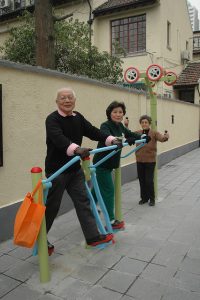
When Ronni Bennett discovered elder playgrounds online a few years ago, she immediately fell in love with the concept. She began researching how the outdoor parks, designed specifically for the social and fitness needs of older adults, have become popular in Asia and Europe. She interviewed designers and looked into the special equipment involved.

Bennett, 75, a retired web producer who writes an influential blog about “what it’s really like to get old,” began lobbying her city council to build an elder playground in Lake Oswego, OR, the town where she lives. She was successful: her community now has a fitness park with 10 pieces of equipment designed specifically for older adults, including three that are wheelchair-friendly.

But, claiming it would be impossible to enforce an “elders only” policy, Lake Oswego officials named the park “FIT Spot.”

Bennett blames ageism. “I am so sorry the word ‘elder’ is not in the name,” she said. “But that is how things go in a culture as terrified of aging as ours is. Nobody wants to say there are old people here.”

Bennett’s experience may help explain why elder playgrounds are taking off much more slowly in the United States than in other parts of the world. While interest is growing, only a handful of dedicated “elder playgrounds” have been installed in the United States. Convincing communities to give money and space to parks that are for elders only is proving to be a hard sell.

Roots in China

Elder playgrounds have been around for about 20 years in other countries. In 1995, with the adoption of the “Physical Health Law of the People’s Republic of China” along with an “Outline of Nationwide Physical Fitness Program,” China began building outdoor fitness centers geared to all ages. In 2003, the University of Lapland in Finland, partnering with manufacturer Lappset, designed and built a playground for elders for research. Around the same time, Japan began repurposing children’s playgrounds as “Nursing Home Prevention Parks,” with specialized workout stations and classes, in response to the nation’s aging demographics. The concept quickly spread to Germany, England, Spain and Canada.

Elder playgrounds typically feature low-impact exercise equipment designed for the specific fitness priorities of older adults, such as building balance, coordination and flexibility. Equipment is lower to the ground and equipped with seats or grips geared to people who might have limited mobility or strength.

Regular use of an elder playground can boost older adults’ physical fitness and help prevent illness. One study found improvements in balance, coordination and speed after just three months.

Some elder playgrounds have been built in the United States, and there are hopeful signs that more are on the way. Colin Milner, founder and CEO of the International Council on Active Aging (ICAA), notes that many manufacturers of outdoor playground and fitness equipment have added or expanded lines of equipment specifically for older adults in recent years.

“These companies don’t jump on board unless they feel there is a significant opportunity,” Milner said.

While ICAA hasn’t tracked elder playgrounds specifically, its 2015 survey of health clubs, senior centers, retirement communities and continuing care retirement communities (CCRCs) found that 21 percent planned to purchase outdoor exercise equipment by 2017. At the time of the survey, some 41 percent planned to add game courts by 2017, 38 percent intended to create outdoor fitness or exercise trails and 57 percent aimed to install walking trails or paths.

From Kids to Elders

Michael Cohen, a veteran designer of children’s playgrounds, first became intrigued with spaces devoted exclusively to older adults when he saw a Good Morning America report on a “pensioners’ playground” in Manchester, England. That led him to found Must Have Play, an Ithaca, NY-based design group exclusively focused on innovative playgrounds for older adults. He has designed several elder playgrounds for parks in US cities, but so far none have actually been built.

Cohen envisions elder playgrounds as places that offer more than a good workout. He’d like to see elder playgrounds promote play in forms suited for older adults’ abilities, with courts or equipment for sports like pickleball, paddle ball, bankshot basketball or bocce ball, and loaded with features like water elements, walking paths and game tables.

“Ideally, an elder playground is not just a place to exercise,” Cohen said. “It’s an inviting space where you’d want to spend time.”

In the United States, playgrounds that cater to multiple generations are catching on more quickly than those designed exclusively for older adults.

That’s what happened at Carbide Park, in Galveston County, TX, which added an elder playground in 2014. The park has become a favorite destination for field trips from three local senior centers. On days when the weather is not too hot, busloads of older adults arrive to enjoy the park, according to Julie Diaz, director of parks and cultural services for Galveston County.

“If they want to go outside, they know they can come here to exercise, to swing or just to sit and talk with other seniors,” Diaz said. “The elder playground provides the type of exercise they need, and it’s very specific to them.”

Some elder playgrounds have arisen as outdoor extensions of local senior centers, such as the fitness park at the Rockville (MD) Senior Center. Cohen says that’s a big plus—proximity to a senior center or a senior residence gives visitors access to clean bathrooms and a place to go for help in the event of emergency.

The Rockville park features equipment developed especially for the needs of older adults, according to Chris Klopfer, the center’s senior sports and fitness supervisor.

“The playground encourages functional training, which incorporates more than one muscle group at a time, and that helps them with their day-to-day function, so that they can stay healthy and strong and age in place,” Klopfer said. “In today’s society we rely on medication for different ailments. I think we need to continue to push in the direction of physical exercise.”

The Rockville playground’s equipment has hand grips on everything, so that older exercisers can stabilize themselves. If they do fall, a non-slip surface made from rubberized tires makes injuries less likely.

One local trainer regularly brings older adult clients to the park for workouts when the weather is good. One of the trainer’s clients, Ellie Rouff, 72, adjusted her workout schedule to allow for more sessions at the park.

“I’m still working in an office and sit at a desk five days a week, so if I can be outside, I love it,” Rouff said. She likes the fact that the equipment has usage instructions and allows her to do exercises she couldn’t otherwise. She can no longer do push-ups on the floor but can perform them on one of the machines.

Boosting Fitness

Research suggests that regular use of an elder playground can boost older adults’ physical fitness and help prevent illness. The University of Lapland studied one group of 40 people, ages 65 to 81, and found significant improvements in balance, speed and coordination after just three months of guided exercise (90 minute, once-a-week sessions) on an elder playground.

Increased fitness not only improves quality of life, it can also help keep the cost of health care down, ICAA’s Milner notes, citing a study that found that adults who do 90 minutes of cardio exercise a week can save $2,500 annually on health care.

“By age 80, 46 percent of Americans can’t lift 10 pounds,” Milner said. “If you can’t lift 10 pounds, that’s a precursor to moving into a nursing home. Just simply getting people outdoors five to 10 minutes can make a huge difference in their mental health, attitude, overall health and well-being.”

Elder playgrounds also promote social engagement, an important factor given that many older adults become isolated and lose social ties. Numerous studies have linked isolation with poorer health among older adults.

Cohen designs elder playgrounds with conversational seating, to make them inviting even to people who may not wish to exercise. The exposure to sunlight helps reduce vitamin D deficiency and may help older adults sleep better at night.

The Multigenerational Option

In the United States, playgrounds that cater to multiple generations, instead of being designed exclusively for older adults, are catching on more quickly than elder playgrounds. These multigenerational playgrounds offer features and equipment appropriate for children as well as older adults. To motivate more adults to take their kids to play more often, the nonprofit KaBOOM! has built more than 50 multigenerational playgrounds in the United States since 2012 through a partnership with Humana and the Humana Foundation. (To build the playgrounds, local communities apply for KaBOOM! grants, enlist funding partners and recruit volunteers.)

But while multigenerational spaces offer great benefits, they’re not designed exclusively with seniors’ needs in mind, Cohen said.

“In reality, many multigenerational designs tend to pay short shrift to the needs of older adults,” he said. Many are essentially children’s playgrounds with a walking path added nearby or a few exercise machines located in adjacent space.

Milner agrees. “Multigenerational can be a little bit intimidating to older adults,” he said. “The noise might be overbearing.” Children who play raucously can be overwhelming to those living with dementia and possibly a safety issue if the children are underfoot among adults with mobility issues.

A study at Germany’s Wiesbaden Polytechnic indicated that many older adults found it embarrassing to exercise in the presence of younger people and were more inclined to use more private playground settings visited mostly by generational peers.

Another factor: some older people simply don’t feel comfortable around children. As a single, older man, Cohen says he’d personally feel uncomfortable on a playground and thinks some parents might feel that way too.

“I want a place where I can maybe meet a friend for a game of bocce, or where I can read,” he said. “I don’t necessarily want a lot of kids around.”

The Lake Oswego FIT Spot has naturally attracted some multigenerational use—it’s located near a children’s playground, so some grandparents and parents use the equipment while keeping an eye out as kids play nearby. But Ronni Bennett thinks it’s important to have dedicated spaces where elders, especially those who can’t afford a health-club membership, know they can meet peers and exercise comfortably and safely.

“With so much concern over health care costs, to me, elder playgrounds are a money-saving no brainer,” she said. “The point is to keep moving and to have fun at it. When people don’t exercise, they die younger than they should.”

Medical Tourism: Are Local Doctors Always the Best Choice?

Patients travel from around the United States and the world to see Richard Guyer, MD, an orthopedic spine surgeon at the Texas Back Institute in Plano, TX, because he is a recognized, widely published expert in disc-replacement surgery.

But when Guyer, 66, recently needed surgery himself—a complex procedure to remove a benign tumor—he flew to Florida. Good care was available in his own hospital, but he chose a surgery center where surgeons perform the procedure, on average, 50 times a week, using advanced techniques.

Guyer’s experience—both as sought-after surgeon and as traveling patient—is becoming more common. Proximity no longer determines health care. A growing number of Americans are willing to travel to other states or overseas as part of a trend called “medical tourism.”

Medical tourists travel to save money, to get cutting-edge or high quality care or for procedures not available locally.

Medical tourists leave home to access the best available care or to save money or, in some cases, both. Patients Beyond Borders, an information service for consumers, estimates that 1.7 million Americans will go overseas for elective medical care in 2017. The global medical tourism market is estimated to be $45 to $72 billion annually, with approximately 14 million patients crossing borders worldwide, including those who travel to the United States for medical care.

Data on domestic medical tourism—traveling within the United States to another state for health services—is scarce and largely anecdotal. But, noting a growing willingness to travel for care, physicians and medical centers are adjusting their practices to attract patients, particularly for out-of-pocket elective procedures.

What Sends Patients Packing

Within the United States, medical travel typically takes patients to centers of excellence for highly complex procedures, such as the Cleveland Clinic for heart surgery, or to research hospitals offering the latest and best care, such as Memorial Sloan Kettering Cancer Center.

Older Americans are driving the trend. Josef Woodman, CEO of Patients Beyond Borders, estimates that about 85 percent of overseas medical travelers fall within the ages of 45 to 65—too young to qualify for Medicare but at an age more likely to develop complex medical conditions.

Other drivers include the relatively inexpensive cost of travel and wide disparities in care and treatment pricing at home and abroad. Also, the Internet makes it easier for patients to research options and for providers at different locations to share medical records.

Gaps in health care insurance are also a factor, especially as a growing number of patients rely on health plans with high deductibles.

“As health plans continue to become more expensive and less cost-efficient for the patient, the ‘underinsured’ patient can often realize cost savings on more expensive surgeries over and above their plan reimbursement,” Woodman wrote in an email interview.

A 2012 study by Woodman, published in AARP International’s Journal, identifies three categories of medical tourists:

  • Value patients, usually those 50 and older, who are uninsured or underinsured or who seek procedures that insurance doesn’t cover
  • Access patients, who live in areas where available health care lacks quality or where specific procedures may not be available
  • Quality patients, who are willing to travel for exceptional specialty care, including cutting-edge surgeries or new therapies

Bill Ruth falls into the quality category. When the 64-year-old retired teacher and coach learned that he needed heart surgery, he called on a few physician friends for advice. They steered Ruth to the Cleveland Clinic or Baylor University Medical Center in Dallas, even though Ruth lives in Estes Park, CO. After researching his options and interviewing physicians, Ruth chose Baylor. He traveled to Dallas, where the procedure was successfully performed. Within a few days, Ruth was up and walking five miles at a time. And within a few weeks, he went to the high school in Pennsylvania, where he once taught, for his induction into the school’s athlete hall of fame.

Ruth’s insurance plan, through the teachers’ union, covered all of his medical costs; he picked up the cost of travel for himself and for his wife.

As a triathlete who organizes health and fitness programs in his community, Ruth said he would never consider just going to the nearest provider without doing his research.

Treatment abroad can be 20 to 80 percent less expensive, depending on the country and the procedure, and including the cost of travel.

“You want the best care possible,” he said. “Why shouldn’t people travel to get the best medical care?

“Some people put more research into buying a car (than medical care). But when you really care about your health and your activity level, you do what it takes to find the best care.”

Typically, for necessary procedures like Ruth’s, insurance will cover the treatment at most US locations, although often at out-of-network rates. (Be sure to confirm coverage with the insurance provider before any procedure.) Patients almost always pay the cost of travel.

But in some cases, medical travel is paid for by an employer. Home-improvement retailer Lowe’s sends employees in need of complex, non-emergency heart surgery to the Cleveland Clinic. Lowe’s, which self-insures its employees, struck deals for bundled prices with the Cleveland Clinic, allowing Lowe’s to save money even after paying all medical and travel costs. By going to a center of excellence for heart surgery, patients enjoy better outcomes and fewer readmissions, which in turn helps employees return to work healthier.

Lowe’s typically picks up the cost of the trip for a caregiver too and sometimes pays the deductible as an added incentive. (Employees who don’t wish to travel may choose a local provider and receive normal coverage.) Other large, self-funding companies, including Walmart, Boeing and PepsiCo, have similar approaches.

Heading Overseas

Patients are traveling to Thailand for plastic surgery, Germany for cancer treatments, Costa Rica and Mexico for dental care, Turkey for eye specialists, Israel for fertility treatments, Poland for dental implants, the United Arab Emirates for bariatric surgery, to list a few.

About 70 percent of Americans who go overseas for medical care do so for elective treatments that insurance typically doesn’t cover, such as dental work, cosmetic surgery, bariatrics or fertility treatments, Woodman said.

Opting for treatment abroad can be 20 to 80 percent less expensive, depending on the country and the procedure, even after the cost of travel. What’s problematic, however, is judging quality of care.
Leigh Turner, PhD, associate professor at the Center for Bioethics, University of Minnesota, cautions that much of the information available online is created by providers, who have a financial stake in painting a positive picture.

When you travel for care, coordinating long-term follow-up and managing postsurgical complications can be problematic.

“It’s not so easy to spot the bad actors,” Turner said. Overseas providers are “businesses that are trying to attract patients, and they are quite savvy in painting a positive picture. While the Internet gives patients more access to information, it’s also creating more misinformation.”

It’s extremely important for medical tourists to do their homework. Patients must have a good understanding of the desired procedure and make careful assessments of the quality of the provider. Patients Beyond Borders advises contacting physicians in advance for references and to check accreditations.

“If the doctor is evasive, hurried, or frequently interrupted, or if you cannot understand his or her language, then either dig deeper or move on,” Woodman writes in his book, Patients Beyond Borders: Everybody’s Guide to Getting Affordable, World-Class Healthcare (2015).

Medical-tourism concierge services can help you locate clinics and arrange travel, but they are not regulated and do not provide medical advice. Some may steer patients toward clinics that pay commissions. You should get recommendations from former customers, ask how the agency is compensated and use a US-based agency if possible.

Those who use overseas hospitals have little recourse in the event of poor outcomes. Regulation and oversight can vary widely, although that may be changing. The Joint Commission International (an independent, not-for-profit accrediting organization for US hospitals and medical providers) now accredits more than 400 hospitals worldwide, giving patients some reassurance as to quality.

Costs of Medical Tourism

Medical travel remains an option largely for those who can afford it. With very few exceptions, you must cover your own travel costs, as well as those of any accompanying caregiver.

Medicare patients may seek care at any US provider that accepts their plan, but aside from a very few rare circumstances, Medicare doesn’t pay for overseas procedures or travel costs, foreign or domestic. (Some Medicare Advantage plans might cover the cost of the trip for those who must go to a distant US facility for transplant surgery.)

Patients must also consider nondollar costs. There will be additional time spent traveling to the location and recovering there. You may need to avoid air travel, especially very long flights, for a period of time after surgery. When you are overseas, language and cultural differences can create additional stress. “Receiving care at a facility where you do not speak the language fluently might increase the chance that misunderstandings will arise about your care,” warns the Centers for Disease Control and Prevention’s website.

Some overseas hospitals offer hotels or resorts where patients may stay for recovery and post-op care before returning home. However, coordinating long-term follow-up and managing postsurgical complications can be problematic. Studies suggest that when patients are admitted for complications at a different hospital than where the original surgery took place, mortality rates are higher.
Guyer, the Texas surgeon, sees that as a key difference between domestic medical travel and overseas travel.

“If a patient comes here from Montana for surgery and later has problems, they can send pictures, we can consult over the phone, and they can fly back if need be,” he said. “If somebody goes abroad for surgery and then has a problem, we don’t like to take care of it here, because we weren’t there for the surgery.”

Effects of Medical Travel

Many hope that the trend toward medical tourism could drive improvements in quality and help keep costs down in the United States.

“Theoretically, it makes sense—as you expand patients’ options, there’s increased competition in terms of quality and price,” said Steve Wojcik, vice president of public policy for the National Business Group on Health. “That benefits everybody.”

When employers like Lowe’s send patients to the Cleveland Clinic, for example, that takes patients away from local providers.

“In those cases, a local provider might approach a big employer and say, ‘We know you’re sending people out of town; here’s our data, and here’s what we can offer you,’” Wojcik said.

But while increased competition should reduce prices and improve quality in theory, price transparency in the United States is still spotty, especially for nonelective procedures, and price disparity is wide. A 2013 Journal of the American Medical Association study of domestic providers found a wide range in pricing for hip replacement surgery: as low as $11,000 or as high as $125,000. Also, when researchers posed as patients prepared to pay cash, more than half of the hospitals queried would not provide prices upon request.

Some US medical centers offer a concierge service to assist with trip arrangements.

“There’s no correlation between cost and quality,” said Jesse Gomez, executive vice president of sales and marketing for BridgeHealth, a Denver health consulting firm that negotiates bundled rates for self-insured employers for procedures at centers of excellence. “But fortunately for consumers, objective provider data is becoming increasingly more accessible.”

Gomez notes that patients can now find average prices for common procedures from the Health Care Cost Institute by way of its consumer website and hospital quality ratings by way of websites like www.carechex.com.

But some foreign providers make it even easier. Bumrungrad International Hospital in Bangkok, a top destination for global medical tourism, publishes costs online for some 30 procedures and offers package pricing in many specialty areas.

“We can only hope for this kind of transparency to visit us sooner than later here in the US,” said Woodman of Patients Beyond Borders.

The desire to attract patients is clearly changing the way some medical providers do business. The Cleveland Clinic’s website offers extensive information for foreign and domestic travelers, plus a concierge service to assist with trip arrangements. Other centers of excellence that attract domestic medical travelers are improving the ways they integrate post-treatment and follow-up care with local providers.

Some of those providers are becoming more transparent and consumer-friendly on pricing, especially those that cater to cash patients. For example, Guyer’s clinic negotiated with the Texas Health Center for Diagnostics & Surgery to offer a package price, which allows out-of-pocket patients to pay up front and avoid unexpected charges.

The option of medical tourism is also encouraging people to become more educated and more proactive in their own medical care.

“The patients who travel to see me have done their homework,” Guyer said. “They know all about the procedure and they know what questions to ask.”

How to Deal with Your Digital Afterlife

Sara Ivey, 63, calls it one of the few gifts of cancer: time to plan.

When her husband, Jerald Sluder, was diagnosed with advanced melanoma, the Dallas couple had time to organize his affairs before his death in December 2016 at age 64. In addition to drawing up a will and advanced health care directives, they assembled a list of login information for his email and social media accounts as well as his banking and investment accounts.

Had her husband died suddenly, Ivey said, managing his online estate “would have been a nightmare upon a nightmare upon a nightmare.”

The digital revolution has created an increasingly thorny end-of-life issue: when we die, what happens to our online accounts and our Facebook pages, or to all the photos, genealogy records, recipes and other content we’ve saved in the cloud?

To deal with these complications, attorneys and other end-of-life experts now encourage clients to create a digital estate plan—a document listing all digital activities and assets, as well as login information and instructions for how to handle each account after death. That includes email, cloud storage, social media profiles, money management, health and medical portals, frequent flyer and travel memberships, web hosting or blogging information, and entertainment and shopping website accounts.

“People can’t inherit what you designate in your will unless you tell them how to get at it,” said Judith Kolberg, author of Creating Your Digital Estate Plan (2015).

Will your autopayments go on without you? Will your heirs know how to find your online accounts?

A digital estate plan doesn’t take the place of a will; rather, it should be prepared in tandem with a will and other end-of-life documents. Experts advise against including passwords or other login information in a will, as it would be inconvenient and expensive to update every time a password changes. Also, wills become public record after a person dies, so it’s possible someone could use the information to fraudulently access accounts. The digital plan serves as an easily updated addendum to help execute the deceased person’s wishes as stated in the will.

Taking this step can reduce hassle for heirs or executors, as well as prevent fraud, Kolberg said. The digital estate plan should be stored in a password-protected spreadsheet, as well as on a paper copy kept in a safe deposit box or other safe place. She also advises making appointments with yourself to update the plan regularly.

“Tie updating your digital estate plan to another activity that you do on a regular basis, such as your changing your automobile oil or paying your quarterly taxes,” Kolberg said.

Why Worry about It

“You can’t take it with you” applies to online assets just as it does to family heirlooms. Photographs, recipes, genealogy records and writings stored online over the course of a lifetime must be dealt with when someone dies: deleted, transferred to physical storage (such as a thumb drive) or maintained by someone who can continue to pay the annual or monthly storage fees.

All those pages of “Terms and Conditions” that users typically flip past when creating online accounts contain the specifics for what happens after death at websites such as Facebook, Twitter and Instagram, or to email. Heirs typically don’t have claim to that material.

“Those are usually restrictive about post-death access,” said Carl Levy, a trusts and estates attorney at Chiesa Shahinian & Giantomasi in New Jersey.

For example, Facebook owns all the content, including photos, that people upload to the site. While Facebook hasn’t generally deleted the pages of deceased users, there’s no guarantee that the social media network will preserve them in perpetuity. Facebook users who want their material to “live on” should download photos or other content onto a hard drive or find other ways to preserve it. A Facebook user may also name a legacy contact, a person who can either delete the deceased’s page or maintain a memorial page.

Accounts that store content—such as movies, music or TV shows on iTunes or eBooks on Kindle—usually “die” with the account holder. Heirs can’t continue to use the content. That’s because the user didn’t purchase the material itself, just a license to use it, which typically expires upon death. However, to date, these sites haven’t shut down accounts of people who die, nor taken steps to prevent family members with login information from continuing to access the content.

For cloud-based content created or owned by individuals—such as photos, recipes or genealogy records—the biggest concern becomes ensuring that the material is stored or maintained after death, if desired. If payments lapse for the host account, legally the website can delete material.

Money Matters

With the advent of online banking and investing, it’s conceivable that someone could die leaving almost no paperwork behind. Many people manage investment accounts on a paperless basis. Updates on accounts and bills may come exclusively through email. When a paperless person dies without leaving specific information on his or her online accounts, that leaves a major headache and investigative chore for heirs.

Reconstructing a dead person’s accounts “is a hassle, but it’s getting easier,” Kolberg said. Many banking and investing websites now offer options, usually under “settings,” where family members can find instructions for what to do if the owner dies.

To locate banking and investment accounts, heirs can start with the deceased’s federal income tax return. Except for newly acquired accounts, investments should be listed in Schedule B, Schedule D and/or 1099 forms. Heirs can contact the investment institutions, and after they provide a death certificate and the deceased’s social security number, the institution will generally transfer assets into an estate account. That’s a new account opened after someone has passed away, into which the executor deposits the deceased person’s money. This allows for bill and debt paying and, ultimately, distribution of funds to beneficiaries.

Once an estate has been settled, the executor should make sure that online accounts are closed.

“Anything kept up is susceptible to phishing and hacking,” Kolberg said.

Naming a Digital Executor

Some experts recommend designating a “digital executor” who can navigate and implement the digital estate plan—someone trustworthy who also knows how to handle online accounts, especially if the principal estate executor isn’t tech savvy. However, others advise against this approach.

“Having one person that handles solely the digital aspect and another handling the rest could be cumbersome,” said elder law attorney and financial advisor Patrick Simasko of Simasko Law in Michigan. “Most of the time, you would want only one executor.”

Some states don’t legally recognize digital executors; some have not yet enacted any legislation relating to digital assets. Individuals should seek an attorney’s advice on adding a digital executor.

Those sorting out a deceased person’s digital property should proceed with caution.

“While having a list of accounts, websites and login information is certainly helpful, care must be taken in accessing the account or website,” Levy said. “States are beginning to adopt statutes which govern who is allowed to access online information and under what circumstances.” (In general, an estate’s executor can access the deceased person’s online accounts, but terms and conditions vary.)

Further complicating the issue are federal statutes that protect privacy and impose penalties upon those who access online information without following proper procedures. But unless fraud or theft occurs, those statutes are rarely enforced, according to Julie C. McKain, an estate planning and probate attorney in Rockport, TX.

“… The problem is, the technology is evolving faster than the law’s ability to keep up.

–Julie C. McKain

She advises clients to tread lightly—wait until the executor is named, which typically takes 30 days after the person passes away, before accessing the deceased’s online accounts. However, if an online account must be accessed to prevent a loss to the estate, she does tell clients to take steps such as halting auto-payments.

This is one of those areas where the law and a website’s terms and conditions don’t really impact what the average American does after a loved one dies,” McKain said. “The problem is, the technology is evolving faster than the law’s ability to keep up.”

If in doubt, heirs should consult an attorney before accessing any online accounts. In addition, if an estate is involved in ongoing or threatened litigation, executors must be careful not to destroy anything that might be evidence—including digital assets.

Some online investment and banking accounts can be handled after death without logging on. Instead, a family member or executor may notify the provider about the death (with appropriate documentation), and the provider will close the account.

To navigate all of this, a growing number of services are emerging to help individuals think ahead about what they’d like to see happen in the event of their deaths and to assemble and update all relevant information into one place. Websites such as Assets in Order, Estate Map, PasswordBox’s Legacy Locker, and SecureSafe allow users to input online accounts and encrypted data and to name trusted family members or friends who may access the data. Other sites, like FinalRoadmap.com and Everplans.com, guide users in assembling login information as well as creating an online repository of health care directives, funeral wishes, plans for pets, family photos, even favorite family recipes. FinalRoadmap also allows users to craft messages that will be automatically sent to loved ones after death.

But user beware: dozens of businesses have sprouted up in the area and a shakeout is likely; some have already shut down or been absorbed by other companies. Before choosing an online repository, you should check to see what guarantees are in place should the company merge or go out of business.

Keeping Social Media Alive

Should you maintain a social media life after death? Heirs may wrestle with that question if the deceased had been an active presence on Facebook or other social media. They usually have three options for each account: delete it, leave it as is or have it turned into a memorial account.

Accounts that no longer serve a purpose, like LinkedIn and dating sites, should be deleted. Same for selling or shopping accounts such as eBay or PayPal.

Other decisions are less cut and dried. Some families opt to leave social media accounts “as is” but that option can have unforeseen consequences. Active Facebook accounts, for example, may generate unsettling alerts and notifications—such as a friend recommendation for someone who has passed away.

Also, a dead person’s online presence can create opportunities for phishing, hacking or scamming. One scenario, Kolberg said, is that a scammer might see the deceased’s alma mater on Facebook, then contact the family posing as a college representative and proposing a donation to a bogus memorial scholarship fund in the person’s name.

On the other hand, setting up a memorial social media page can serve as a way for friends and family to process grief and remember someone who has died.

Nowadays, we live on online, even after we pass away.

 –Sara Ivey

“Facebook creates this visual, multimedia ecosystem,” said Molly Kalan, a Boston-based marketing executive who wrote her master’s thesis on how people grieve on social media. “It’s a dynamic archive of stories, and people can keep adding to those stories. The page can commemorate a birthday or anniversary. You can reflect on that as you go through different waves of grief. I think it’s a positive.”

More than six months after her husband’s death, Ivey continues to monitor his email account. From time to time, she receives emails with key information, such as a notice of an old 401(k) account that her husband had apparently forgotten about and that she didn’t know existed.

While she expects to shut down his email soon, Sara Ivey plans to keep her husband’s Facebook page up indefinitely.

“That’s important to me, to keep his memory alive,” she said. “It has become a forum to stay connected with family and mutual friends.”

Having gone through the process, Ivey has designated her older son as the person who will manage her online presence should something happen to her.

“Nowadays, we live on online, even after we pass away,” she said.

Grandpa Gets Around…Using Uber

When Kerri Couillard founded Babierge, she expected the business would mostly attract young families who were traveling. The Albuquerque-based fledgling company connects people who need baby gear for a few days with those who have equipment to rent.

Couillard was surprised when, instead, many of her customers were people like Yvonne Mull: a 78-year-old Santa Fe grandmother who rents baby gear for just a few days here and there when her grandson comes to visit. 

“I don’t want to buy it and I don’t want to store it,” Mull said. “This works perfectly for me.”

Older customers are surprising many companies that, like Babierge, are part of the sharing economy, in which people rent out rooms, cars, boats and other assets, or buy and sell services directly from each other, all connected by way of the Internet. Also known as the gig economy or the on-demand economy, it includes businesses like the home-sharing enterprise Airbnb and the ride-hailing service Uber.

While many of these companies assumed that their customer base would be dominated by millennials, “It turns out that the baby boomer generation is a big user of the on-demand economy,” said Rowan Benecke, global technology practice chair for public relations firm Burson-Marsteller.

25 percent of Americans who are 55 or older say they’re providing services in the sharing economy.

In conjunction with the Aspen Institute and Time magazine, Burson-Marsteller developed a survey in late 2015 that revealed that 29 percent of people over age 60 have used sharing-economy services, just slightly more than the 28 percent noted in the 50-59 age group.

The fact that older adults are getting involved is good news, because the sharing economy now occupies a significant and growing position in the United States.  PricewaterhouseCoopers (PwC) estimates that the sharing economy totaled $15 billion in 2014—and will grow to $335 billion by 2025.

“Companies are realizing that there’s still an untapped market among older adults, and that paying attention to this market segment is a good idea,” Benecke said. “Older adults do have a lot of purchasing power.”

Many people, like Linda and Richard Barnhart, ages 69 and 71, of Scroggins, TX, find that the sharing economy offers benefits like convenience and good prices. The Barnharts learned about Airbnb from their daughter and used the service to rent privately owned homes in San Diego and near Yosemite for recent trips with friends.

“You get much better accommodations for a lesser price,” Linda Barnhart said. “In each instance, we were able to rent an entire house, rather than just a couple of hotel rooms. It worked out great.”

More than Bargains

Some observers believe the sharing economy offers even more than bargains and convenience; they believe that services provided on demand could create a new, cost-effective avenue for older adults to stay independent longer.

“Use TaskRabbit to get help around the house, use Instacart to deliver your groceries, use Uber to drive you to your medical appointments; the list goes on,” says Glenn Carter, a blogger at the Casual Capitalist.

Having convenient access to these services, at a reasonable price, could be a game changer, allowing older adults to avoid or postpone moving into assisted living.

“When you compare the cost of a mortgage with the cost of assisted living facilities, in some cases it can make more financial sense to use those services and age in place, rather than move to a facility, depending on the level of care required, of course,” said Nela Richardson, PhD, chief economist for national real estate brokerage Redfin.

And Dr. Joseph Coughlin, director of the Massachusetts Institute of Technology AgeLab, thinks ride-sharing services could help solve the critical problem of transportation that plagues many older adults.

“Uber improves on cabs in a few critical ways—loved ones can track Uber cars’ progress, for instance—and other, smaller services go even further,” he writes in a blog post. He points to SilverRide and Lift Hero, which match older passengers with drivers who are willing and trained to provide extra service, such as assisting customers to and from their doors, or accompanying them on doctors’ visits.

Participating in the sharing economy gives older people with a way to earn extra cash—and, just as important, to stay active and engaged.

However, not everyone sees the sharing economy as a panacea.

“Seniors 75 and up are less likely to use a smartphone, and most of these services depend on that,” said Laurie Orlov, blogger for the Aging in Place Technology Watch. A 2015 Pew study found that, while nearly two-thirds of all Americans have a smartphone, only about a quarter of adults 65 and older own one. (Some 78 percent of older adults do own cell phones, but they tend to be more basic devices, the study noted.)

Already, though, some companies are finding ways to get around the smartphone gap.

GreatCall, which markets Jitterbug cell phones and medical alert products to older people, recently announced GreatCall Rides, a pilot program in five markets (California, Florida, Arizona, Dallas/Fort Worth, TX, and Chicago) with significant populations of older adults. GreatCall customers simply press 0 to call an operator on their Jitterbug phone and order a Lyft ride; GreatCall adds the cost of the ride (plus a nominal fee) to the customer’s monthly bill. No cash is involved.

“Even among those older adults who do use a smartphone, the comfort level with the technology may still be a barrier,” said Gyre Renwick, head of healthcare enterprise partnerships at Lyft. “They may not be comfortable downloading and using an app, for example. By offering another option, we took away that barrier.”

For those who do own smartphones but lack confidence using apps, Lyft has an ambassador program. Jeff Roberts, a Lyft driver in Fort Worth, TX, visits independent living communities to get the word out and to provide “tech support.” He hosts learning sessions to give hands-on guidance and pamphlets with step-by-step instructions for using the app.

Roberts saw the opportunity for serving an older customer base after watching his grandmother discover Lyft. “She no longer drives but with Lyft can get her hair done each week and run errands,” he said.

Getting in on the Game

Some companies see an even bigger business opportunity in wooing older adults to provide services as “offerors” in the sharing economy.

Uber estimates that one in four of its drivers is 50 and older. A study by Airbnb showed that hosts 60 and older represent its fastest-growing age demographic; women 60 and up earn a higher percentage of five-star reviews (top reviews) than any other age and gender combination. And DogVacay, which pairs pet sitters with pet owners, estimates that 25 percent of its sitters are 50 and older.

Many older Americans have acquired assets—such as rooms in a large home or an extra car—that end up unused after the kids have moved out or they’ve stopped commuting to work. Companies like Airbnb and RelayRides (a car-sharing service) “let seniors monetize assets that would otherwise be gathering dust,” said Coughlin of AgeLab.

Participating as offerors also provides a way to earn extra cash—and, just as important, to stay active and engaged. Research suggests that people who become isolated in their later years don’t live as long or fare as well, health-wise, as those with strong social networks.

The sharing economy has opened new connections, both human and canine, for retired handyman Jon Palmer, 60, of Plano, TX. Palmer was devastated when his own dog, a black lab named Gracie, passed away two years ago. Later, when a lost black lab wandered onto his front porch, he took it as a sign.

“I had the best time caring for my new friend while waiting for her family to pick her up,” Palmer said. “I knew then where my next path would take me.”

Sharing-economy companies, created by young visionaries, could ultimately change the lives of older adults profoundly.

Now he offers dog boarding and day care out of his home by way of DogVacay.com. His wife works during the day, so this gives him canine companionship as well as a way to bring home some cash.

In meeting new clients, “I feel as if I make new friends every week doing this,” he said. “And I’m not the type to sit and watch TV all day.” Another bonus: while sitting jobs keep him busy, they don’t require Palmer to climb on ladders or to work outdoors in hot weather, as his previous job often did.

Palmer is part of a growing trend. An April 2015 report from PwC estimated that, while 7 percent of all Americans consider themselves providers in the sharing economy, of those ages 55 and up, 25 percent do.

However, Palmer doesn’t face one of the biggest downsides of the gig economy, given that his wife still works full time. For most, the work doesn’t provide the safety net that full-time employment does. Income often fluctuates, and the work doesn’t come with health insurance or other benefits.

While it’s clear that older adults are taking on gig-economy jobs, “what’s not clear is whether they’re doing this because they’re semiretired and value freedom and flexibility, or because they’ve been downsized out of a full-time, full-benefit job and have to settle for contract work,” says Bloomberg View blogger Justin Fox.

For those who do have a safety net—Social Security for income and Medicare for health insurance—doing jobs “on demand” offers a way to stay active, earn some extra cash and keep a flexible schedule. Or put another way, adults who remain able and willing to work may be the best positioned segment to work in the on-demand economy.

Room for Growth

While many older adults do use the sharing economy, experts agree there are still untapped avenues for increased usage among older adults. The Burson-Marsteller survey revealed two factors that may keep seniors out of the sharing economy: awareness and trust.

“Only 20 percent of the people surveyed, ages 60 and up, were familiar with the term ‘sharing economy,’” Benecke said. “There’s an opportunity for these companies to raise the awareness and to educate older potential customers about the services they are providing.”

Perception is also an issue, said Michelle Barnhart, associate professor of marketing at Oregon State University, who has studied consumers age 80 and up. “There’s a perceived difference between the shared economy versus the more heavily regulated, commercialized economy that we’ve all become accustomed [to]. We tend to feel like a company that watches its employees and is bonded and licensed and insured is a safer option than a peer-to-peer exchange.”

Still, Barnhart turned her parents, Linda and Richard, on to Airbnb, and she suspects that’s how many older adults initially connect to the sharing economy—through word-of-mouth by way of children or other trusted friends and relatives.

For the older Barnharts, the smartphone piece wasn’t an issue because they both retired recently from jobs that required them to use technology. However, that could be a barrier for her peers, Linda Barnhart believes. 

If businesses can help overcome these barriers to connect with older adults, they stand to profit. While sharing-economy companies were created by a younger generation of tech visionaries—with young, urban consumers in mind—they could ultimately change the lives of older adults most profoundly.

Says blogger Glenn Carter, “Where the sharing economy really stands out is its ability to keep [older adults] social and to help them live more independently.

Ellen Goodman: It’s Time to Talk about Death

This article is the next in our series on the future of aging: interviews with people who are experts in their fields and are also visionaries. We’re asking them to talk about what they believe will happen in the years ahead to change the experience of aging.

Ellen Goodman, a Pulitzer Prize winning columnist, has been examining social change for most of her career. As a writer and speaker, Goodman has given a voice to progressive ideas and to women’s issues in particular. Now she is steering how we think about death and dying with her nonprofit organization, the Conversation Project, which calls itself a public health campaign and a movement, working to change the way people talk about, and prepare for, their end-of-life care.

The first glimmer of Ellen Goodman’s vision for the Conversation Project started with a suitcase.

When she was 25, Goodman went home to visit her family. Her father had been diagnosed with terminal cancer and would pass away three months later. Her mother had just given him a gift: a brand new suitcase.

Goodman jokes that the suitcase may qualify her family for the “Denial Hall of Fame” but adds she has carried the baggage of that image ever since. Because no one in her family was willing to talk about her father’s impending death, she says, there was no chance to say goodbye.

“I still wonder if my father was lonely in the silence that surrounded our inability to talk about what we all knew,” she says.

Ninety percent say talking with loved ones about end-of-life care is important; only 27 percent have actually done so.

Even though the Goodmans talked about just about everything else, the topic of death was taboo. Now, Ellen Goodman has cofounded a project to break the silence, to get people to start talking about their wishes for the end of life. 

“We hope that these conversations will begin at the kitchen table with the people you love,” she says.

Fostering Discussion

Decades after her father’s death, when her mother developed dementia and reached the end of life, Goodman found herself making difficult decisions about her care, with no sense of what her mother’s wishes might have been.  

“I had to say no to one procedure and yes to another, no to the bone marrow test, yes and yes again to antibiotics,” she says. “How often I wished I could hear her voice telling me what she wanted. And what she didn’t want.” 

Goodman’s family was not alone. According to a Conversation Project survey, even though 90 percent of people say that talking with their loved ones about end-of-life care is important, only 27 percent have actually done so.

To help bridge that gap, in 2010 Goodman cofounded the Conversation Project, a nonprofit that aims to get people talking with their families and medical providers about how they’d like to be cared for, well in advance of when a health crisis occurs. The project has created a Conversation Starter Kit, a discussion guide about what’s most important in the last phase of life. To date, more than 300,000 people have downloaded the free starter kit from www.theconversationproject.org. The project is also working to spread the word through worship groups, at local health centers and in the medical community.

Comforting Survivors

While the Conversation Project will help those at the end of life, it’s just as important for survivors. When someone passes away, studies show that depression rates plummet six months after a death if the family has had “the conversation.”

Atul Gawande, author of Being Mortal (2014) and an advisor to the Conversation Project, says that when families face difficult end-of-life decisions with no sense of their loved one’s wishes, “it’s incredibly traumatic for the family and the doctor involved.”

Death is no longer what we used to think of as natural. It comes as a cascading number of decisions.

Stories of individual families’ experiences with end-of-life questions are featured on the Conversation Project website. There’s Hong Yee, an Asian man who feels guilt about his grandmother’s not-so-good death.

“In retrospect, perhaps, we could have asked her if she wanted a feeding tube…we could have asked what she wanted and respected those wishes,” he mused.

In contrast, there’s the story of Jane, whose mother shared her wishes (“no heroics”) and her desire to be buried in the town where she lived, rather than in a family plot in another state. After her mother passed away, Jane said, knowing her wishes were honored was a source of extreme comfort.

Then there’s Linda, whose mother, Helen, did have the conversation, dealing with her impending death “honestly, openly and with great humor.” Helen signed forms for her cremation while she was still alert mentally and immediately enrolled in hospice, ensuring access to good care and pain medication when it was needed. 

“Hospice answered many requests: a massage therapist for comfort, a harpist who played by her bed; we had help with bathing, and a nurse was available day and night,” said Linda. She urged others, “Please, create the ending you want. Have the conversation too. For whatever comes next.” 

Says Goodman: “This is the gift, maybe the last gift, we can give one another.” 

We talked with Goodman about her vision for a time when people can talk openly about their wishes for the end of life—and have a better chance of dying in the way that honors those wishes.

SCF: As a society, we haven’t always needed to talk about death in the ways we do now. One might say we’re learning new skills that our parents or grandparents didn’t need as often.

EG: Medical technology has advanced so much. People are living 30 years longer than they did a century ago. That’s the good news. The harder news is that death is no longer what we used to think of as natural. It comes as a cascading number of decisions. We are faced with these decisions, which our grandparents were, by and large, not faced with. It’s a huge difference.

SCF: Another difference is, death used to be part of life. Most people died at home, so people were more familiar with death and dying—and perhaps more comfortable talking about it?

EG: Let’s not look at the past in rose-colored glasses. People died of infections and whooping cough, suddenly and tragically of diseases we can now cure. But it is true—that people saw death and they knew it up close.

SCF: Today, because of their age and numbers, boomers in particular are kind of in charge of moving the culture forward—to a better way of dealing with dying in these modern times.

EG: This is the generation of people who are now turning 65 at the rate of 10,000 a day. This generation has been [a] social-change agent of our culture all the way through their lives and they’ve also been outspoken, Lord knows. So it seems likely that, starting with [baby boomers] and going on down, we will be much more comfortable talking about these things.

SCF: How do you think your goals and your project might alter the future of how we live with death? How are your efforts going to have an effect on society?  

EG: We are a people-centered project, not a patient-centered project, and our goal is that how you live at the end of your life will be thought about and structured by your own desires. Obviously, that’s not always going to happen—there are car accidents and tragedies—but there would be a much greater number of people who would die in something we might call a “good death.”

SCF: You’ve written that everyone seems to have “a piercing memory of a good death or a hard death.” How do you define a good death? 

EG: I think the closest we’ve come is that it’s a death in which people’s wishes were respected, whatever those wishes were.

It’s not for me to say what somebody else’s experience should be. It is a death in which the people that you love know what you want and are able to help that happen.

SCF: You mentioned that the Conversation Project is people-centered, not patient-centered. In your view, is the end-of-life process too medically driven, instead of personally directed? If so, what might a more person-centered approach look like?

EG: I always think about how we transformed birth in this country a generation ago. It was because women and families said to the medical establishment that birth was not just a medical experience, it was a human experience. And now we are saying that dying is not just a medical experience, it’s a human experience and we need to keep people at the center. 

SCF: Is death a subject that’s avoided in other cultures the way many Americans avoid it?

EG: People often say, “Well, in my family/tribe/ethnic group/religion, [talking about death] is really taboo. I think we are talking about it more openly than we did, though. I’ve seen a change in the years since we’ve been in operation. We’ve had, for example, our “Death over Dinner” events, which sounds far from casual, but people have come and told stories.

As a journalist myself, one of the astounding things to me is, I’ve never been involved in anything where everybody has a story. I mean everybody has a story. I tell people I’m involved in a project to encourage conversations about end-of-life wishes. There’s kind of like half a beat, and then out pours a story. It’s just amazing.

[Editor’s note: For three years, the Conversation Project has partnered with the Death Over Dinner organization to encourage people during a designated week to host dinner parties to talk about their end-of-life wishes.]

SCF: Then again, when you’re talking to loved ones, they may be resistant, even hostile, when you try to bring up the topic of end of life. Any suggestions for broaching the subject in ways that might be less threatening or upsetting?

EG: There are lots of things that we have on the website about ways to approach it: telling someone your own story; showing them a letter; showing them this column that you’re writing; telling a story themselves; asking for a story.

One thing that works really well for adult children when talking with their parents is asking for help: “Hey Mom, hey Dad, when the times comes, I may have to make decisions for you and I really need your help in figuring out what I should do.” That’s useful because parents like to be in a position to help their children.

SCF: What are a few specific end-of-life issues—medical, financial, emotional—addressed in the starter kit?

EG: The starter kit is a non-scary, non-medical conversation starter, literally. It asks you questions like what matters to you, where do you want to spend your last days, are you a person who wants all the information or would you rather doctors and families make decisions. Of course, it also asks whether you want every imaginable treatment no matter your condition, or whether there will come a time when you want comfort care only.

SCF: Could you talk a little about multicultural aspects? For example, in Being Mortal, Atul Gawande talks about how some African Americans worry more about receiving too little treatment rather than too much, which is the opposite of what many Caucasians fear. 

EG: That’s true, and understandable for historical reasons.

We are doing several multi-ethnic projects. One is the Conversation Sabbath, where we’re trying to get the word out through faith communities [to] virtually every religion you can think of. We’re also doing a project with community health centers that is looking at the differences between different ethnic groups. It’s like a pilot project. How does it work at a largely Asian community health center, an African-American community health center, a Hispanic community health center?

SCF: Have you heard yet from any participants who used the Conversation Starter Kit, and then put the information they’d gleaned to use? I’d love to have an example of how it worked in real life.  

EG: A lot of people have told me, “I thought this would be so hard. I never thought my father would talk to me about this. But when we actually sat down, it wasn’t painful. It was one of the most intimate conversations we’ve ever had.” I’ve heard that repeatedly.

SCF: Having this conversation can bring up some complicated issues. Boiled down, what do you think it’s really about?

EG: I actually think the end-of-life conversation is about life, how you want to live at the end, what matters to you, and sharing those intimate feelings and information with the people you love.

BE THE FUEL

MAKE A DONATION TODAY

Your generosity is truly the fuel that empowers CMAP to change lives and to help older adults discover their “why!”

We invite you to donate to the 2023–2024 Annual Giving Campaign by June 30 to help us reach our goal.