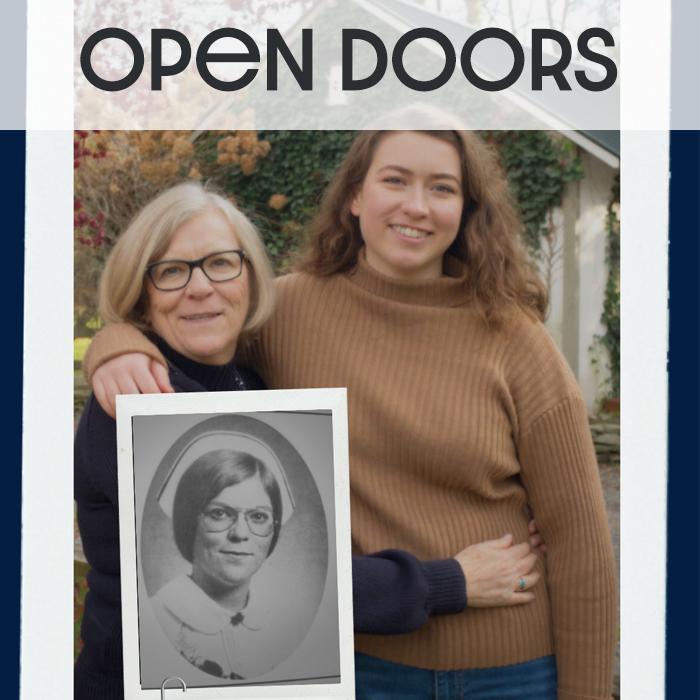
“I originally signed up for the class because I wanted to write my obituary, but I found I have much more to say and share. I now feel more comfortable writing, and I have met some interesting people. I still haven’t gotten around to writing my obituary.”
— Class Member Since 2023
My Sneakers Go Upscale
Around seven years ago, I began to experience pain in my right knee whenever I walked. Finally, when the discomfort became miserable, off to the doctor I went. An X-ray revealed arthritis in the knee. The calcium knob on the end of a bone in the X-ray picture protruded considerably. It was easy to see that when the bone-on-bone contact occurred while walking, agonizing discomfort would result, because of the calcium knob between the bones.
I was given a cortisone shot, and several days later, the pain was gone. In about six months, however, the knee acted up again. Was I going to have to have a knee replacement? I certainly hoped not.
Cortisone shots to the knee cannot be given more than one or two times, because of possible damage to the bone. So I had a second cortisone shot and hoped that the problem in the knee would be cured. In a year or so, however, the knee spoke loudly to me again. By this time I had fortunately heard about a gel shot which delivered a cushiony substance into the knee between the arthritic knob and the nearby bone.
Over time the need for the gel shot began to be required around every three or four months, if I wanted to be able to maintain any comfort while walking.
In December of 2021, I traveled to Florida to vacation for some months. I had the gel shot in late November just before I left New Jersey, and kept my fingers crossed that the knee would hold up until I returned to Princeton. Alas, in February, the knee problem became excruciating.
I researched online for a doctor and fortunately was able to obtain an almost immediate appointment. I asked the doctor for a gel shot. He pointed out, however, that the soles of the sneakers I was wearing were much too firm and that I should also get a more suitable sneaker in addition to the gel shot.
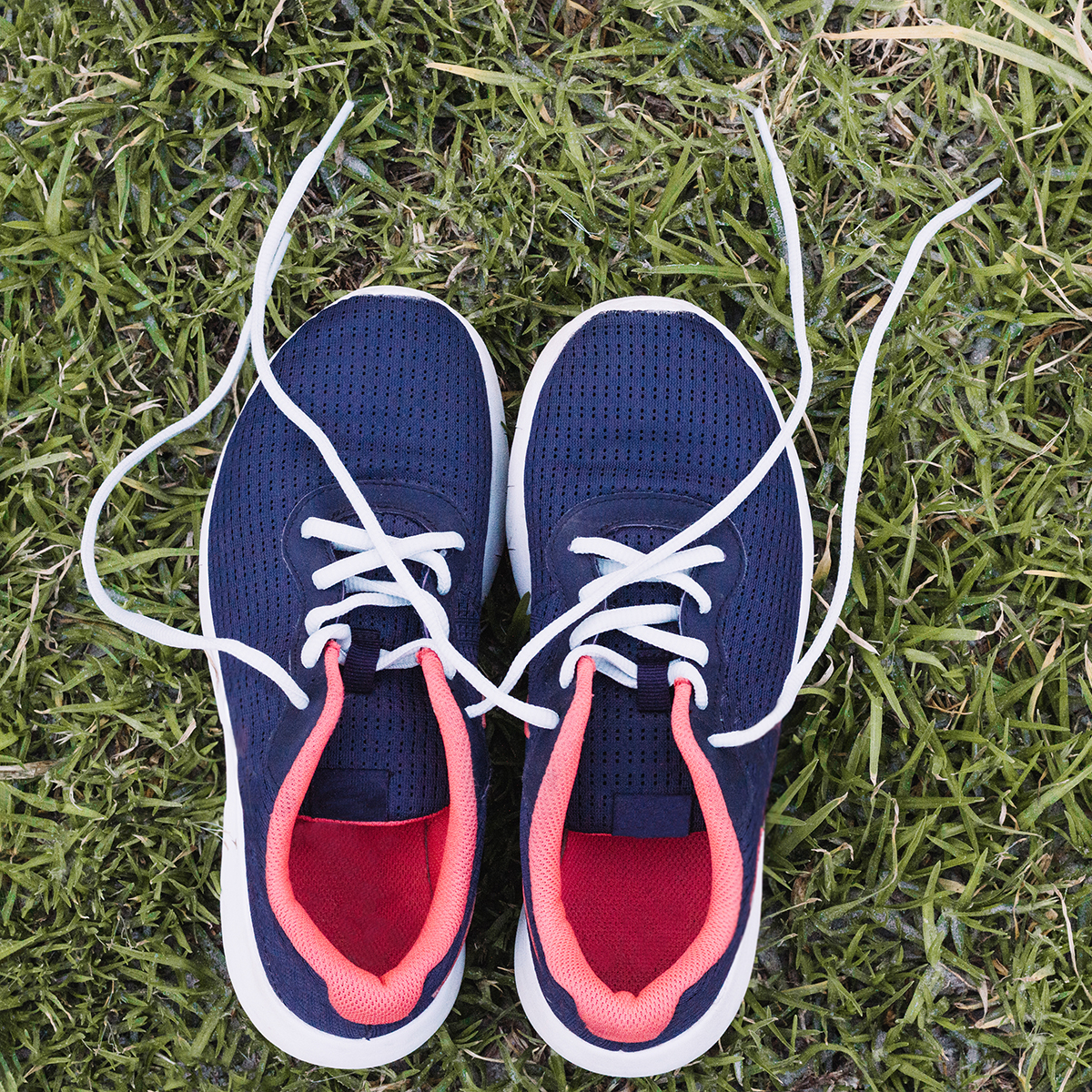
The doctor administered the gel. In addition, he told me about a sneaker store. I was able to find the store even though I had not yet mastered the GPS. In the store, a young man, completely decorated in tattoos, reached out to help me. After my explanation quoting the doctor, the very courteous helper brought out some colorful footwear. The sneaker he was holding had a thick, deep sole. The shoes seemed comfortable enough. So I bought them. The new footwear was called HOKA.
I am happy to report that for three and a half years I have not needed a gel shot. During that time, my knee has not spoken to me one little bit. I have now decided that I would wear HOKA sneakers all day, day in and day out, for the rest of my life.
For most of my activities, wearing sneakers was okay as far as appearances were concerned. Soon to become a member of the tenth decade, I felt that my footwear could be less formal, because people are more tolerant of the foibles of the older generation. No matter whatever function I attended, I really was not self-conscious about what I wore on my feet.
That is, until several weeks ago, when the development office at my college invited me to a luncheon in Palm Beach to meet the president of the college. The affair sounded rather fancy and much more formal than my usual activities.
Unfortunately, the only shoes I had in Florida were my HOKA sneakers. Certainly sneakers were not really suitable, but I did have a hankering to attend the event. So, sneakers it was going to be, because, of course, bare feet, the only alternative, certainly would not do.
The luncheon was at an alumna’s home. Beautifully decorated with flowers, little statues, and elegant pictures, the extensive layout of the house made me additionally self-conscious, because I really had no dressy clothes appropriate for the special invitation. I did have a necklace to wear, however.
Upon entering the home I was escorted to a table containing name tags, each of which were hung on a string. People were lingering around the table, introducing themselves and chatting. I stood close to the table to hide the sneakers. I noticed, with some relief, that I was the third oldest of the fifteen guests, thus making my sneaker age-related idiosyncrasy perhaps less out of place.
In time, we moved to a room filled with couches and fancy-cushioned chairs. Two men in penguin-like uniforms of white shirts, black pants and black bow ties passed around hors d’oeuvres along with wine. I sat next to a woman who was a graduate of Harvard Law School and who worked for a Wall Street law firm. I gathered that her one client was a wealthy family who kept her busy full time. During the conversation she shared that she came to Palm Beach every weekend in the winter and went to the Hamptons on weekends during the summer. Obviously she had rather deep pockets from which to donate generously to the college. I did not check out her shoes, but I kept my legs and feet as much under my skirt as possible.
After a while, we moved to the porch for lunch. There were three tables with place cards by each setting. I found myself designated to sit by our hostess who was already seated at the table. When I sat, my sneakered feet quickly disappeared under the table. Thank goodness we were not eating from trays off our laps sitting in an open circle causing the HOKAS to be fully exposed.
Three additional graduates sat at the table. Somehow the subject of writing came up. I blurted out that I found writing difficult. I pointed out that, for me, production of the written word was slow and laborious. Our hostess was extremely surprised to hear about my struggles with “putting pen to paper.” It turned out that my fellow diners all had majored in English or drama. I was the only science major. The other alums were very comfortable, therefore, about delivering the written word.
One woman at the table had written sixteen books. Words certainly were not difficult for her. Her income was probably substantial from all of those royalties. So she was in a position to be financially generous to the college. I bet SHE was not wearing sneakers.
Across from me sat an alum who was the head of a foundation which backed Broadway plays and funded projects in the arts and education. She wore a lovely pink suit with a matching necklace containing hand painted floral beads. Of course she had deep pockets from which to donate to the school. Obviously she would never consider wearing sneakers even if they matched the suit. In addition, she was comfortable with words, for she taught drama writing courses at several colleges.
The third woman was the head of an organization which had produced over one-hundred off-Broadway plays. She was a trustee of our college, making her another generous donor. I am sure she did not wear sneakers to trustees’ meetings. Also, words were definitely her friends, because she was an adjunct professor of drama at our school.
For dessert, our hostess switched places with the president of the college. My sneakers continued to be out of sight under the table as the president arrived to sit next to me. I asked our college head how she managed to handle the tensions of running the institution. Her reply was interesting. Before falling asleep each night, she reviewed the activities of the day in a special way. She focused on her emotions connected with each of the day’s events. That strategy released her psychological stress from the work. She was therefore able to fall asleep easily.
After the luncheon solicitously served by the penguin-outfitted men, we gathered for a group picture which was sent to each of us the following day. You know? In the picture those HOKAS did not look too out of place. Also, the knee certainly had been comfortable.
Later in the evening, back at home I read online the opening second semester speech given by the president of another college I am involved with. In the welcoming talk he described the concern for and attention to the school’s students. In the examples of student care, he mentioned my name in connection with a program I had presented the previous June. At that presentation I had of course worn my HOKA sneakers.
Late into the darkness of the night, as I read his speech, I figured that connections with two college presidents in one day, meeting highly accomplished wealthy women, and dining in elegance were special memories for me and my HOKAs.