Important Update: Temporary Closure of the Nancy S. Klath Center Due to water damage, the Nancy S. Klath Center (101 Poor Farm Road) is temporarily closed for construction. For your safety, please do not visit the building. We will share updates as soon as it is ready to reopen.

CMAP remains fully operational. Staff are working remotely and from the Suzanne Patterson Building (45 Stockton Street). Programs will continue as scheduled at the Suzanne Patterson Building and in virtual formats. Thank you for your understanding.

GrandPal Student – Cameron

Sweet Moment at Princeton Community Event

Cameron

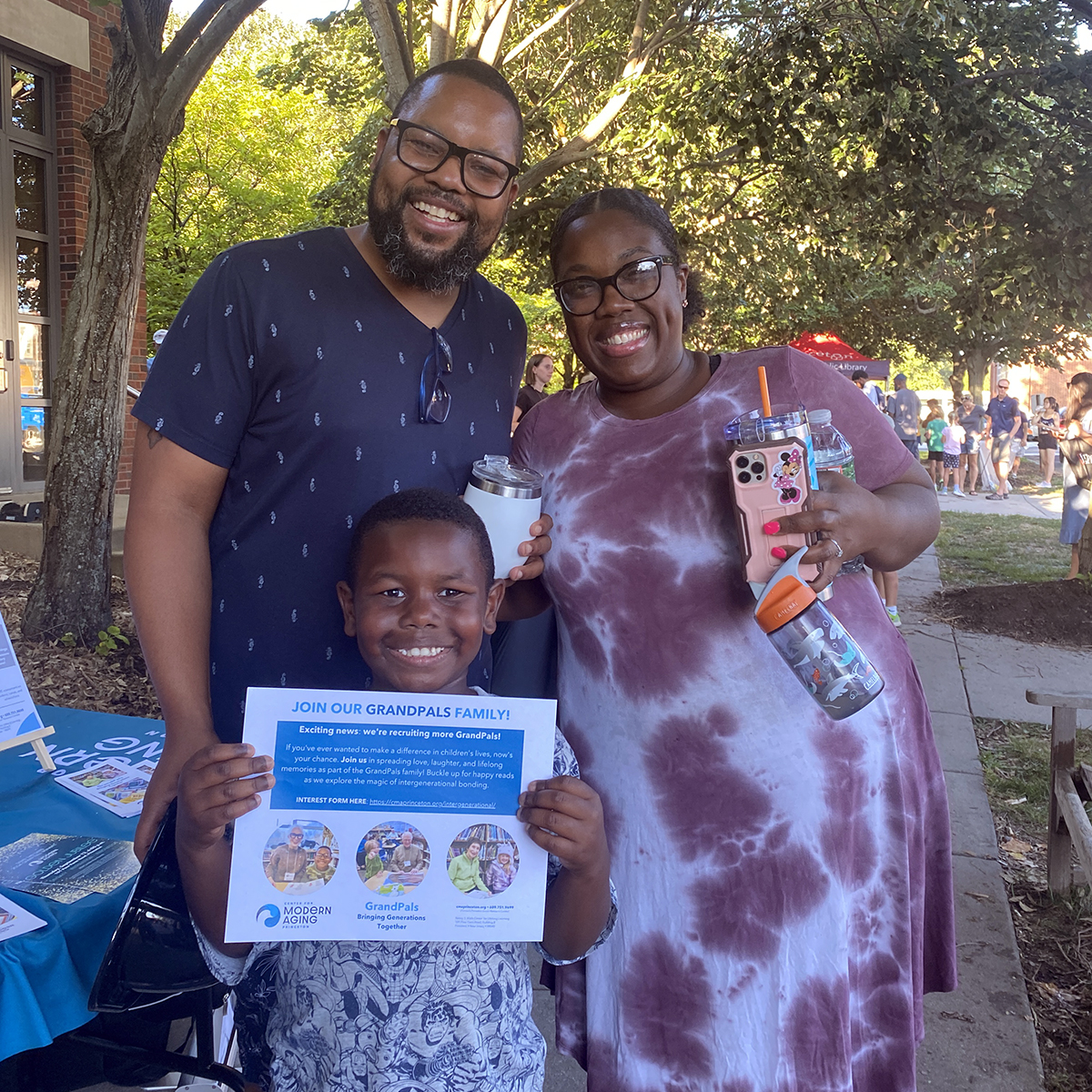
We’re excited to share a sweet moment from our recent Princeton community event that truly captures the spirit of our GrandPals program. At our table, we displayed our new GrandPals flyer, featuring a photo of one of our cherished pairs.

During the event, a family stopped by, and the little boy’s mom pointed at the flyer with excitement. “Cameron, look, this is you!” she exclaimed. The look on Cameron’s face was unforgettable — his smile was pure joy! The family was so thrilled that they took the flyer with them to show all of Cameron’s friends. We were able to capture this touching moment on camera, and Cameron and his parents happily posed together.

It’s moments like these that remind us of the impact our GrandPals program has on both our young readers and their GrandPals. We’re delighted to share this story with our GrandPals community, and we can’t wait to see even more smiles as we continue our work together.

Thank you for being a part of this special journey.

Evergreen Forum: Registration

Evergreen Forum is known for its in-depth, six or eight-week courses. But we understand that life can get busy, and it can be hard to fit it all in. This fall, we’re excited to offer more than ever before a selection of shorter, three-to-four-week courses starting at different times throughout fall. Dive into a new topic without long-term commitment. Perfect for those seeking a quick intellectual fix or wanting to explore multiple subjects this fall. 


Here are this semester’s short form courses: 

American Impressionism: The Bucks County Painters with Christina Kales — Four Weeks 

Journey through nineteenth century American Impressionism, focusing on Bucks County School painters reshaping French influence with a distinct American touch. 

Fridays from 1:30–3:30 p.m. for four weeks beginning October 11 through November 1. 


Demystifying New Jersey: Geography, Demographics, and Heritage with Dave Saltzman — — Four Weeks 

Discover the formation of New Jersey from its colonial roots through exploring the history of geography, labor, canals, railroads, and so much more. 

Thursdays from 10:00 a.m.–noon for four weeks beginning October 10 through October 31. 


Geology of the BC Coast Mountains with Lincoln Hollister — Four Weeks 

Explore the geology of the British Columbia Coast Mountains in the 1960s, highlighting remarkable adventures from more than fifty years of study in this  remote region. 

Thursdays from 1:30–3:30 p.m. for four weeks beginning October 10 through October 31. 


Understanding Cognitive Behavioral Therapy with Naomi Browar — Three Weeks 

Deep dive into the effective features of mindfulness-based cognitive behavioral therapy for anxiety and depression. 

Mondays from 1:30–3:30 p.m. for three weeks beginning September 30 through October 14. 


Learn more about Evergreen Forum and the Fall 2024 course brochure here: https://cmaprinceton.org/evergreen-forum/

EmpowerHer Speaker Series: Michele Tuck-Ponder

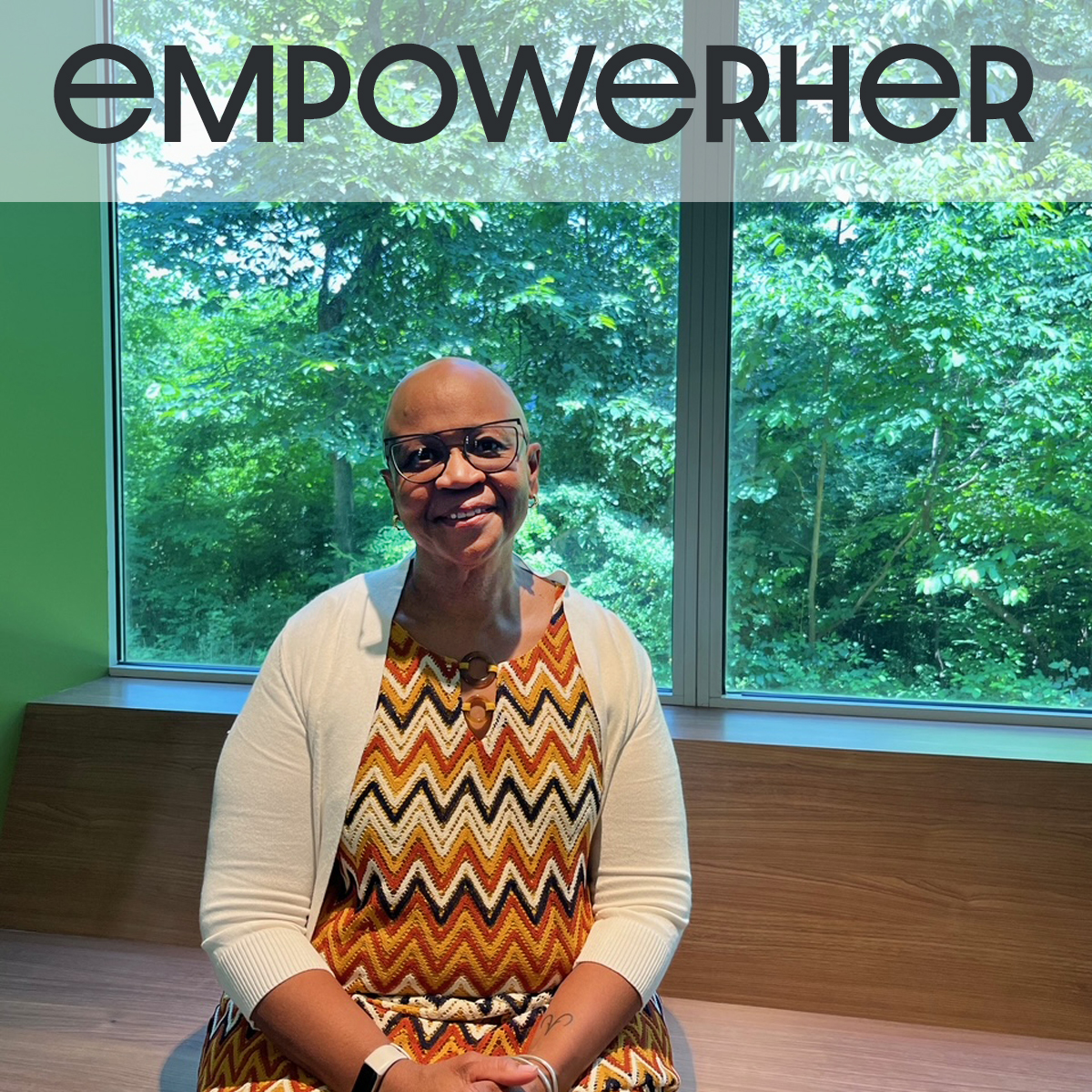
EmpowerHer Speaker Series: Michele Tuck-Ponder on Resilience, Authenticity, and Community

At the Center for Modern Aging Princeton, our EmpowerHer speaker series was created to highlight the transformative power of women’s voices. Every month, we welcome a woman who has made a significant impact in her field and who embodies the spirit of resilience, authenticity, and leadership. In June 2024, we were privileged to hear from Michele Tuck-Ponder, a woman whose journey is as inspiring as it is instructive.

Michele Tuck-Ponder is a woman of many talents and titles: lawyer, journalist, former mayor, author, CEO, and, perhaps most intriguingly, a passionate quilter. Her talk at the Center was a beautiful reflection of how these diverse roles have woven together into the rich tapestry of her life. Michele’s story is one of adaptability, resilience, and the constant pursuit of authenticity.

The Art of Adaptation: Lessons from Quilting

Michele began her talk by sharing her love for quilting, an art form that has become a metaphor for her life. In quilting, as in life, things don’t always go as planned — colors may clash, patterns might not align, and sometimes, the whole project needs to be set aside and revisited later. Michele emphasized that this process of adaptation is not just necessary but beautiful. It’s about finding new ways forward, whether in quilting or in facing the challenges of being a Black woman in America. For Michele, and for so many others, success has required innovation and improvisation.

Resilience in the Face of Adversity

One of the most powerful themes of Michele’s talk was resilience. She shared personal stories of facing adversity — whether it was the loss of her hair due to an autoimmune condition, the challenges of navigating a career in a society steeped in racism, or the emotional toll of caring for loved ones with chronic illnesses. Michele’s message was clear: resilience isn’t just about bouncing back; it’s about rising every time we fall, even when the path forward is uncertain.

Embracing Authenticity

Michele also spoke passionately about the importance of authenticity, especially for women of color. She recounted her own experiences of being judged and underestimated, and how she has learned that true success comes from embracing one’s identity fully and unapologetically. In a world that often tries to silence or diminish the voices of Black women, Michele’s journey is a testament to the power of staying true to oneself.

Community as a Source of Strength

Service to the community has been a cornerstone of Michele’s life and career. From leading nonprofits like the Girl Scouts and women’s advocacy organizations to serving in public office, Michele has dedicated herself to making a difference. She reminded us that true leadership is not about power, but about lifting others up and working together to overcome challenges.

Looking Ahead: Continuing the Conversation

Michele Tuck-Ponder’s visit to the Center for Modern Aging Princeton in June was not just a lecture; it was an invitation to reflect, to grow, and to continue building a community that values resilience, authenticity, and service. As we look forward to our next EmpowerHer event, we carry with us the lessons Michele shared, knowing that each of us has the power to create beauty and strength from the challenges we face.

We are excited to announce that our next guest in the EmpowerHer series will be Leticia Fraga, who will join us on Monday, September 23, from 11:00 a.m. to noon. Leticia’s journey as a leader and advocate promises to be just as inspiring, and we look forward to welcoming you all to continue this important conversation.

GrandPal Student – Lily

Sweet Moment at Princeton Community Event

Lily

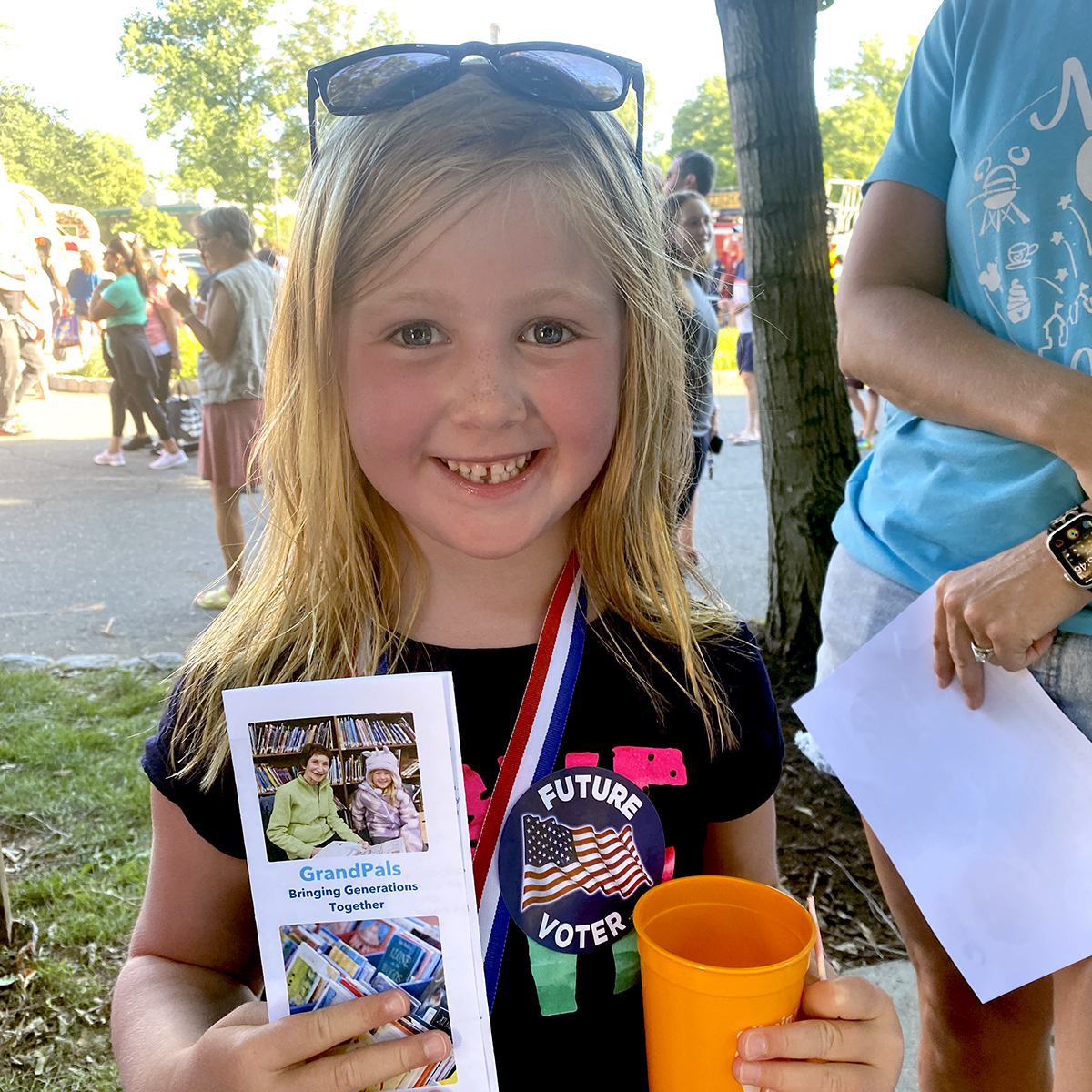
We had a heartwarming experience at a recent Princeton community event that we just had to share with our GrandPals family. Our new GrandPals brochure, featuring a photo of one of our shining pairs, was on display at the event.

About an hour into the evening, a group of moms and their children passed by our table. One of the moms stopped, her face lighting up as she pointed at the flyer. “Lily, look, this is you! You’re the face of GrandPals!” she exclaimed. Lily’s reaction was priceless — her face lit up with pure joy, and her friend was so excited for her that she couldn’t help but give her a big hug. Lily was the star on the cover!

Lily’s mom was so proud that she asked to take a few brochures and flyers to share with their friends. We captured this sweet moment on camera, and Lily posed with a big smile. We’re thrilled to share this special moment with all of you.

We look forward to seeing many more moments like this as we continue to grow our GrandPals community. Stay tuned for more stories and updates!

Evergreen Forum: Hybrid Technology

Hybrid classrooms were born out of the pandemic as the world began to “open” back up but the comfort level of returning to said world varied. At CMAP, our rooms and buildings were specifically designed to allow for the hybrid classroom experience, allowing participants to attend in-person or virtually on Zoom depending on their comfort, ability, or just ease of travel. Since then, the staff has worked to optimize audio, visual, and classroom set up to make it the best possible experience for those in the classroom and at home.  

So, what does it mean to sign up for a hybrid class? 

Hybrid courses are held and taught in-person. While the course leader will typically be in-person teaching to a live class, there will also be participants who attend virtually on Zoom. This means there will be additional audio and visual equipment in the room to allow those on Zoom to clearly see and hear those attending or teaching in-person. There will also be screens for those attending in-person to see the participants attending virtually on Zoom. 

If you register for a hybrid class this fall, you’ll be required to select either in-person or virtual attendance. We are unable to allow switching back and forth between attending in-person or virtually on Zoom from week to week as we must plan appropriately for seats in the room and, often time, in-person seats will sell out. If participants are unable to attend a session, they will be recorded!  

By carefully planning and utilizing technology, we strive to create an inclusive and engaging learning environment for all participants in hybrid classes! 

How does my role as a participant work in a hybrid class? 

For those attending in-person, it’s good to remember there are virtual participants also joining. Questions and discussions may come from inside the classroom and virtually online. Make sure to speak loudly and clearly so the microphones in the room can pick you up. 

For those attending virtually on Zoom, you can still play an active role in the classroom. We recommend keeping your video on so the course leader and classmates can see you. Depending on the set up, you can use the chat function or unmuting to pose questions and contribute to class. 

So, which courses are hybrid for the fall 2024 semester? 


2024 Elections: Democracy At Stake? with Elaine Jacoby 

Dive into the tumultuous 2024 elections,  dissecting democracy’s fate through  Congressional races and ideological  lenses. 

Wednesdays from 1:30–3:30 p.m. for eight weeks beginning October 2 through November 20. 


America During the Obama Years with Stan Katz 

Delve into the transformative Obama era and post-2008 decade, exploring key events from elections to policy shifts through engaging video analysis and interactive discussions. 

Fridays from 10:00 a.m.–noon for six weeks beginning October 11 through November 15. 


American Impressionism: The Bucks County Painters with Christina Kales

Journey through nineteenth century American Impressionism, focusing on Bucks County School painters reshaping French influence with a distinct American touch. 

Fridays from 1:30–3:30 p.m. for four weeks beginning October 11 through November 1. 


Antebellum America: It Still Matters with Walter Frank 

Uncover the complexities of 1789–1861 Antebellum America, focusing on slavery, constitutional debates, wars, social movements, and technological shifts with a focus on pivotal presidential elections. 

Thursdays from 10:00 a.m.–noon for six weeks beginning October 24 through December 5 (no class 11/29). 


Demystifying New Jersey: Geography, Demographics, and Heritage with Dave Saltzman 

Discover the formation of New Jersey from its colonial roots through exploring the history of geography, labor, canals, railroads, and so much more. 

Thursdays from 10:00 a.m.–noon for four weeks beginning October 10 through October 31. 


Explore, Engage, and Empower with the Princeton University Art Museum Docents 

Discover “What was it like to be…” a conceptual artist, an Outsider artist, a Renaissance artist, a Woman artist, an Indigenous artist…all in this engaging art course. 

Wednesdays from 1:30–3:00 p.m. for six weeks beginning October 16 through November 20. 


Histories of Indigenous Peoples in America with Robert Nolan 

Invigorate one’s knowledge of America by engaging with key dimensions of the histories and cultures of Indigenous Peoples. 

Thursdays from 1:30–3:30 p.m. for eight weeks beginning October 3 through November 21. 


Science in the News with Harold Heft and additional panelists 

Join “Science in the News” for weekly insights into the latest research and issues in science and medicine, with engaging lectures and discussions. 

Fridays from 10:00 a.m.–noon for eight weeks beginning September 27 through November 22 (no Class 10/4). 


Supreme Court -Greatest Hits of 2024 with Phil Carchman 

Uncover key Supreme Court decisions from 2023–2024 on pressing issues impacting lives across the U.S. in this lecture course. 

Mondays from 10:00 a.m.–noon for six weeks beginning September 30 through November 4. 


Understanding Human Evolution with Peter Smith

Explore the branches of the human family tree spanning millions of years to uncover why Earth now hosts over eight billion humans. 

Tuesdays from 1:30–3:30 p.m. for eight weeks beginning October 1 through November 19. 


Learn more about Evergreen Forum and the Fall 2024 course brochure here: https://cmaprinceton.org/evergreen-forum/

Dementia: A Diagnosis Too Often Delayed

Last year, a bank officer phoned Kelli Brown’s brother with a concern: a lot of money was going out of their 87-year-old father’s bank account. 

Their father, a retired accountant, lived alone in Cincinnati. He seemed to be functioning well on his own, continuing to drive and golf twice a week. But when asked about the account, their father explained he’d won $3 million in the Publisher’s Clearinghouse Sweepstakes. He was paying the taxes so he could claim his prize. 

“This scammer had befriended him, and my dad fell for it, hook line and sinker,” Brown said. “He was taking money out of his account to buy gift cards and then sent the codes to the scammer.”  

Efforts to convince him this was a scam didn’t work. He continued sending money, and the family was powerless to stop him. Ultimately, he lost $75,000—most of his life savings. 

“He kept telling us, ‘No, I’ve won this money, you guys just don’t understand how the process works,’” Brown said. 

Finally, they persuaded their father to undergo a neuropsychiatric exam, which revealed he had advanced, stage 5 Alzheimer’s disease with dementia. Neither his physician nor the family had noticed any clues. 

“He had been compensating extremely well,” Brown said. 

A Common Tragedy

The Brown family’s situation is not uncommon. Only 50 percent of all dementia cases are ever medically diagnosed.

And many diagnoses come too late—too late to protect the older adult from scams, to make plans for their future or to start treatment that could slow the progression of the disease. 

“It’s a tragedy when I see patients presenting to me who are already in the moderate to severe stages of Alzheimer’s, where we can only offer palliative or comfort care,” said David Weisman, MD, with Abington Neurological Associates in Abington, PA. “It’s a tragedy because now we have a disease-modifying therapy that can slow the disease.” 

Why aren’t more people diagnosed sooner? Signs of cognitive changes in an older adult can be easily missed or dismissed as normal aging. In some cases, the family may know the older adult has cognitive impairment but, assuming nothing can be done, they don’t pursue a diagnosis. And few primary care physicians (PCPs) perform dementia screening on a routine basis.

Health care leaders are taking note. Programs like Dementia Care Aware in California are working to encourage and train providers to perform screening earlier and more proactively for older patients.

“Dementia is incredibly common, affecting as many as 30 to 50 percent of people over age 85, and there are a number of programs, like ours, where the goal is to identify people with dementia much earlier,” said Anna Chodos, MD, a geriatrician and principal investigator of Dementia Care Aware, which aims to improve detection in older adults with Medi-Cal benefits. 

Sooner, Not Later

Experts say sooner is always better for a dementia screening. 

For one thing, a screening as part of an overall checkup could rule out dementia and avoid needless suffering and worry, according to Ambar Kulshreshtha, MD, associate professor, Department of Family and Preventive Medicine, Emory University School of Medicine. 

“Sometimes what looks like dementia might be a treatable condition, like a urinary tract infection, thyroid disease, depression or the result of medication interactions,” he said. “These can mimic cognitive impairment.” 

Some medications, like sleep meds, sedatives and anticholinergic drugs (used for a variety of conditions from overactive bladder to chronic obstructive pulmonary disease), can temporarily impair cognition. 

“It’s important to report concerns about cognitive loss so that your doctor can rule out other causes that might be easily treated,” Kulshreshtha said. 

A later diagnosis may mean it’s too late for a patient to benefit from newer medications that can slow the progression of disease, such as Leqembi (lecanemab-irmb), a drug approved by the FDA in January 2023 for the treatment of Alzheimer’s. (Leqembi is not prescribed for other types of dementia, such as vascular, frontotemporal or Lewy body.) 

“This is the holy grail that we’ve been hoping for and waiting for forever: a disease-modifying treatment,” said Andrew Ferree, MD, a neurologist in Milford, MA, and an Alzheimer’s researcher. “If the patient has Alzheimer’s, you want to catch that as absolutely early as possible.” 

When dementia goes unrecognized, family stress and resentment can build up for years. 

Ferree cited a common saying in stroke neurology: “Time is brain.” For a patient having a stroke, the sooner they’re treated, the more brain function is likely to be preserved. 

“The same can be said for Alzheimer’s now,” he said. “The sooner you get that diagnosis and see if you qualify for that treatment, the more likely it could change everything.” For those with other types of dementia, clinical trials of experimental medications can offer hope, but only if the patient is diagnosed. 

A delayed diagnosis may also carry a psychological cost, according to Weisman. By the time dementia is diagnosed, he said, resentment and stress may have already been building among family members for years. 

Diane Ty, MBA, managing director of the Milken Institute Future of Aging, saw that in her own family. 

After retiring from a distinguished career as an engineer, Ty’s father became increasingly difficult. He was verbally abusive toward her mother. The family assumed he just wasn’t adjusting well to the loss of identity that came with early retirement. Finally, after an unexplained parking lot accident, her father was assessed and diagnosed with dementia. 

That was over 17 years ago, but the memory is still raw for Ty. Her voice broke as she recalled the family’s ordeal.

“Before the diagnosis, my mom endured so much distress over my dad’s behavior and verbal abuse,” said Ty. “When she learned of his diagnosis, she was able to forgive him. She became his caregiver and gave it her all. We finally understood that it wasn’t him. It was this terrible disease.”

Making Plans

An early diagnosis also gives families a chance to put safeguards in place to help protect the older adult’s assets from scammers. 

“There’s an entire scam industry in this country, and it’s targeting vulnerable older people, usually those with some cognitive changes,” Chodos said. 

Even without instances of fraud, an older adult’s finances may suffer from poor decisions caused by undiagnosed dementia. Ty noted that her family missed one clue that seems obvious in retrospect: her father started to spend money on luxuries like a new car or a garage repair, a departure from his normally frugal, practical ways. 

In fact, financial problems, like missing routine payments or a lowered credit score, may represent an early predictor of dementia, according to a 2020 study published in JAMA Internal Medicine. The study found that Medicare beneficiaries who went on to be diagnosed with dementia were more likely to have missed payments on bills as early as six years before clinical diagnosis.

Undiagnosed dementia can be especially problematic for “solo agers” without spouses or adult children, or for those who are socially isolated.

“An older adult with undiagnosed dementia may start having difficulty managing their health care,” said Kristen Romea, LCSW, director of supportive services for Alzheimer’s San Diego. “These days it’s very difficult to do without accessing an online portal. They just stop going to the doctor, so that means they’re no longer getting treatment for the other conditions they’re living with. And they become even more isolated.”

Romea added that many older adults put off having their cognition assessed because of stigma or shame, or for fear of losing their driver’s license. In California, for example, health care providers are mandated to report a dementia diagnosis to the DMV.

How Dementia is Diagnosed

When patients express concerns about cognitive issues to a PCP, typically the first step is a cognitive screening test, such as the Montreal Cognitive Assessment (MoCA) or Mini-Cog. Patients are asked to complete tasks on an app or paper-based test that assesses short-term memory, executive function, visuospatial abilities and orientation to time and place. 

If the screening test points to cognitive issues, the physician will refer the patient to a neurologist, psychiatrist or geriatrician for further evaluation. The next step might involve more in-depth cognitive testing, an extensive medical and family history and imaging tests such as a PET scan or MRI.

However, unless a patient reports concerns, most PCPs don’t perform screenings on a routine basis. 

“It’s really hard to do dementia detection and diagnosis in primary care,” said Chodos. “Doctors don’t get a lot of education on dementia during their training. Dementia is a more labor-intensive, complex diagnosis to make.” 

Dementia can’t be diagnosed definitively with a single blood test or scan. Cognitive assessments such as MoCA aren’t “pass” or “fail” tests; they must be considered in the context of the person’s history. An exceptionally well-educated person, for example, may earn a relatively high score, even if their cognitive abilities have declined significantly due to dementia. 

PCPs are not strongly encouraged to perform routine screening. The most recent statement of the US Preventive Services Task Force, which provides preventive care guidelines to physicians, concluded that the evidence was insufficient to recommend routine screening.  

Changes Ahead

Weisman thinks physicians will be more inclined to perform routine screening as they become more aware of new treatments. As recently as the mid-twentieth century, he said, doctors were reluctant to inform patients of a cancer diagnosis, a virtual death sentence with few treatment options. As the stigma attached to dementia recedes, and treatments improve, Weisman thinks doctors will be more proactive. 

“I think there was a time when doctors thought, ‘Why bother the patient if we can’t do anything about dementia?’” he said. “Now we have something we can do about it.”

Ty notes progress on other fronts that could help change the picture. Researchers are developing new tools that will make diagnosis more accessible and precise, such as a simple blood test to detect biomarkers of disease pathology. Similarly, digital cognitive assessment tools are allowing doctors to move away from paper-based tools, which require someone to be present to administer, observe and interpret the results. Early use suggests these digital tools offer more accuracy in terms of prediction, automated scoring and interpretation. 

Proactive Approach 

In the meantime, patients and families must approach this issue proactively. 

The first step is to become aware of the signs of dementia—and how they differ from normal aging. Nearly everyone over 65 will experience some measure of forgetfulness and mild cognitive decline. It’s normal for an older person to misplace the car keys from time to time. For a person with dementia, however, memory loss begins to disrupt daily life. The person may put the keys in the refrigerator or accuse others of stealing them. 

People with a family history of dementia should consider asking for baseline screening even before they experience symptoms.

“I would be screening before they even start forgetting their keys, before they have any memory problems,” Ferree said. 

Ty is hopeful that, one day, brain health screenings will become as routine as blood pressure checks for adults 65 and older. Until then, patients and their families need to report any symptoms of cognitive change and request evaluation.

“Individuals who are concerned about their memory, or a loved one’s memory, should make an appointment with their health care provider for a thorough cognitive evaluation,” according to the Alzheimer’s Association. 

A Cautionary Tale

Today, Kelli Brown’s father resides in assisted living. Family members continue to pay off his debts. 

Brown is hopeful the scammers will be caught. While dementia robbed her father of his ability to recognize the scam, his accounting habits remained intact. He kept detailed records of all the transactions with the scammer—receipts from every FedEx package received and every gift card he’d purchased. She hopes those records will enable law enforcement to bring the scammer to justice. 

Meanwhile, Brown is sharing her story on Facebook as a cautionary tale, urging friends to pursue dementia screening and assessment for family members who may be affected. 

“With early detection, we could have prevented Dad from giving away his retirement savings,” she said.  

Evergreen Forum: Participants

Did you know that around 500 participants enjoy Evergreen Forum courses each semester? From the arts to STEM, hundreds take part in courses in-person and online to explore a wide range of topics. Whether you’re diving deep into a specific field or simply seeking intellectual stimulation, Evergreen Forum offers something for everyone. But don’t take it from us, hear from two dedicated participants on why they continue to choose Evergreen Forum: 

Behnaz Ahmadi has been a dedicated participant in Evergreen Forum courses at the Center for Modern Aging for more than seven years. Drawn to the program’s diverse offerings, including Science in the News, Introduction to Mindfulness Practices, and Elaine Jacoby’s annual election-based class, Behnaz consistently chooses Evergreen Forum for its unique courses, dedicated participants, and experienced instructors, typically attending in-person classes. “I truly enjoy the variety of subjects, the knowledgeable classmates, and the supportive staff,” she shares. 

Velma Williams-Gates joined Evergreen Forum virtually after her museum volunteer position ended because of the pandemic. Having wanted to join an Evergreen Forum course in the past, Velma saw the switch to virtual courses as a safe opportunity to finally get involved with Evergreen Forum. She hasn’t gone back since. Velma especially appreciates the work and dedication of the course leaders saying, “The instructors with whom I have taken classes do a lot of in-depth research, usually on topics I know little or nothing about. I feel my instructors really want to pass on their knowledge of the topic(s) they teach. And the topics are about something they are passionate about.” 

We hope you’ll consider joining Behnaz, Velma, and the hundreds of other participants who take part in Evergreen Forum each semester and discover your very own lifelong learning journey this fall. 

Learn more about Evergreen Forum and the Fall 2024 course brochure here: https://cmaprinceton.org/evergreen-forum/

Meet Pushpa Kulkarni

“I first came to Princeton in 2004 from South Africa, where I had been teaching mathematics. My journey began when my son, a professor at Princeton, needed help with his three young children. I packed up and left South Africa to take care of my great-grandchildren. My husband, who was a professor in upstate New York at SUNY, always encouraged me to pursue my education. After raising my children, I went back to school and earned my master’s degree in mathematics.

My life has taken me from India to South Africa, and even to Nepal, where I taught English and mathematics. The children there called me ‘American mom,’ and I helped finance their education. Seeing them succeed and become doctors and teachers is one of my greatest joys. When I arrived in Princeton, I lived with my son until his children went to college. Then, I bought my own apartment near the Suzanne Patterson Building.

I joined the Center for Modern Aging a year after moving here. The first program I participated in was ‘Let’s Talk,’ and I’ve been involved ever since. What I love most about the Center is its inclusivity. Unlike other senior centers that restrict membership based on residence, Princeton’s center welcomes everyone. It’s a place where I’ve found community and belonging. My only suggestion for improvement is to keep doing what they’re doing — creating an open and welcoming environment for all older adults.”

Rhythms and Roots – “What’s Going On”

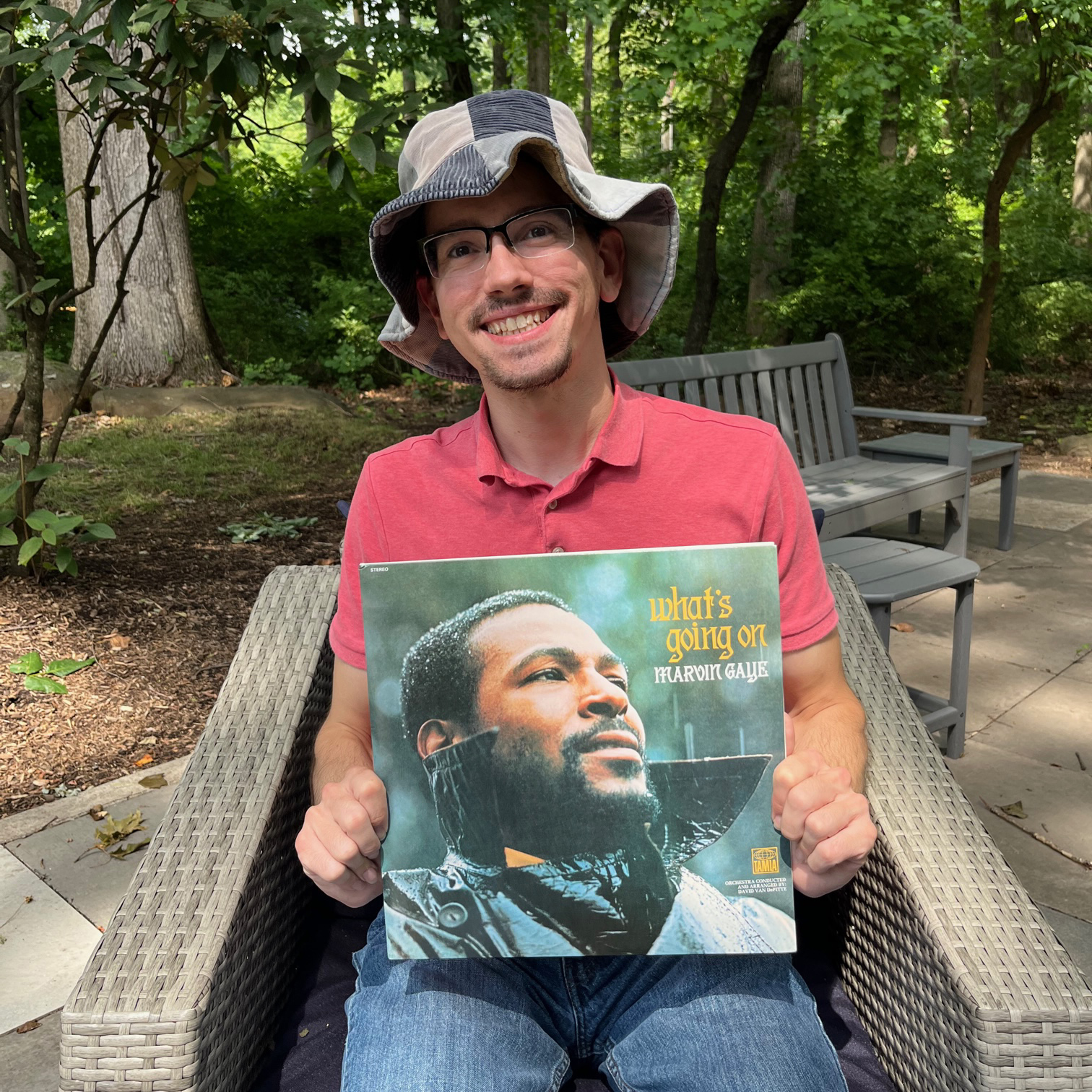
Rhythms and Roots: Reviving the Impact of “What’s Going On”

A Conversation with Nick

In the turbulent landscape of the late 1960s and early 1970s, Marvin Gaye released “What’s Going On,” an album that has become both a musical and social landmark. We spoke with Nick, who provides deep insights into the creation and enduring impact of this iconic album.

Q: Nick, can you tell us about the context in which “What’s Going On” was created and how the social climate of the time influenced its production?

A: The context was highly volatile. Between the Watts riots of 1965, police brutality, and the Vietnam War, the nation was immersed in deep social discontent. Marvin Gaye, affected by these events and his personal life—including the illness and death of his partner Tammy Terrell and family issues—sought a way to express his disillusionment with the state of the world. Gaye had been working at Motown, making songs in the company’s style, but felt his previous work didn’t reflect his reality. He wanted to create something authentic and relevant, something that connected with people’s realities at the time.

Q: What was the recording process like and what challenges did Marvin Gaye face?

A: The recording process was challenging. Marvin faced resistance from Barry Gordy, the founder of Motown, who was initially unwilling to release the album due to its political content. Gaye even attempted to create a version of the song “What’s Going On” with double-tracked vocals — a mistake by the engineer that ended up being a distinctive feature of the album. Despite the opposition, the song became a resounding success. Gaye fought for full control of the album, and in the end, his vision remained intact, resulting in a work that addressed issues like police brutality and social justice with an authenticity that resonated with listeners.

Q: Why do you think “What’s Going On” remains relevant today and what can it teach us?

A: “What’s Going On” remains relevant because it addresses universal issues that persist, such as inequality and injustice. The album’s ability to capture the social struggles of its time and present them in an emotionally resonant way makes it a powerful tool for understanding others’ experiences. Today, as issues of racism and inequality continue to be prominent, the album acts as a mirror reflecting how, despite progress, many problems remain unresolved. It’s an opportunity for new generations to listen and reflect on what has changed and what still needs to be done.

“What’s Going On” is more than an album; it is a testament to the power of music to challenge, comfort, and inspire. It is a call to keep striving for a more just and equitable world.

For our audience at the Center for Modern Aging Princeton, “What’s Going On” offers a profound exploration of social justice and resilience, connecting generations and encouraging thoughtful reflection on ongoing challenges.

As we strive for a more inclusive community, how do you see the themes of this album resonating with your own experiences and current societal issues?

Listen here!

https://youtu.be/H-kA3UtBj4M?si=Th1zO8FnRTlOcziZ 🌍🎶

What Do You Say to Someone with Dementia?

I got a call from my neighbor Marion.

“I need to talk to you. My friend Jean was just diagnosed with Alzheimer’s. I want to visit her, but I don’t know what to say to her. What do you say to someone with Alzheimer’s?”

The stigma of Alzheimer’s disease (AD) is so strong, it can lead us to imagine that, once diagnosed, a person changes almost overnight. We can’t help wondering, what will she be like now?

I told Marion, “Jean will still be Jean. If you just keep that in mind, you’ll be treating her in ways that show that you still value her friendship as you always did. That’s what she needs most right now.”

“But,” Marion asked, “should I say, ‘I hear you have Alzheimer’s?’”

“I’d give her a chance to bring it up first. If she doesn’t, try saying, ‘I heard about your diagnosis. I just want you to know, if you want to talk about it, I’m glad to listen. If not, that’s OK too.’”

One man, himself recently diagnosed, said, ”People are not sure how to respond when the topic comes up. Most of them change the subject or attribute my symptoms to aging and say, ‘I forget things too.’”

Such discomfort is very common and understandable. But tragically, it leads to the person diagnosed being ignored. And it dismisses their very real and frightening trouble remembering.

Family members and friends need to know that people diagnosed with AD or any other dementia are sensitive. Their feelings can be hurt, and they are often lonely. Jean needs her friends to be with her, to show her she is still important to them.

How we engage people with dementia reveals–often unwittingly—a lot about what we think of them. Are we distracted, because we don’t think they have anything interesting to say, and we’re essentially pretending to listen? Or do we listen actively, letting them know we want to understand, because what they say is important to us?

As the disease progresses, people living with dementia need the patience and good listening skills of others because AD may make it increasingly hard for them to communicate. 

But the people around them face dilemmas they have no preparation for. Many of their natural ways of responding and interacting get them into trouble.

Here are some tips to help you avoid unintended outcomes: 

Don’t say, “Do you remember…?” They may not be able to. If you want to reminisce about a time you were together, say, “I remember when we went fishing in Maine, and you were the only one who caught a fish!” In that way you may spark a memory without putting them on the spot.

Make eye contact and listen with all you have. As one woman with AD told her caregivers, “Listen with the ears of your heart.” 

Don’t interrupt, because if you do, the person may not be able to pick up the thread of their thoughts again.

Don’t exclude the person when you’re having conversations with others. This can happen even though you’re not aware of it. Be proactive about inclusion!

Be patient. Dementia can make it hard for people to find the right word. You can supply the word if you know it, and they don’t take offense. You might say, “Shall I guess?” One woman was so comfortable with her friends that when she was stuck for a word, she could say, “What’s that big water thing?” And someone would guess, “The ocean?” People living with AD sometimes invent new words for common objects or rely on gestures instead of speech. They may take longer to pull their thoughts together. Give them time and quiet; don’t distract them.

Don’t argue. There’s a maxim in the Alzheimer’s community, “If you argue with someone with Alzheimer’s, you get what you deserve.” That is, a major meltdown. But more important, by arguing you are eroding their sense of security and their self-esteem—both of which are fragile in view of their many losses. Don’t criticize or correct them, even when you’re obviously right. Just let it go.

Don’t condescend to them by using elderspeak—“Come dearie, let’s get dressed”—or baby-talk. They will rightly be offended.

Don’t ask open-ended questions. “What would you like for dinner?” is unanswerable for someone who can no longer remember which foods one eats at dinner or what they’re called. You can ask instead, “Would you like chicken or spaghetti for dinner?” You’re still giving them a choice, but it’s a choice they can make. When even two choices become too much, say, “I know you love chicken. Shall we have chicken for dinner?”

Be honest if you don’t understand. Say, “I’m having trouble understanding. Can you help me?” That tells the person you care about what they are trying to say and want to work with them.

Following these guidelines will help create a safe and supportive environment where the person with dementia is valued, enabled and included. In such surroundings, they may surprise you with their ability to understand and communicate. 

Alan Dienstag, PhD, is a psychologist who has worked with people with AD in support groups. He continued to work with one woman long after her language was too impaired to be in a group. But eventually it became harder to connect with her and she seemed to have lost all language. Their last visit was just before he was set to go on vacation to the beach.

He knew she loved the seaside too, so he said to her, “Ann, I’m going to the beach. I’m going to be away for a while.” Her face lit up. 

“What do you love about the beach?” he asked. 

She was quiet for a long time, and he lost hope that she could answer.

But then she turned to him and said, “There’s a certain kind of music there.”

BE THE FUEL

MAKE A DONATION TODAY

Your generosity is truly the fuel that empowers CMAP to change lives and to help older adults discover their “why!”

We invite you to donate to the 2023–2024 Annual Giving Campaign by June 30 to help us reach our goal.