

Important Update: Temporary Closure of the Nancy S. Klath Center Due to water damage, the Nancy S. Klath Center (101 Poor Farm Road) is temporarily closed for construction. For your safety, please do not visit the building. We will share updates as soon as it is ready to reopen.

CMAP remains fully operational. Staff are working remotely and from the Suzanne Patterson Building (45 Stockton Street). Programs will continue as scheduled at the Suzanne Patterson Building and in virtual formats. Thank you for your understanding.

It Was a Hoax

Recently, I was thrilled to get an email from someone I’ve known since college, more than 70 years ago. Though Jenny and I seldom got together—she lived in Toronto, while I’m in New Jersey—we talked on the phone, and every Christmas, we exchanged cards, enclosing long, newsy letters. 

Until that email came, I thought Jenny was dead. When you’re 90 or thereabouts and a distant friend dies, often the only way you find out is when there’s no card at Christmas. For the last two years, I’d had no card from Jenny.  

I had looked online for an obituary, but there wasn’t one. I’d thought about phoning Toronto, but I barely knew her husband. I imagined asking for Jenny when he picked up the phone, and how it would hurt him to have to explain that she was gone. I just couldn’t do it. There was no one else I could ask—I’d lost touch with all our mutual friends. 

Finally, I accepted the fact that Jenny had died. I missed her. When we got together, in person or by phone, we always took up just where we’d left off. She was warm, smart, funny, passionate about all kinds of things and always ready to laugh at herself. 

So when the email came, I was overjoyed: Jenny was alive! The message was quite short: 

Please write me and let me know how you are. I am chugging along and will write a message once I hear from you.

I almost fired off a long response, but it didn’t sound like Jenny. She wrote the way she talked, fast and funny. When I read her Christmas letters, I could hear her voice, and this wasn’t it. So I sent a tentative reply: 

Jenny, is that really you? I’ve sent my usual Xmas letters and got no response. I assumed the worst! How are YOU? 

The answer came a few hours later:

Yes! It’s really me! I know! It is terrible how we are losing our closest friends one by one. I can’t tell you how glad I am to receive this message from you! I will write you a message with some detail about me, but I would LOVE to hear about you!!! 

Thank God, you’re still here! Lately, I have been trying to reconnect with friends. I also am looking up people who were important in my life. I just finished reading an obit on Mike Graham. I shed a few tears when I think of what a tragedy it was that he died so young! Terrible. 

That sounded even less like Jenny. If she was too busy to send a long email, she’d have explained why in her usual, breathless fashion. And Mike was a friend of mine, but I wasn’t aware that she knew him. He died in his 30s. Why would she be reading his obit now? 

I wanted to believe the emails were from Jenny, but I had a strong hunch they came instead from someone who hoped to get details from me that they could use to rob me. These days, an awful lot of scams target older people, on the assumption that some (maybe most) of us are addled enough to believe almost anything. 

I delayed answering. After two days with no further emails from the person who might or might not be Jenny, I reluctantly concluded I really was being scammed. I bit the bullet and called her number in Toronto. If someone had hacked her email account and was using it to try to defraud her friends, her husband would want to know. But there was no answer at their home.

I’d have given almost anything to be wrong, but I was as sure as I could be that I was the intended victim of an online, phishing expedition. I was relieved that I hadn’t been sucked in, but sad all over again that I’d never see—or hear from—Jenny again.

It was a cruel hoax.
 

My Father’s Frugal Habits Make Sense Now

This thoughtful blog about a change of heart was originally posted on both Next Avenue and Forbes on May 12. It appears here with the permission of the author.

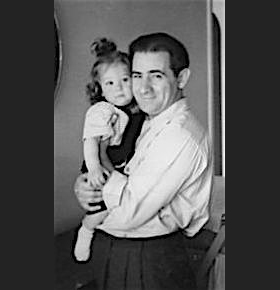
My father had plenty of habits that irritated my mother. But nothing irritated her more than “Marty being cheap.” As a child, I didn’t understand it either.

For instance, my father turned off the lights in rooms that people had just left. Sometimes we were leaving just to come right back in, but whenever he was home, he would march across the little hallway from wherever he was at either end of the house to click the light switches down. Did he like a dark house?

With the lights off, the forest-green end of the house was as dismal as a real Hansel and Gretel woods. My mother would march right back from wherever she had been to defiantly flick the switches up.

My father also saved things. He wore the same, plaid, flannel shirts year after year, one on top of another, even indoors. In the basement shop, when I was invited, he took long, thick, crooked nails that had been pulled out of boards with the claw end of the hammer and smashed them with the fat, butt end, so they straightened out like new.

He saved rusted nails, which had turned a delicate, copper color I liked. Each size went into its own unmatched, little, glass jar: screws, screw-eyes, all the iron nails: the tenpenny, brads, roofing nails, slender, white, finish nails and even some upholstery nails with stubby shanks hidden by golden, curving, indented tops.

But the frugal habit my mother mocked most was my father’s taking the little, bitty soap ends and mashing them together, so they made a small, irregular cake or many-sided, oily, squashed muffin.

He didn’t explain to me why he was doing any of those things. He didn’t explain anything, except, rarely, American politics. He was a silent man.

Maybe in those days, my mother flattened him. But she was a good mother to me, and you don’t judge your parents when you are still so young it’s difficult to tell them apart. Later, when I was married, they came to visit to say they were a happy couple now. My mother, as it were, apologized. She said gaily, because it was all in the past, “I didn’t let him be the captain of his own ship.” They had a good year before he got sick with ALS.

As an adult, I used to tell friends those amusing, childhood stories about my freaky father—straightening  bent nails, turning lights off, saving soap ends. People recognized he did those things to save money.

In the middle class, where my husband and I had slowly risen to occupy a fairly secure place, saving money had begun to seem odd. It was “cheap,” just as my upwardly mobile mother had said, even before the postwar boom really got started lifting our boat.

My generation’s goal, as we were moving up economic ladders, was to spend on visible objects, showing taste as well as means.

But over time, I noticed that as I told the stories, they had lost the tinge of being amusing foibles. They began to edge toward being about thrift. Conspicuous consumption had seemed cruelly elite during the Great Depression, which marked both my parents, though in opposite ways.

Likewise, after the Great Recession of 2008, waste of any kind began to seem excessive, ostentatious, brutal and stupid. Saving became not a mere trend, but a value and a virtue of those who could manage it. The planet cannot take the rapid, steady diminution of its resources forever.

Plenty of people are replicating some of my dad’s frugal habits. Anyone with any sense now wants to save electricity, because so much of it still comes from fossil fuels. Everyone goes around smoothing down the dimmers.

I’ve come to see differently what I once thought of as my father’s eccentricities. I’ve come closer to him in spirit.

Since he gave me his jars, my own basement shop has held his nail collection and I draw on the legacy.

Just recently, when I mentioned the soap ends, a close friend said with a smile that was only slightly embarrassed, “How do you do that?”

“Oh, it’s quick and easy,” I began. “You get a few slivers wet and soft and slimy, and you crush them and press them and rub them around until they hold together. It feels so nice.”


BE THE FUEL

MAKE A DONATION TODAY

Your generosity is truly the fuel that empowers CMAP to change lives and to help older adults discover their “why!”

We invite you to donate to the 2023–2024 Annual Giving Campaign by June 30 to help us reach our goal.