
Important Update: Temporary Closure of the Nancy S. Klath Center Due to water damage, the Nancy S. Klath Center (101 Poor Farm Road) is temporarily closed for construction. For your safety, please do not visit the building. We will share updates as soon as it is ready to reopen.

CMAP remains fully operational. Staff are working remotely and from the Suzanne Patterson Building (45 Stockton Street). Programs will continue as scheduled at the Suzanne Patterson Building and in virtual formats. Thank you for your understanding.

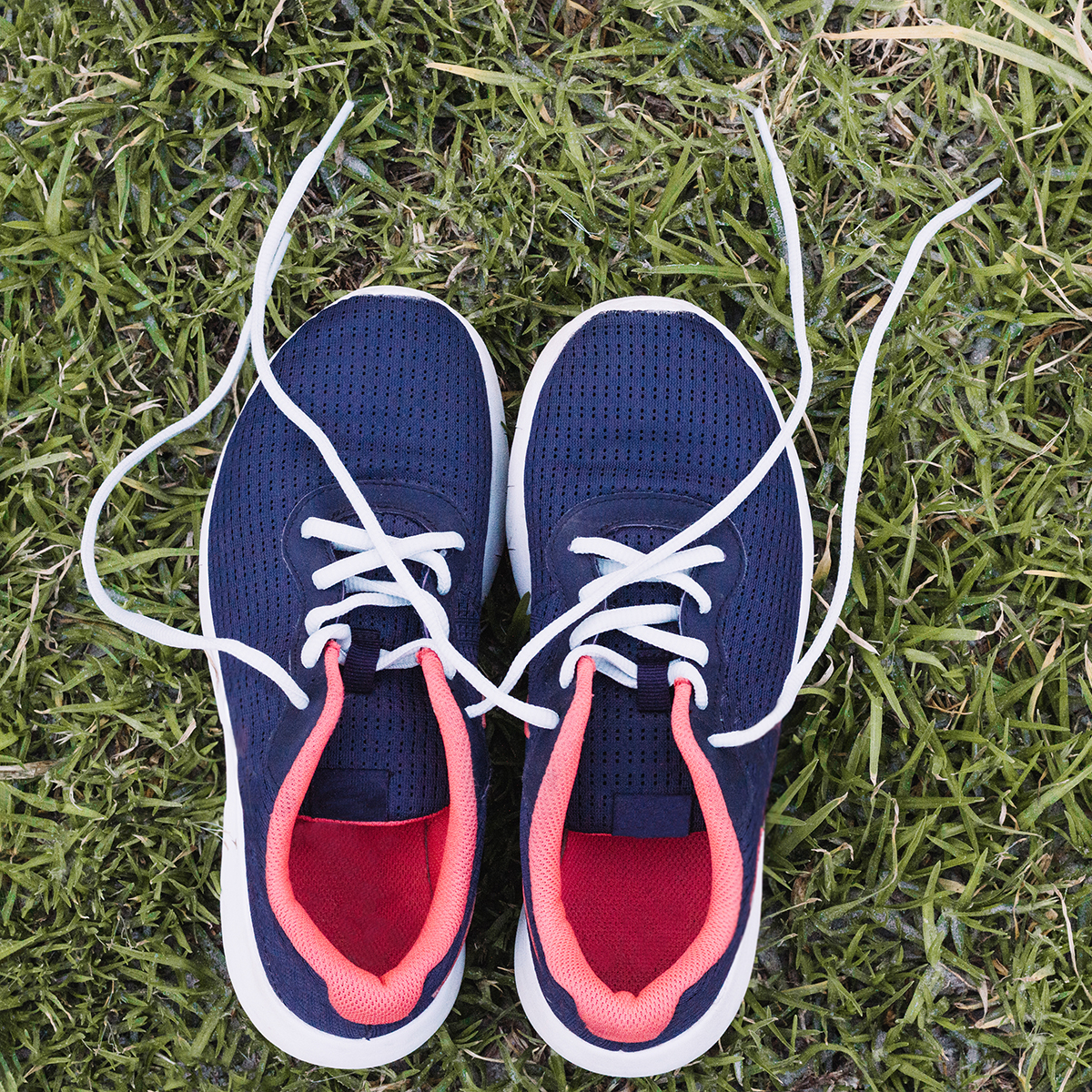
My Sneakers Go Upscale

“I originally signed up for the class because I wanted to write my obituary, but I found I have much more to say and share. I now feel more comfortable writing, and I have met some interesting people. I still haven’t gotten around to writing my obituary.”
— Class Member Since 2023

My Sneakers Go Upscale

Around seven years ago, I began to experience pain in my right knee whenever I walked. Finally, when the discomfort became miserable, off to the doctor I went. An X-ray revealed arthritis in the knee. The calcium knob on the end of a bone in the X-ray picture protruded considerably. It was easy to see that when the bone-on-bone contact occurred while walking, agonizing discomfort would result, because of the calcium knob between the bones.

I  was given a cortisone shot, and several days later, the pain was gone. In about six months, however, the knee acted up again. Was I going to have to have a knee replacement? I certainly hoped not.

Cortisone shots to the knee cannot be given more than one or two times, because of possible damage to the bone. So I had a second cortisone shot and hoped  that the problem in the knee would be cured. In a year or so, however, the knee spoke loudly to me again. By this time I had fortunately heard about a gel shot which delivered a cushiony substance into the knee between the arthritic knob and the nearby bone.

Over time the need for the gel shot began to be required around every three or four months, if I wanted to be able to maintain any comfort while walking.

In December of 2021, I traveled to Florida to vacation for some months. I had the gel shot in late November just before I left New Jersey, and kept my fingers crossed that the knee would hold up until I returned to Princeton. Alas, in February, the knee problem became excruciating.

I researched online for a doctor and fortunately was able to obtain an almost immediate appointment. I asked the doctor for a gel shot. He pointed out, however, that the soles of the sneakers I was wearing were much too firm and that I should also get a more suitable sneaker in addition to the gel shot.

The doctor administered the gel. In addition, he told me about a sneaker store. I was able to find the store even though I had not yet mastered the GPS. In the store, a young man, completely decorated in tattoos, reached out to help me. After my explanation quoting the doctor, the very courteous helper brought out some colorful footwear. The sneaker he was holding had a thick, deep sole. The shoes seemed comfortable enough. So I bought them. The new footwear was called HOKA.

I am happy to report that for three and a half years I have not needed a gel shot. During that time, my knee has not spoken to me one little bit. I have now decided that I would wear HOKA sneakers all day, day in and day out, for the rest of my life.

For most of my activities, wearing sneakers was okay as far as appearances were concerned. Soon to become a member of the tenth decade, I felt that my footwear could be less formal, because people are more tolerant of the foibles of the older generation. No matter whatever function I attended, I really was not self-conscious about what I wore on my feet.

That is, until several weeks ago, when the development office at my college invited me to a luncheon in Palm Beach to meet the president of the college. The affair sounded rather fancy and much more formal than my usual activities.

Unfortunately, the only shoes I had in Florida were my HOKA sneakers. Certainly sneakers were not really suitable, but I did have a hankering to attend the event. So, sneakers it was going to be, because, of course, bare feet, the only alternative,  certainly would not do.

The luncheon was at an alumna’s home. Beautifully decorated with flowers, little statues, and elegant pictures, the extensive layout of the house made me additionally self-conscious, because I really had no dressy clothes appropriate for the special invitation. I did have a necklace to wear, however.

Upon entering the home I was escorted to a table containing name tags, each of which were hung on a string.  People were lingering around the table, introducing themselves and chatting. I stood close to the table to hide the sneakers. I noticed, with some relief, that I was the third oldest of the fifteen guests, thus making my sneaker age-related idiosyncrasy perhaps less out of place.

In time, we moved to a room filled with couches and fancy-cushioned chairs. Two men in penguin-like uniforms of white shirts, black pants and black bow ties passed around hors d’oeuvres along with wine. I sat next to a woman who was a graduate of Harvard Law School and who worked for a Wall Street law firm. I gathered that her one client was a wealthy family who kept her busy full time. During the conversation she shared that she came to Palm Beach every weekend in the winter and went to the Hamptons on weekends during the summer. Obviously she had rather deep pockets from which to donate generously to the college. I did not check out her shoes, but I kept my legs and feet as much under my skirt as possible.

After a while, we moved to the porch for lunch. There were three tables with place cards by each setting. I found myself designated to sit by our hostess who was already seated at the table. When I sat, my sneakered feet quickly disappeared under the table. Thank goodness we were not eating from trays off our laps sitting in an open circle causing the HOKAS to be fully exposed.

Three additional graduates sat at the table. Somehow the subject of writing came up. I blurted out that I found writing difficult. I pointed out that, for me, production of the written word was slow and laborious. Our hostess was extremely surprised to hear about my struggles with “putting pen to paper.”  It turned out that my fellow diners all had majored in English or drama. I was the only science major. The other alums were very comfortable, therefore, about delivering the written word.

One woman at the table had written sixteen books. Words certainly were not difficult for her. Her income was probably substantial from all of those royalties. So she was in a position to be financially generous to the college. I bet SHE was not wearing sneakers.

Across from me sat an alum who was the head of a foundation which backed Broadway plays and funded projects in the arts and education. She wore a lovely pink suit with a matching necklace containing hand painted floral beads. Of course she had deep pockets from which to donate to the school. Obviously she would never consider wearing sneakers even if they matched the suit. In addition, she was comfortable with words, for she taught drama writing courses at several colleges.

The third woman was the head of an organization which had produced over one-hundred off-Broadway plays. She was a trustee of our college, making her another generous donor. I am sure she did not wear sneakers to trustees’ meetings. Also, words were definitely her friends, because she was an adjunct professor of drama at our school.

For dessert, our hostess switched places with the president of the college. My sneakers continued to be out of sight under the table as the president arrived to sit next to me. I asked our college head how she managed to handle the tensions of running the institution. Her reply was interesting. Before falling asleep each night, she reviewed the activities of the day in a special way. She focused on her emotions connected with each of the day’s events. That strategy released her psychological stress from the work. She was therefore able to fall asleep easily.

After the luncheon solicitously served by the penguin-outfitted men, we gathered for a group picture which was sent to each of us the following day. You know? In the picture those  HOKAS did not look too out of place. Also, the knee  certainly had been comfortable.

Later in the evening, back at home I read online the opening second semester speech given by the president of another college I am involved with. In the welcoming talk he described the concern for and attention to the school’s students. In the examples of student care, he mentioned my name in connection with  a program I had presented the previous June. At that presentation I had of course worn my HOKA sneakers.

Late into the darkness of the night, as I read his speech, I figured that connections with two college presidents in one day, meeting highly accomplished wealthy women, and dining in elegance were special memories for me and my HOKAs.

Fidel Castro – My Hero

“Our biweekly memoir class helps me reflect on meaningful moments in my life. Each session uncovers a new theme or memory, opening a treasure chest of experiences I might otherwise have stored away and forgotten. Writing with others who share my passion creates a supportive circle: we listen to one another’s stories, give feedback, and cheer each other on. My confidence as a writer has grown. Our instructor, Wendy, offers just the right amount of motivation and guidance. I am writing my memoirs for my family.”

—Class Member since 2024

Fidel Castro—My Hero

I lived in a small three-bedroom apartment with my parents and brother in Roselle, New Jersey. In 1955, at the age of six, I sat with my family in front of an old twelve-inch black-and-white television, watching the six o’clock CBS news. Despite our deep concern for the lives of Black Americans in the segregated South, we could barely make out the fuzzy images of four small Black children navigating through a frenzied mob of white citizens trying to block their entry into the local public school. I sat frozen, imagining the possibility of an angry white crowd shouting at me. I was so terrified I couldn’t sleep for weeks.

The schools in the South operated under “separate but equal” laws. Yet it was widely known that schools in Black neighborhoods lacked the resources needed to improve reading and math skills. Through threats of violence, white aggressors enforced racial segregation within school districts. Black parents and their children were prevented from attending mainstream Southern elementary schools.

For the next five years, my family watched numerous racist events recorded and televised every evening on the six o’clock news. I will never forget the coverage of the Little Rock Nine, a group of teenagers who attempted to enroll in the public high school in Little Rock, Arkansas. They walked silently, single file, with military police at their sides. The police guarded them against a crowd of hundreds of angry white citizens. The crowd screamed that Black people were animals and should not be permitted in school with white children.

I watched disturbing scenes of nonviolent resistance—both men and women facing violent dog attacks and powerful water hoses. I realized no one would protect us from these assaults. I felt a mix of anger and fear. Beatings increased in frequency and severity. The violence had to stop somehow. Still, I understood that the path to equality would be a long one. Martin Luther King Jr., the most recognized leader of the Civil Rights Movement, was deeply influenced by the principles of Mahatma Gandhi’s nonviolent resistance.

In September 1960, Fidel Castro, recognized as an ally against colonialism and U.S. racism, stepped up to the United Nations speaker’s platform and delivered a four-hour, passionate speech that resonated worldwide in support of freedom fighters in the United States and Africa. This address set a record for the longest speech in the history of the General Assembly. Castro highlighted blatant racism and inequality in the United States, becoming a voice for the oppressed and marginalized—especially in Africa, where colonial independence movements were gaining momentum. My soul was shouting: Thank God for Castro. He championed the African American struggle for equality on the global stage.

In response, the U.S. government restricted Castro’s movements in Manhattan. When his hotel refused to display the Cuban flag, he relocated his entire delegation to the Hotel Theresa, a modest three-star hotel in Harlem. The Black community felt pride in being chosen by a world leader for refuge. He received warm hospitality at Harlem’s top establishments. My father and thousands of Black Americans marched to the Hotel Theresa to welcome the Cuban delegation. As a result, other world leaders visited Harlem to meet and discuss sensitive political issues with Castro there. Racism and colonialism remained the primary focus.

Castro met in Harlem with Malcolm X, the African American religious leader and freedom fighter; Allen Ginsberg, the American poet and activist; Nikita Khrushchev, the Soviet premier; Gamal Abdel Nasser, the president of Egypt; and Jawaharlal Nehru, the prime minister of India. Days later, the U.S. government imposed a trade embargo on Cuba. Following the humiliation of the Bay of Pigs, the blockade has remained in place for more than fifty years.

I have always admired and respected Castro for addressing the civil rights struggle in America. I knew that one day I would travel to Cuba to thank Castro and the Cuban people for their vital support. On January 25, 2025, I traveled to Cuba. Even though Castro was no longer its leader, I still hold deep respect for the country’s values. I imagined that the Cuban people would remember the UN speech and the world-famous meetings at the Hotel Theresa. Our tour guide, Jesús, proudly recounted Castro’s visit to New York City in 1960. Many younger tourists were unaware of his courageous stance. Later, we visited the Fidel Castro National Museum, which features numerous exhibits showcasing his leadership during historic conflicts achieved through Cuban heroism.

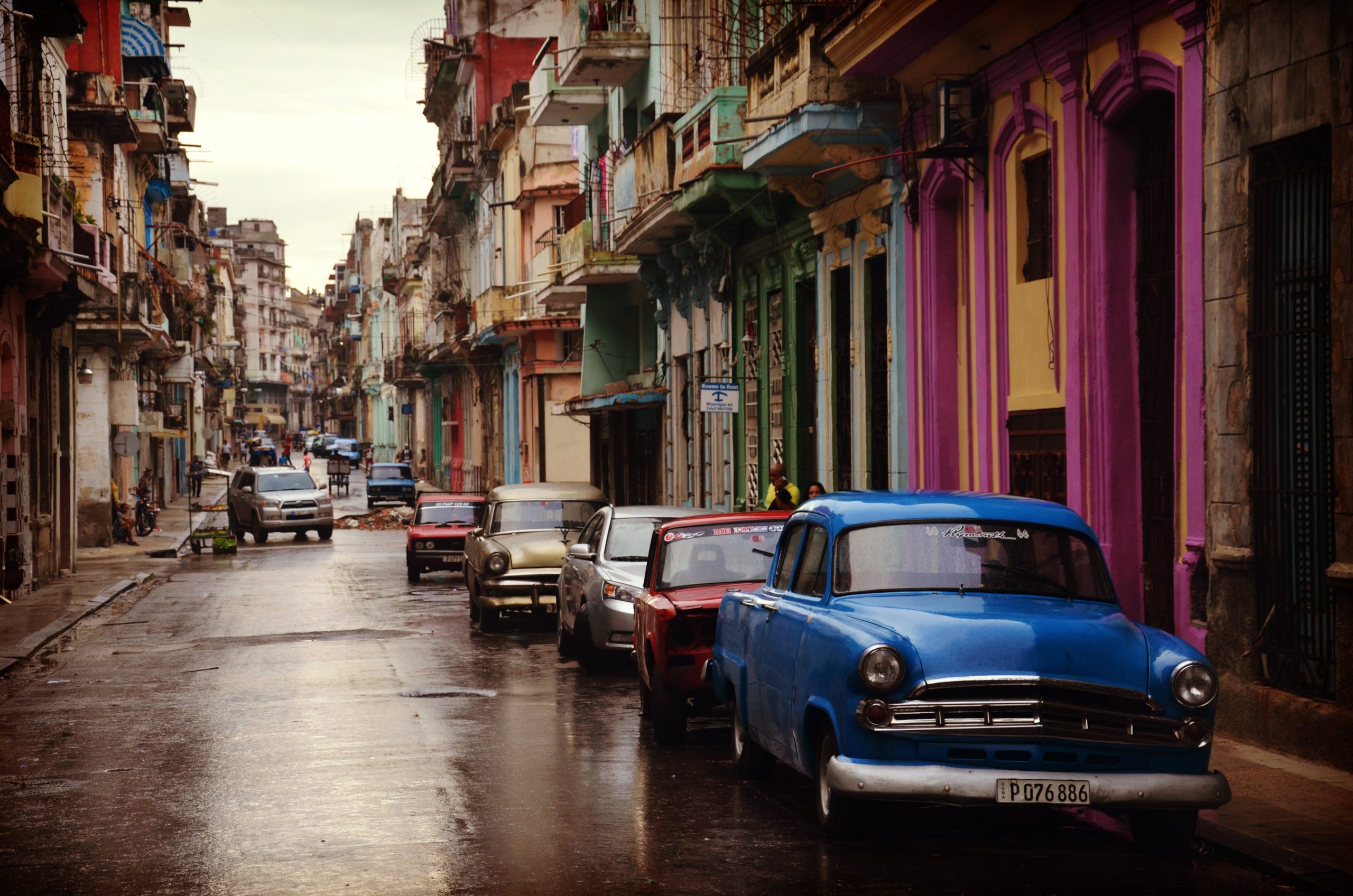
While the beauty of Spanish colonial architecture is captivating, I was struck by the poverty I saw in Havana. Many architectural historians recognize Cuban architecture, often called Spanish eclectic, as one of the most stunning styles in the world. This style blends influences from Moorish, Byzantine, Roman, Renaissance, and modern design. The streets were lined with beautiful homes decorated with marble columns and intricate details, though their interiors were noticeably in disrepair. The government covers all monthly rent and food costs, so I saw no one hungry or homeless.

As expected, there were issues with water distribution and electricity. I was most disturbed by the clutter in the streets, which included plastic bags filled with trash, heaps of used paper, and cardboard boxes. According to our guide, the country has limited funds for infrastructure maintenance and waste management due to the near collapse of its economy. Garbage is collected only as needed. Designated as a terrorist state by the United States, any country that does business with Cuba is quickly labeled a supporter of terrorism.

We visited several world-class art museums with works from the fifteenth to the twenty-first centuries. We also explored small galleries featuring original paintings and sculptures for purchase. While in Havana, we enjoyed jazz performances during the Annual International Jazz Festival, which featured musicians from North America, Europe, Australia, and Asia. Formal concerts took place at the National Theatre in the afternoon, while modern jazz jams occurred late into the night at the National Arts Factory. I loved the rhythm of the African drums, which amplified the lively rumbas and romantic Cuban love songs. Cuban art and music continue to be celebrated worldwide.

Life is tough in Cuba. The country supported Namibia and Angola in their fight against apartheid in the 1970s, losing twenty thousand soldiers in those conflicts. Yet these African countries no longer support Cuba due to the embargo and political tensions. Additionally, Cuba has lost financial backing from its main supporters: Russia, Mexico, and Argentina. Venezuela has reduced its oil aid. Still, the Cuban people take great pride in their achievements despite hardships. The people of Cuba have adequate shelter, food, and excellent healthcare. The government provides housing and monthly food rations to every citizen.

Although I stayed at a four-star hotel, there were restrictions on food, drinks, and linen services. We also faced inconsistent internet service and electronic room keys that required daily reprogramming. These issues are not unique to Cuba; they are common in most developing countries. Poverty creates lifestyle challenges worldwide, affecting family life, nutrition, and resources.

Nonetheless, for me, Castro was a brave and exceptional world leader. I enjoyed my travels and learned much about Cuban history and society.

BE THE FUEL

MAKE A DONATION TODAY

Your generosity is truly the fuel that empowers CMAP to change lives and to help older adults discover their “why!”

We invite you to donate to the 2023–2024 Annual Giving Campaign by June 30 to help us reach our goal.